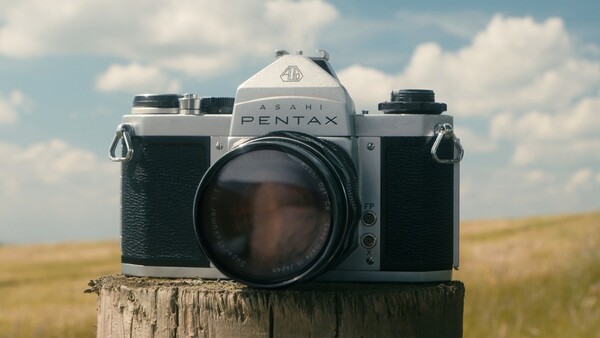
Film photography has a way of humbling you fast. You shoot a roll, wait days to see the results, and get back something flat, muddy, or just... off. This helpful video lays out three specific reasons this keeps happening and what to fix, and none of them require spending more money on gear.
Coming to you from Max Kent, this practical video starts with something most people overlook: where you get your film developed matters more than you probably think. Not all labs are equal. A basic scanner will give you a noticeably different result than a Fuji Frontier or Noritsu scanner, and that difference becomes obvious the moment you try to print anything. Labs also apply their own preset looks during scanning, some heavier than others, which means the "film look" you've been getting might actually be your lab's aesthetic, not your film stock's. Kent makes a sharp point here: a lot of people stick with the same lab out of habit without realizing they could be getting dramatically better results somewhere else.
The second fix is one that catches a lot of people off guard. Most get their scans back and treat them as finished files, assuming that's just how film looks. Kent argues you should treat a film scan more like a raw digital file, something with retained shadow and highlight detail that's waiting to be worked. Even small adjustments in Lightroom to your highlights and shadows can shift a photo significantly.
The third issue is one that trips up anyone coming from digital: film and digital handle exposure in opposite ways. Digital sensors are generally more tolerant of underexposure, so many people develop the habit of exposing conservatively. Film is the opposite. Underexpose, and you get muddy shadows with very little you can do to recover them. Kent's approach is to overexpose by one stop in aperture priority mode, which gives the film enough light to work with and leaves highlight recovery as an option in post. It's not about chasing perfect exposures every frame. It's about consistently avoiding the kind of underexposure that film simply can't survive. He's candid about the fact that there are more precise methods, but for shooting in real conditions without overthinking every frame, this approach holds up.
What ties all three fixes together is that none of them are about buying better equipment. Any camera can produce genuinely great images when you get the lab, the editing, and the exposure working in your favor. Kent walks through the specifics of each fix with enough detail that you can start applying them on your next roll. Check out the video above for the full rundown from Kent.


Join the Fstoppers community for free
-
Post comments and join in the discussions
-
Browse the site ad-free
-
Share your work and get featured in the community
-
Compete in the photo contests for fun and prizes
4 Comments
Try printing in a dark room, that should fix the issue.
A huge problem, in my observation, with people that use film with too little knowledge, is exposure. Many color negative films are very over rated in terms of their working ASA. When I am using color films my usual practice is to rate a film with a box speed of 160 is to rate it at ASA 100. The box speed of color films is determined in a lab under tightly controlled environment using carefully calibrated equipment and processed under very tightly controlled lab conditions. Reality is quite different. First of all camera bodies built in meters are notoriously inaccurate. Film users have known that for years. I have used Canon cameras for decades, specifically Canon F-1s. I have three F-1 bodies and there is a difference between them in how the read a scene. I've a friend who uses Nikons, and has for years. He has the same experience, so when you use a film camera that is new to you the best practice is to expose the film you will be using in your main camera at different ASA's using the cameras metering system and setting the aperture and shutter speed to the camera's recommendation. Next, many of the cameras being used are designed to be used with mercury batteries that have a voltage that is slightly higher than the batteries available now. That difference will have an effect on what your meter says. So, again, more testing is indicated.
When using color negative film it should be noted that within reasonable parameters image contrast is controlled by exposure. It is not effectively controlled by so called push and pull processing. Using push or pull processing can cause the color layers in the film to develop in a way that isn't linear, and there are some very technical reasons for that. Suffice to say that extending the processing time too much can cause red/green crossover where highlights cannot be rendered as neutral white.
Next is film processing. Find a lab that runs control strips each day. Over used chemicals that have not had there PH and basic chemical structure restored at the beginning of each day, or that are too hot or too cold will have a very deleterious effect on the negatives you get back. One of the great disadvantages of using any film product, as opposed to digital, is that there is no immediate feedback like a histogram. But film has such a different palette than digitial. I think that once you learn to really be effective in your film photography there will be a greater appreciation for what can be done. Also remember that commercial labs have their scanners set up to work a certain way. My preference with commercial scans, the few times I have had to order them, is I want a very flat scan back, and professional labs will do that. The difference in your images will be made as you work with the scans in Photoshop, or whatever software you are using.
PS. The caveat for me in using color films is that I haven't in many years. I almost always used C-41 films in my studio and E-6 films if I was doing commercial work. Their responses to light are wholly different. Some of the info I gave may have changed since I used a lot of film, which I used to purchase by the case. The film I use now is Black and White, and those emulsions have changed very little in the last 30+ years.
During my wedding photography days in the late 70s, the 80s, and the early 90s I always rated my 160 film at 100. In that case it was Vericolor II. I never considered doing anything else. Most of my friends doing wedding photography would even rate it as low as 80.