
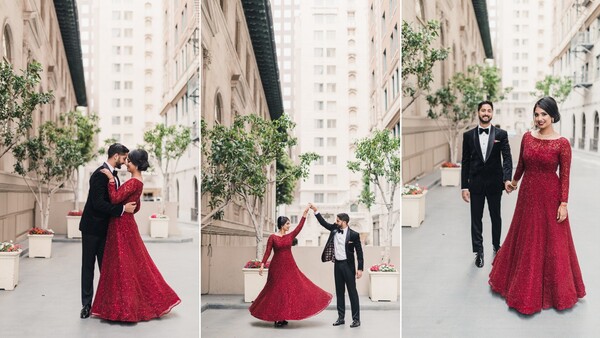
I want to start by defending the thing this article might look like it is against. Static posing in wedding and portrait photography is the backbone of every couples session I shoot. The five foundations I teach are all static positions, and they are static for good reasons. They are fast. They are repeatable. They are flattering on almost everybody. When you have ninety seconds before the coordinator waves you off, you reach for a static pose, and you should.
Most of what ends up in a finished gallery is static work. That is not a compromise. That is the job. So the problem is not the pose. The problem is what happens to people inside it after a while.
Minute Fifteen
Watch any couples session around the fifteen-minute mark. The shapes are still correct. The photographer is still directing well. And something has quietly gone out of the pictures.
What has happened is that the couple has settled into being photographed. They have worked out which smile to produce, and they are producing it. They have stopped thinking about each other and started thinking about the camera, and once that flips, you can keep making technically correct images for another twenty minutes without getting a single one you actually want.
You cannot fix that by adjusting the pose. And telling them to relax makes it worse, because now being relaxed is one more thing they are performing for you. What fixes it is giving them something to do.
Before I go further, where this comes from. We recently launched an app called Cue & Capture, which is the posing system I teach broken into individual cards, each with the setup, the exact words to say, how to shoot it, and what usually goes wrong. The five below are pulled straight from it. I am telling you that up front rather than burying it, and I have included the full working detail for each one so this is useful whether or not you ever open the app.
Why Movement Works, and the Part Most People Miss
When you ask two people to hold a shape, there is nothing to occupy them except the fact that they are being looked at. Give them a task and that attention goes somewhere else. The expression you wanted stops being something you have to request. It becomes a byproduct of them being busy.
That much is fairly obvious. Here is the part that took me longer to notice.
The movement frames are not the main prize. They are good, and some will make the gallery. But the real return arrives in the two minutes afterward. Put a couple through a twirl or a piggyback and they come out of it laughing, a little out of breath, and no longer thinking about you. Go straight back into a static foundation right then and you will shoot the best static frames of the entire session.
So do not batch these at the end. Interleave them. Work your foundations, feel the energy drop, drop in one movement beat, then go immediately back to static while they are still loose. Two or three of those cycles across a session is usually plenty.
If you are running several across a session, escalate in roughly the order below. Each one asks for a little more physical contact and a little more trust than the last. Opening with a dip, which is where most photographers go when they want energy, asks a couple who met your camera twenty minutes ago to do something intimate and slightly precarious in front of a stranger. It usually produces exactly the self-conscious grin you were trying to get rid of.
1. Walking, Leading
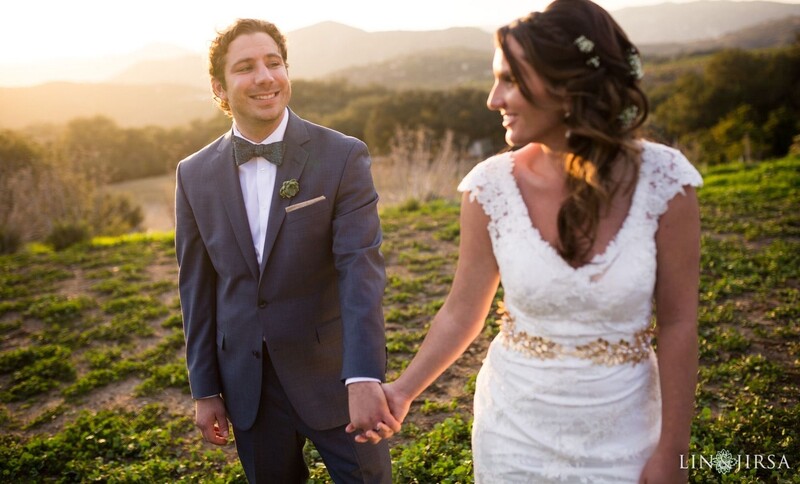
The gentlest way back in. One partner takes a genuine half stride ahead, hand reaching back to stay connected, glancing back or toward the camera. It is not a side-by-side stroll, and that difference is the whole pose.
The setup. One partner steps a real half stride ahead of the other, hand reaching back. The gap between them is the shot.
What to say, to one partner, normal voice. If you want playful: "Drag him. He's too slow and you're done waiting." If you want dramatic: "Hold hands like you're out for a walk. Stay right there, and take one big step forward. Now look at the back of her head, and give me your best Vogue look right into the camera."
How to shoot it. Get slightly ahead or to the side so you catch the gap. Burst through several steps rather than picking one. Run the stride a few times, because the natural rhythm usually takes a couple of passes to settle.
What goes wrong. They drift back into walking side by side, which happens constantly. Call out the lead again. The leading partner twists their entire spine to look back, when all you need is a head turn. And the hands lose contact, which loosens the whole thing, so remind them to hold on.
2. The Twirl
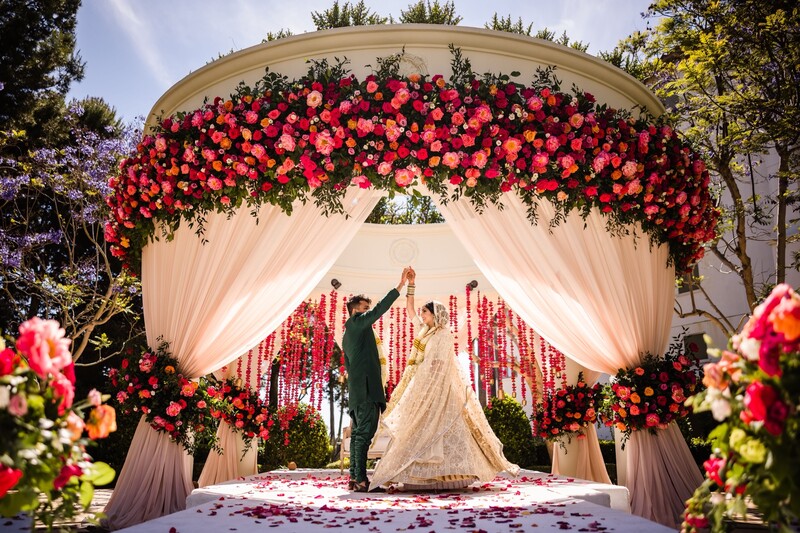
The fastest way to put energy back into a session that has flattened out. She spins out from a raised hand, the dress flares, she comes back in.
The setup. Hands joined and raised. One partner anchors that raised hand and holds it steady. The other needs room to turn a full circle.
What to say, to her, normal voice: "Spin her out and reel her back in. Again, faster."
How to shoot it. 1/800th or faster to freeze the dress mid-flare. Burst through the entire spin, start to finish. Run it three times, because the third pass is usually the cleanest.
Here is the part most people miss. You get three usable frames per attempt: the start, the mid-spin, and the return. The return is almost always the best one. Do not stop shooting when she is facing away from you. The moment she lands back into him is the photograph.
What goes wrong. The spin is too fast for the dress to catch up, so ask for slower than feels natural. The anchoring arm collapses halfway through, so tell the anchor to keep it up and steady. And you stop shooting too early and miss the return.
3. The Carry
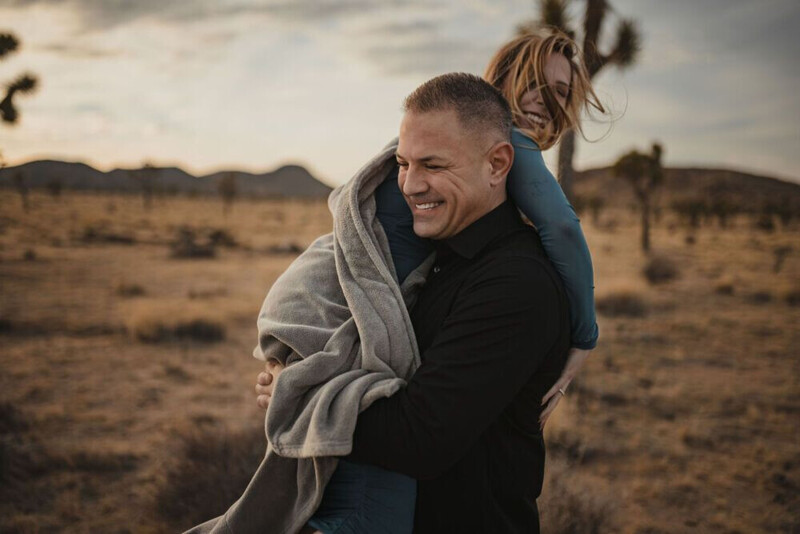
A cradle carry, held or walked. More sustained and more playful than a lift, and it requires actual trust, which is the point.
The setup. He bends at the knees to lift her into a cradle, one arm under her knees and one under her back.
What to say, to him, normal voice: "Pick her up. Now walk without dropping her. No pressure."
How to shoot it. If they walk, keep the steps small and controlled, because this is not about covering distance. Burst, especially while walking. And watch his face for strain, then check in before it shows in the frame.
What goes wrong. He strains, and you get a photograph of a man lifting furniture. Check in and let him reset rather than pushing for one more. She holds her body straight and stiff, so ask her to bend one leg for shape. The walk gets fast and loses focus, so slow it down.
4. The Airport Hug
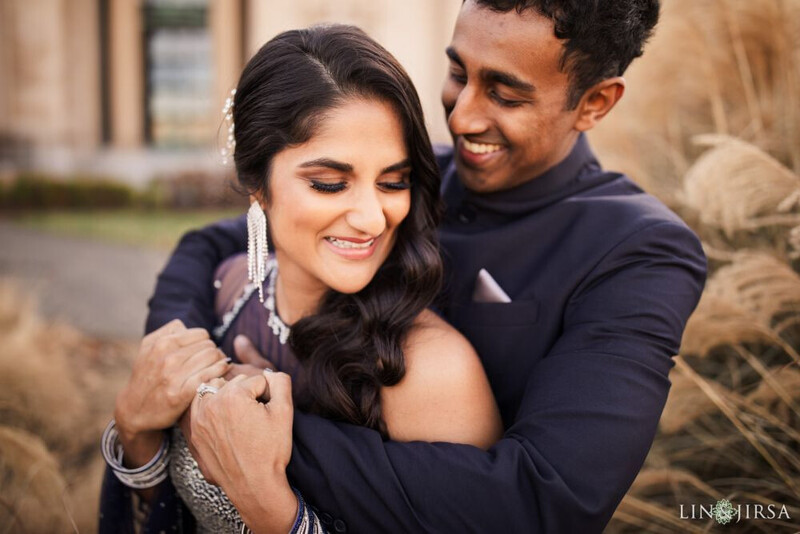
This is the one I would keep if I could only keep one. It is not really a pose. It is a small piece of theatre, and the reaction it produces cannot be requested directly.
The setup. Stand him about six feet directly behind her, outside her peripheral vision. Then pull him in close and brief him quietly, so she does not hear it.
What to say, whispered, to him only: "I want you to imagine she's standing in line at an airport. She has no idea you're there. You're going to come up behind her and give her a big surprise bear hug. I'm going to get in position, then I'll say three, two, one. Go surprise her. That's when you go, OK?"
How to shoot it. 1/500th or faster, because the entire reaction lives in about a quarter of a second. Burst through the whole moment, and the keepers are usually in the middle rather than at either end. Shoot from her eye level.
What goes wrong. One thing, and it happens nearly every time. The hug is too polite. He is being careful with her. Tell him he is not squeezing anywhere near hard enough, then run it again. The second take is almost always the one.
Notice what the cue is doing. I am not asking anybody to look happy. I am giving him a scene and a countdown, and I am keeping her genuinely surprised. The laugh is real because the surprise is real.
5. The Slow Dance
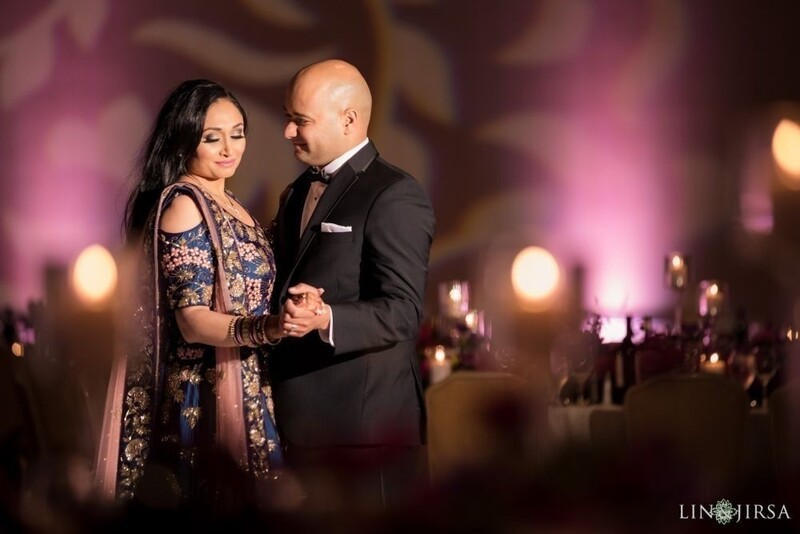
The landing. After the adrenaline of a carry or a surprise, they are loose and no longer performing. This is when you get the quiet one, and it is also the perfect bridge back into static work.
The setup. Chest to chest with a gap of six to eight inches. One pair of hands joins and lifts to shoulder height, elbows soft.
What to say, to both, normal voice: "Start swaying. Tell her what was playing the first time you two danced."
That second sentence is the entire pose. The sway is just a container. What you are actually doing is starting a conversation between them that has nothing to do with you, and then photographing it.
How to shoot it. Burst through the sway, because the small movement changes the shape frame to frame. Shoot at their eye level. Watch that the raised hands stay at shoulder height and do not creep up to cover a face.
What goes wrong. The raised hands drift up and block a face. The joined arm locks straight and reads stiff, so ask for a soft bend at the elbow. And the steps turn into an actual dance, which gives you motion blur, so coach a small side-to-side rock instead.
4 More Worth Having
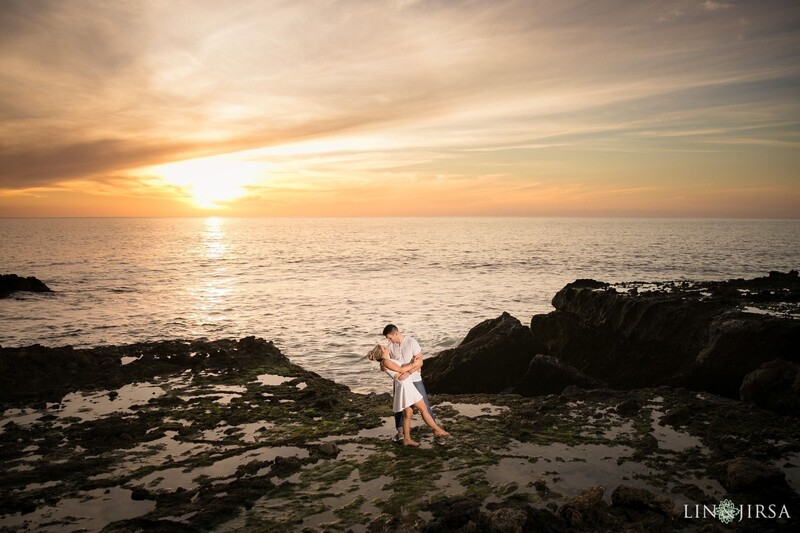
Once those are working, these are the next ones I reach for. Same principle, different energy.
The Dip. The full version, and genuinely one of the highest-impact frames in a gallery when it lands. It needs trust and clear physical direction, and the trick is that you coach the laugh, not the dip. "Start chest to chest like you're about to dance. Now lean back like you're at the very end of the song, all the way, and trust them to hold you. And laugh. Ready? Go."
The Lift. A full scoop off the ground into a spin or a hold. High energy, high trust, and one of the most requested shots of a session. "Scoop her up and give her a spin. Hold on tight and just laugh, both of you."
The Piggyback. My go-to for unlocking genuine, unforced play. The effort of climbing on and holding up almost always cracks both of them into a real laugh, and it reads as fun from any distance. Delivered loud, to both: "Okay, hop up on his back, go! Hold on tight and don't let go. Now both of you look at me and give me that big laugh."
The Veil Toss. An assistant throws the veil into the air and runs out of frame, and you catch it mid-flight against the sky. Less controlled than a veil swoop and you may need to edit the assistant out, but when it works it is unforgettable. Quietly, to both: "Kiss her and don't move. And then the whole sky went white."
The Thing to Take Away
If you remember one sentence from this, make it this one: the cue is doing more work than the pose.
Look back at those ten. The physical setups are simple, and you could have guessed most of them. What makes them work is what gets said. Drag him, he's too slow. Spin her out and reel her back in. Pick her up, no pressure. She has no idea you're there. Tell her what was playing the first time you danced. And then the whole sky went white.
None of those sentences describe a shape. Every one of them gives two people something to do or something to think about, and the posing takes care of itself.
Use them the way I do. Not as a block of action shots at the end of a session, and not as a replacement for the static work that will fill most of the gallery. Use them as the reset, dropped in the moment your couple starts looking like people being photographed rather than people who like each other.
Then go straight back to your foundations, while they are still laughing, and take the shot you came for.



Join the Fstoppers community for free
-
Post comments and join in the discussions
-
Browse the site ad-free
-
Share your work and get featured in the community
-
Compete in the photo contests for fun and prizes
No comments yet