
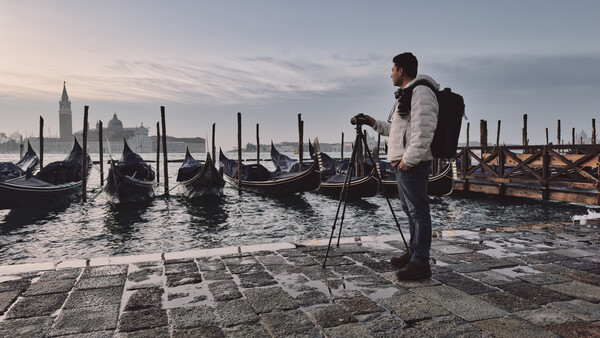
One year into a leap from software to full-time creativity, I reveal the unexpected challenges and surprising victories that transformed my journey. What happens when passion meets the harsh realities of freelance life?
After two decades in the software industry, I leapt into full-time photography and filmmaking exactly one year ago. I had not started from scratch, but had been pursuing photography and filmmaking as a side hustle for more than a decade, which gave me a substantial understanding of potential revenue streams. However, I quickly learned the hard truth that part-time and full-time creative work are fundamentally different pursuits. When you're earning from creative projects while maintaining a salary, that steady paycheck covers your expenses, and creative income feels like a bonus. But when you quit your job to pursue creativity full time, you are on your own. I would not have survived this time financially without the backup support from 16 years of disciplined saving and strategic investments. Even with this preparation and my decade of semi-professional experience, what I discovered was far more complex and infinitely more valuable.
From IT Professional to Creative Entrepreneur
At the start of this new phase of my journey, I defined myself simply: a storyteller who uses photography, short films, and writing to inspire people. My background included landscape photography, street photography, portraiture, cinematic short films, travel documentaries, and client projects, all of which I did while maintaining my corporate career.
I had already established a foundation: YouTube content featuring photography vlogs, tutorials, and gear reviews. This existing portfolio gave me confidence that transitioning to full-time creative work would be achievable.
The identity shift felt natural. Instead of being an IT professional who created on weekends, I would become a creative professional who had already gained an understanding of the industry. I started a fresh YouTube channel, hiding my 15-year-old one with its hodgepodge of uploads, and transferring across only some of my best work.

The Master Plan: How I Expected To Earn
My strategy seemed bulletproof on paper. I planned to generate income through four primary channels:
-
Educational content: Selling photography and filmmaking courses directly through my website
-
Personal instruction: Offering one-on-one lessons to aspiring photographers
-
Client work: Approaching local businesses and leveraging my network for paid projects in Cape Town
-
YouTube monetization: Growing my channel through films and photography content to attract sponsors and partnerships
The plan felt comprehensive. Multiple income streams would provide stability, and my existing audience would convert into paying customers. What could go wrong?
Early Victories That Fueled My Confidence
The initial months delivered exactly the validation I needed. My very first post-corporate video, produced just after my transition, titled "I Quit," felt like an explosion beyond my expectations, because it generated over 60,000 views within the first four weeks, launching my new channel subscriber base from a few hundred to 4,000 subscribers. It attracted attention from both local and international publications.
These early wins opened doors I hadn't anticipated. A South African travel magazine reached out for contributions, followed by an international company offering ongoing writing opportunities. I was riding the wave.
I invested several months of effort in developing comprehensive courses that covered beginner photography, landscape techniques, Lightroom editing, and street photography. The freedom to travel and create content was intoxicating; I produced multiple short films while exploring new locations, funded by savings and my partner's support.
Even my stagnant Instagram account showed signs of life in that first six months, with my followers growing by 40%. While modest, this growth led to some meaningful connections with other creators who became collaborators and friends.

The Harsh Realities: When Plans Don’t Materialize
Despite early momentum, midway through my first year, significant challenges became apparent that no amount of planning had prepared me for.
Client work remained elusive. Despite having a decent portfolio and actively approaching potential clients, I never secured meaningful client projects. Several promising opportunities materialized only to disappear without explanation. The local market proved far more challenging than anticipated.
Course sales were devastating. This became my most significant setback. Despite investing heavily in Google and Facebook advertising to promote my privately hosted courses, I generated very few sales. Neither my 4,000 YouTube subscribers nor my newsletter audience converted into paying customers.
The financial and emotional impact was heartbreaking. After spending significant savings on course development and marketing with no return, I reluctantly moved my content to Udemy. While the courses now generate regular sales and maintain good rankings, the income remains far below expectations due to the nature of the platform.
YouTube's growth stalled. After the initial success of my "I Quit" video, subsequent motivational short films failed to gain traction. The algorithm seemed indifferent to my carefully crafted content, and subscriber growth plateaued.
The Numbers Game: Covering 30% of Expenses
Financial reality provided the most precise assessment of my first year's performance. Through writing assignments, modest Udemy course sales, and occasional small projects, I covered approximately 30% of my living expenses.
The remaining 70% came from pre-existing investments that I had strategically positioned before leaving corporate life, as well as savings I had explicitly accumulated for this transition. While disappointing, this financial cushion allowed me to continue pursuing creative work without immediate pressure to return to traditional employment.
My anxiety about income has been real, but it has certainly been mitigated by having a partner who earns well and is supportive.
This experience taught me that having adequate financial backup isn't just helpful; it is essential for surviving the journey of creative entrepreneurship, especially with the family responsibilities that are inevitable at this age. Without this safety net, the stress of immediate income needs would have forced premature decisions and potentially derailed the entire venture.
Strategic Pivot: Focus Over Spread
My project management background from IT, combined with a year of setbacks, has forced a strategic reassessment of the first year:
A huge lesson has emerged from analyzing my scattered approach at this time, when I knocked on multiple doors, hoping that one would open.
-
Content alignment: I was creating motivational films while selling photography courses; the disconnect is now apparent in hindsight. I have now shifted YouTube content exclusively to photography-focused material, ensuring my audience matches my products.
-
Resource concentration: Instead of maintaining presence across Instagram posts, reels, YouTube, and client outreach, I now focus primarily on writing and YouTube long-form content.
-
Market targeting: I have actively stopped pursuing the Cape Town market and now concentrate on international opportunities through writing. Projects that come organically through a referral, I take.
The lesson is clear: as a solo creator, trying to excel everywhere means excelling nowhere. I had thought that my time would be wide open to explore all avenues, but it is not.
You Cannot Be a Jack of All Trades
When you're not spread thin across multiple platforms and strategies, the benefits extend far beyond simple time management. I am now less stressed and can identify mistakes in my work much sooner, allowing for quicker course corrections. This focus has freed my mind to think more strategically, which has cleared up mental clutter that was previously overwhelming.
You need to choose what you wish to master.
Consistency creates its own momentum and improves output. Social media numbers do not always predict financial success. Even without explosive growth in online presence, my steady approach has slowly garnered my work the attention of the right people, which has gained me some solid work. More importantly, I have strengthened relationships with existing work partners, and this has opened doors to additional opportunities. For example, through my writing work for one international client, new collaboration opportunities have begun to emerge that combine filmmaking and writing—exactly the creative intersection I have been seeking.
My income streams are not what I had thought they would be, but my enjoyment of writing has opened unexpected doors, while I can still follow my first loves of videography and photography.

The Path Forward: Persistence Over Perfection
While covering only a part of the expenses might seem discouraging at this point, the year has provided an invaluable learning curve that no corporate job could offer. I learned about audience development, content marketing, course creation, client relations, and most importantly, my own capabilities and limitations.
Most significantly, I am acquiring greater resilience and adaptability. The initial plan failed, but the ability to analyze, pivot, and continue is my mantra.
The journey continues with hard-earned lessons: creative entrepreneurship requires patience, financial preparation, strategic thinking, emotional resilience, and the humility to change course when evidence demands it. The dream remains alive, but now it's grounded in reality rather than wishful thinking.





Join the Fstoppers community for free
-
Post comments and join in the discussions
-
Browse the site ad-free
-
Share your work and get featured in the community
-
Compete in the photo contests for fun and prizes
9 Comments
A good read for those who want to go pro! I believe all who dip a toe into the picture will be aware first! For all of us non pros Thank You for the share.
I found so many legal things just for us non pros that needs to be aware of in just street photography and the use of just a tripod in some state parks in the U.S. can be costly!
There are many web sites that help with the legal issue's in photography that after reading some I as a hobbyist learned some things!!!
Thank you for your feedback and for sharing useful information about the USA market. In South Africa, we also have restrictions, but we have more safety issues to consider here. For me, some countries in Europe and Asia are street photography heavens. I don't have that luxury in Cape Town because of safety.
Hello Edwin, Ive retired in Jan. of this year and plan to hit the road with my gear. any tips or websites you could provide regarding the legalitys of state laws would be appreciated greatly. I do know that certain laws will not allow tripods to be set up in some state parks. Thanks in advance.
Thank you for your writings. (Sometimes reading is better than watching videos)
A lot of us would like to go pro in photography, but reality is hard.
Now you have specific information about what may go bad in going pro. We don't!
Why you don't try to create software or web app for photographers?
I have considered creating software or a web app, but I know it's not a one-time thing, and it would likely draw me back into the software world. You need time to manage, and I don't have time for that.
Thank you for reading and appreciating my honest feedback to the readers. :-)
I wrote in your other article about how charting a path forward in today's business world seems like a scene out of Star Trek. Choices were mostly limited when I began my printing business in 1979 to whether I wanted to add employees or remain working by myself. I discovered quickly that I was no better of an employer than an employee. So I do what I can do and outsource the rest. Getting customers was easy at the start. Every business in town needed printing in 1979, and with a discipline of making cold calls every day, it was hard not to get business and grow my income. Of course there being no internet, virtually everything then was local. And now in 2025, nothing seems local. The internet is the main attraction for anyone starting a business today. It brings unlimited potential, and unlimited competition too. I doubt anyone young and starting a business today would even comprehend the idea of cold calling in person or by phone. Marketing experts claim the virtues and necessity of social media. Times have changed. Let technology dictate the terms of the advertising and sales.
But is human nature really all that different today than 45 years ago? Some try to attribute different characteristics to different generations. Millennials are so.... whatever. However, people have an underlying need for emotional connection. You can say that people don't want phone calls, but I believe that they don't want phone calls from salespeople who talk incessantly about themselves. People who have a primary need for what I'm selling are happy to talk, provided they're engaged in the conversation and I do more listening than talking.
What I'm saying is the more things seem to change in this world, the more they stay the same. In that respect, my business has to be local in concept. I have to create ongoing relationships with people... people who return and buy more the next year. Whether that's a business down the street or on the other side of the planet probably doesn't matter, although relationships with the business owner in my city are easier to establish. Just the simple act of face-to-face physically showing them prints of my work has a greater impact than hoping they see something on my website that's relevant for them. It's a proactive approach to selling that social media is not. We're discussing their problems and solutions. I know you said you've given up on local opportunities, but you might think twice about that. You live in a city of nearly four million people... a veritable gold mine under your feet. My city is about 150,000. I understand that local business has been a disappointment for you, but it takes time and persistence to develop new accounts. You are typically not their first priority on any given day. I just can't imagine most of YouTube, online course sales, or much of anything generated through social media as having a significant impact on your business income.
Granted I am a bit old fashioned, but my model has worked well for 45 years and still does. Engaging in business is about building trust between buyer and seller, however you choose to do that. For me it's more than just posting a website or portfolio in a sea of competitive clutter... it's about developing relationships with people. However you can do that, only you know best, but always remember that a business grows by building an ever growing customer base. Not just followers, but customers who actually buy something, and especially the ones who keep coming back.
Hi Ed,
Firstly, thank you very much for taking the time to share your insights from your experiences. These are valuable, and I appreciate that you take the time to share; it means a lot.
I have just returned from a meeting with a potential client, and it looks like I will secure the video project. You are absolutely right; it makes a significant difference when someone doesn't just call but shows genuine interest through a face-to-face conversation. I’ve had a few "potential client" meetings, and even when I didn’t secure the project, the connections made and the exchange of ideas were invaluable. In fact, the only reason my proposals weren't accepted was because the clients had already allocated funds for their marketing campaigns for the financial year. They are quite hopeful about working with me on projects in the next financial year. And I know that they weren't putting me off because I am in touch with them regularly.
I have temporarily prioritised local projects to focus on other projects. In social gatherings, I do mention what I do. For example, a friend of mine asked me to do a video project for his client while he was away on holiday. While I was filming, I made a contact with which I had a meeting this morning. So, I am still looking for opportunities, but they are a lower priority for now.
In today's world, it's easier to make a living with your online courses and products if you either market them effectively and succeed or have a large following (in which case, you've worked hard to earn that following, trust, and inspiration).
So, my focus at the moment is on my creative writing for FStoppers and other organisations, finishing my one or two remaining courses and putting them online (every sale helps, and once the course is online, it is low maintenance), and also making my YouTube channel a success. I will be doing local projects, and hopefully one contact will lead to others.
I agree with all you have said; you have critically analysed the whole situation based on your experiences, and from my point of view, you are spot on.
Thank you for your valuable insights; you have inspired and motivated me. I needed to hear that this morning.
Kind regards,
Muji
You're welcome. Hope to hear more about your journey down the road. Above all else, a business of our own is something to take great pride in and be thankful for. It's like my home... the carpet may be a bit worn and the outside could use a fresh coat of paint, but it's mine, and I am so thankful for all that we have. Gratitude is such an important thing for when obstacles appear, and they always do. I wish you much success.
Thank you very much. As the saying goes, "love yourself first" is the same as what you are expressing. Be grateful, but also take great pride. For me, these are two key ingredients, along with a mix of confidence that drives me forward every day. Perhaps I should write about my wins and losses again in a few months. We'll see.