
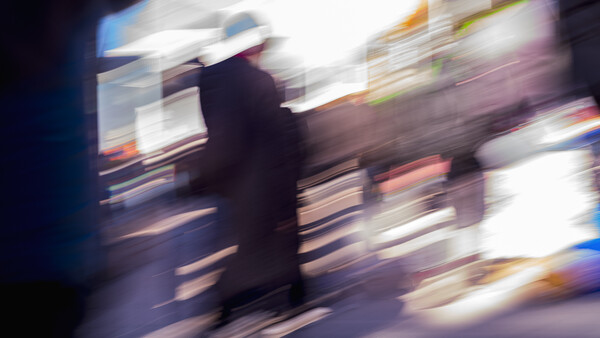
Experienced photographers rarely miss the scene. They know what to look for. They arrive with a clear idea, and that is exactly where the error begins. Instead of reading what is in front of them, they start looking for confirmation of what they came for.
Photographers like to explain weak photographs through lack of attention. "You need to see better," "you just didn't notice," "learn to look." This explanation is convenient because it blames no one. It also promises that training will solve it. Training does not. The photographer sees the scene and refuses to accept it, because he has already decided what it should offer. The error is not passive. It is active.
This is where the break with photography's usual language begins. Almost every explanation circles the same ground and misses the core each time. People speak of "seeing vs. looking," as if the problem were that the person does not distinguish, when in fact he distinguishes and simply ignores what does not match his expectation. People speak of "previsualization" as a professional skill, which is true as long as the expectation stays flexible; once it becomes more rigid than the scene, it stops helping and starts breaking the frame. People speak of Instagram, of "shooting what you've already seen online," as if the problem came from outside, when social media only amplifies what is already happening: the habit of searching for confirmation of an image known in advance.
Algorithms and likes reward precisely this rigid expectation. We look for what is "guaranteed to work," turning photography into the verification of past successes rather than the investigation of reality.
The Trap of Aesthetic Surface
Even when photographers sense the problem more precisely, the language stays weak. "Don't force the frame" sounds like advice on composition. But it begins before composition: it is not about arranging elements wrongly, it is about trying to assemble a frame the scene does not contain. "Let the scene speak" is softer still — the language of therapy, not diagnosis. It tells you to relax and explains nothing about what is going wrong.
Each of these ways of describing it holds a piece of truth, and none names the mechanism. The conversation keeps sliding into advice: be more attentive, be open, work with what you have. It all sounds right and changes nothing.
The real problem looks different and far less comfortable. More often, the photographer fails not because he did not see, but because he overestimated the scene. He takes potential for fact. It seems to him that it is about to work, that there is almost a frame here, that one more push will bring it together. And he starts shooting not what is there but what, as he imagines, should emerge.
The photographer sees beautiful light and decides the frame already exists. The person in the scene is weak, there is no gesture, the elements do not hold together, and the light alone looks "too good to leave without a frame." This is where the error begins. What gets shot is not the scene but the belief that such light must work. Fog seems like "atmosphere" while nothing actually happens in the frame. A street looks "cinematic" because it resembles a reference, yet inside it is empty. A person stands in the frame and forms no relation with the space, and the whole thing rests on the expectation that this "should work."
This is where substitution begins. Instead of revising the decision, the photographer starts looking for confirmation. He keeps shooting because "almost." He moves without changing the idea. He makes more frames, and each of them tests not the scene but his expectation of it.
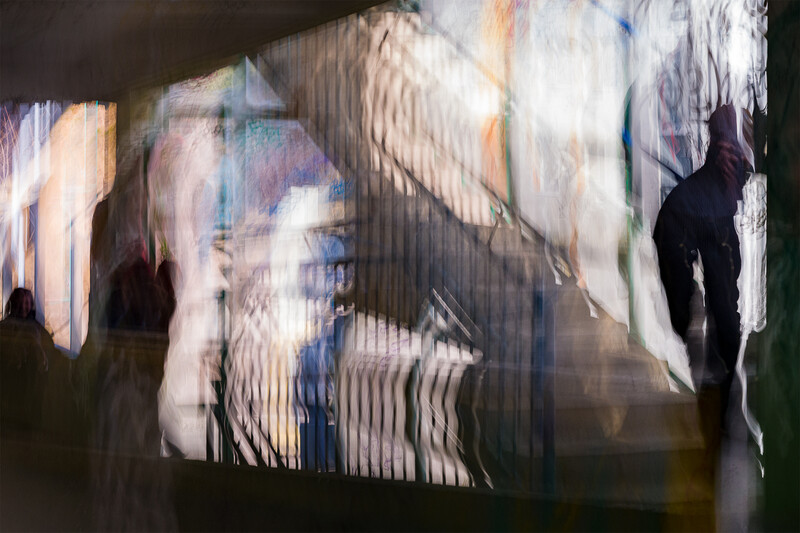
Rigid vs. Fluid Intention
This is where the process breaks: intention stays in place even when the scene no longer supports it.
This is the boundary that usually goes unspoken. Expectation is necessary, and without it work is impossible. It directs, it helps select, it cuts away what is unnecessary. It works only while it moves with the scene. When it moves with the scene, the idea does not disappear — it changes shape to match what is actually there. The photographer arrives with a direction, but the direction is not fixed. It shifts with what the scene allows. Parts of it fall away, others take over, and sometimes it resolves into something different from what was expected at the start. The moment expectation becomes more rigid than reality, it stops being a tool and turns into the source of error.
This explains why the error is so common. It is typical not of beginners, but of those who already know what they are doing. Beginners more often do not see; experienced photographers more often overestimate. They already have a notion of how it "should look," and it is this notion that begins to interfere.
All five ways photography tries to describe this problem turn out to be fragments of the same process. "Learn to see" touches the moment you ignore reality. "Previsualization" shows where expectation comes from. "Instagram expectations" explains why it has become so strong. "Forcing the frame" describes how it looks in the frame. "Let the scene speak" proposes a way out without naming the cause. Put together, they describe one thing: the photographer expects more from the scene than it contains, and keeps working as if that content were already there.
This error can be named directly: it is not a problem of attention, not a problem of technique, not a problem of taste. It is overestimating the scene.
Why "Almost" Is a Red Flag
The most dangerous signal in shooting is not the obvious failure: it is the sense that the frame "almost came together." This is what keeps the photographer inside a false decision. "Almost" sounds like a promise, but more often it means the scene does not confirm the initial idea and the photographer keeps pushing it through. One does not continue. One rebuilds the decision.
Here is the only test that actually works. Every time the sense of "almost came together" appears, it is not a signal to continue — it is a signal to rebuild the decision. Not to add effort, but to change the expectation. Until this is done, the frame stays tied to something the scene did not contain. This is why it does not work, even when it looks acceptable.


Join the Fstoppers community for free
-
Post comments and join in the discussions
-
Browse the site ad-free
-
Share your work and get featured in the community
-
Compete in the photo contests for fun and prizes
4 Comments
I stopped reading right here: "Photographers like to explain weak photographs through lack of attention. 'YOU need to see better,' 'YOU just didn't notice,' '(YOU need to) learn to look.' This explanation is convenient because it blames no one." (emphasis added)
Umm, who is "You," expressly or implicitly stated? Hint: it's not "no one." You lost all credibility and attention with those two sentences. And no, I'm not being defensive. Just pointing out a general lack of quality writing and just a basic ability to THINK that I am increasingly seeing here, . . . among other places.
You are absolutely right.
I usually agree with your articles, other times only in part, and also, on occasion, I don’t agree at all with what is proposed. But I always like the tone and the manner of your writing. There is a certain degree of provocation that makes them interesting.
I understand the text as a warning against the complacency of the expert, to distrust our own judgment in the face of superficial aesthetic satisfaction. But, a clear distinction is left hanging in the air between good preview if it is flexible and rigid expectation. At what exact moment does the "intention" which is necessary, become the "rigid expectation" that constitutes the error?
Best regards.
Thank you, you've pointed to the most difficult and missing part of the text. But this moment is very, very subjective for each photographer, in my view. I guess, as long as the intention is asking "what is here," it stays flexible. The moment it begins to ask "how do I make this confirm what I came for," it has already become rigid. But this is only one possible answer, of course.