
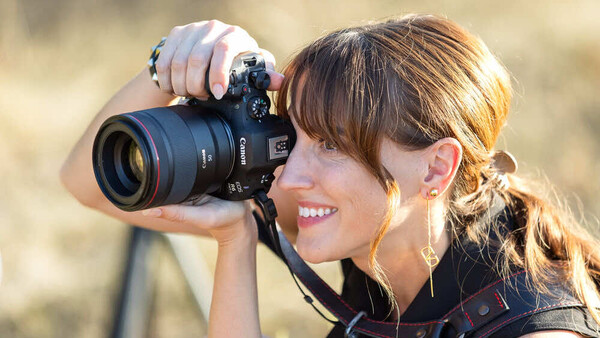
The Canon EOS R6 used to be a simple recommendation. You wanted a full frame hybrid that did a little of everything well without costing as much as the R5, so you bought the R6, and that was the end of the conversation. That clarity is gone. The line has split into three very different cameras that happen to share a name, and choosing between them now means knowing what kind of shooter you actually are. The good news is that once you sort that out, the right answer becomes obvious, because Canon has aimed each of these bodies at a genuinely different person.
Here is how the three current R6-family bodies break down, what each one is built to do, and which one belongs in your bag.
The Short Version
The Canon EOS R6 Mark II is the value pick, a proven hybrid that is still on sale and now costs hundreds less than it did at launch. The Canon EOS R6 Mark III is the do-everything photographer's camera, the current flagship of the line with the newest sensor, a viewfinder, and a mechanical shutter. The Canon EOS R6 V is the video-first body, a member of Canon's new V-series that drops the viewfinder and mechanical shutter entirely in exchange for serious cinema tools. If you mostly shoot stills, you are choosing between the Mark II and the Mark III. If you mostly shoot video, the V is calling your name.
Canon EOS R6 Mark II: The Smart Money
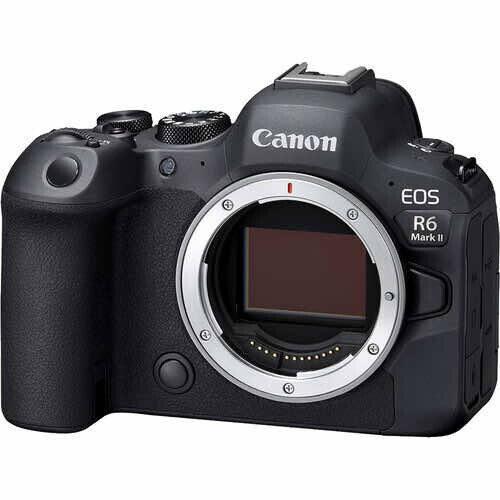
Released in late 2022, the R6 Mark II has quietly become the smartest buy in the lineup precisely because it did not go anywhere. It remains a current product, expected to stay on sale through 2026, and it has settled to around $1,999 in the United States, well below its $2,499 launch price. Its 24.2-megapixel sensor hits a genuine sweet spot for speed and low light, and for many photographers it is all the camera they will ever need.
Key Specs
- 24.2-megapixel full frame CMOS sensor
- Up to 40 fps electronic shutter, 12 fps mechanical
- 30 fps raw burst mode with pre-capture, recording the half second before you fully press the shutter
- ISO 100 to 102,400, expandable to 50 and 204,800
- Up to 8 stops of in-body image stabilization with compatible lenses
- 6K-oversampled 4K up to 60p in 10-bit with C-Log 3, external 6K ProRes RAW, and slow motion at up to Full HD 180p
- 3.69-million-dot OLED electronic viewfinder with a 120 fps refresh
- Dual UHS-II SD card slots and weather-sealing
- Around $1,999 body only, down from a $2,499 launch price
This is the camera for the photographer who chases motion. Sports, wildlife, weddings, events, and low-light work all play directly to its strengths, and the deep buffer and confident Dual Pixel autofocus make fast, chaotic scenes feel manageable. The honest limitation is the storage: dual SD cards rather than the faster CFexpress, which can constrain the most demanding video and burst workflows. For most shooters, that is a price worth paying to save several hundred dollars over the newer bodies. If you want the most camera per dollar and 24 megapixels is enough resolution for your work, stop here.
Canon EOS R6 Mark III: The Hybrid Monster
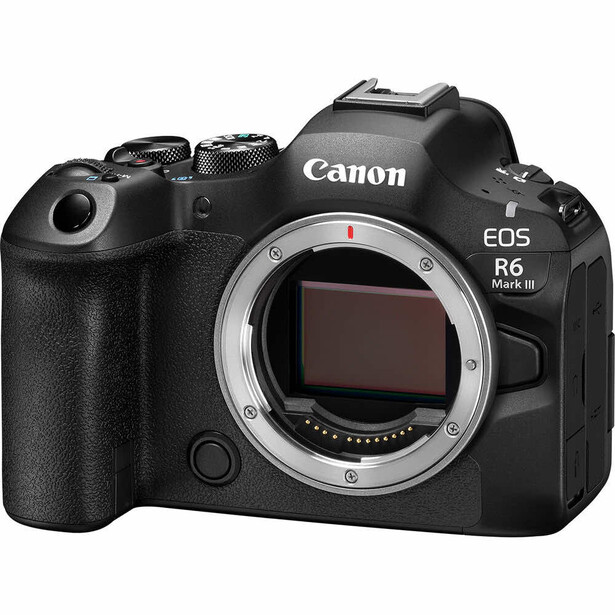
Launched in November 2025 at $2,799 for the body, the R6 Mark III is what most people will picture when they think of the modern R6: a stills-first hybrid that does nearly everything an enthusiast or working pro needs and sits well below the $4,299 Canon EOS R5 Mark II. The headline change is a new 32.5-megapixel full frame sensor, a substantial jump in resolution from the 24-megapixel design that defined the line, and notably the same sensor Canon uses in its cinema-focused Cinema EOS C50. More pixels mean more room to crop, which matters for wildlife and any work where you cannot get close enough.
Key Specs
- 32.5-megapixel full frame CMOS sensor, shared with the Cinema EOS C50
- Up to 40 fps electronic shutter, 12 fps mechanical, with a 20-frame pre-continuous buffer
- ISO 100 to 64,000, expandable to 50 and 102,400
- 7K RAW Light up to 60p, 7K 30p open gate, and 4K up to 120p, in C-Log 2 and C-Log 3
- Up to 8.5 stops of in-body image stabilization at the center, 7.5 at the periphery, with compatible lenses
- 3.69-million-dot, 0.76x OLED electronic viewfinder and a true mechanical shutter
- One CFexpress Type B slot plus one UHS-II SD slot
- LP-E6P battery and a full-size HDMI port
- $2,799 body only; kits around $3,150 and $4,050; a stop-motion firmware variant for $100 more
Crucially for stills shooters, the Mark III retains the electronic viewfinder and the mechanical shutter, the two things that make a camera feel like a photographer's tool rather than a video box. Its video is genuinely capable in its own right, and the storage and battery upgrades over the Mark II matter for demanding work. Kits are available with the RF 24-105mm f/4-7.1 IS STM and the RF 24-105mm f/4 L IS USM, and the stop-motion variant works with professional software like Dragonframe.
This is the camera for the photographer who wants one body to handle everything and does not want to think about its limits for years. If you shoot a mix of portraits, events, wildlife, and the occasional video project, and you want the newest sensor with a viewfinder and a mechanical shutter, the Mark III is the natural choice. You are paying roughly $800 more than the Mark II for more resolution, faster storage, better video, and the latest processing. If that range of work sounds like you, the Fstoppers The Well-Rounded Photographer: 8 Instructors Teach 8 Genres of Photography tutorial is built around exactly the kind of versatility this camera is made for.
Canon EOS R6 V: The Video Specialist
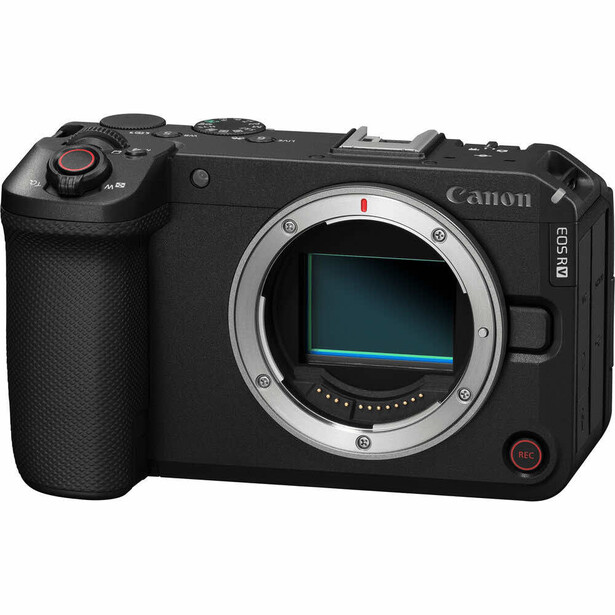
The EOS R6 V is the surprise, and the one most likely to confuse shoppers, because it looks like an R6 but is built around a completely different priority. It is the newest member of Canon's V-series, a line aimed squarely at video creators, and it is based on the R6 Mark III while making choices no stills photographer would make. At $2,499 for the body, or $3,699 bundled with the new RF 20-50mm f/4 L IS USM PZ power-zoom lens, it slots in below the $3,899 Cinema EOS C50 as the choice for serious video shooters who do not need a dedicated cinema camera.
Key Specs
- 32.5-megapixel full frame CMOS sensor, shared with the Mark III
- Up to 40 fps electronic shutter for stills
- No electronic viewfinder and no mechanical shutter
- 7K RAW Light up to 60p, 7K 30p open gate, and a Slow and Fast motion mode
- Active cooling for sustained, long-form recording
- Exposure aids including zebras, a waveform monitor, and false color
- Video-first hardware: a front record button, a power-zoom lever, a tally lamp, a vertical tripod mount, a vertical user interface, and a full-size HDMI port
- In-body image stabilization and weather-sealing
- $2,499 body only, or $3,699 with the RF 20-50mm f/4 L IS USM PZ
It shares the 32.5-megapixel sensor and shoots stills at up to 40 frames per second, so it is not incapable as a stills camera. But the defining traits are what it leaves out and what it adds. There is no viewfinder and no mechanical shutter, two omissions that would be dealbreakers for many photographers and are simply irrelevant to a video shooter working off a screen or a gimbal. The R6 V shares much of the Mark III's video capability, so what actually sets it apart is the body itself: active cooling for sustained recording that the Mark III cannot match, plus the video-first controls listed above.
This is the camera for the creator who shoots video first and stills second. If you want full frame 7K, open gate, active cooling, stabilization, and weather-sealing in one portable, gimbal-friendly body, and you do not need a viewfinder or a mechanical shutter, the R6 V is the only one of the three that makes sense. For a stills photographer, those missing pieces make it the wrong tool no matter how good the video specs look. If you are a photographer moving into video with any of these bodies, the Fstoppers Introduction to Video: A Photographer's Guide to Filmmaking tutorial covers the fundamentals of making the jump.
So Which One Should You Buy?
The decision really does come down to a single honest question about how you shoot.
Buy the Canon EOS R6 Mark II if you want the best value and proven performance, shoot a lot of action or low light, and are happy with 24 megapixels. It is the most camera for the least money, and for many photographers it is all the camera they will ever need.
Buy the Canon EOS R6 Mark III if you want the current photographer's flagship, the newest 32.5-megapixel sensor, the extra cropping room, faster CFexpress storage, and the reassurance of a viewfinder and mechanical shutter in a do-everything hybrid. It is the safe long-term choice if stills come first and you want room to grow.
Buy the Canon EOS R6 V if you are primarily a video creator who wants 7K, open gate, active cooling, and a video-first body designed for handheld and gimbal work, and you do not need a viewfinder or mechanical shutter. It is a specialist, and for the right shooter it is exactly the specialist they have been waiting for.
The name on all three may be the same, but these are not really competing products. They are Canon's answer to three different photographers, and the only mistake is buying the one built for someone else.



Join the Fstoppers community for free
-
Post comments and join in the discussions
-
Browse the site ad-free
-
Share your work and get featured in the community
-
Compete in the photo contests for fun and prizes
No comments yet