Rain in the forecast for the first time in months, dark clouds gathering to the north, and a family lunch that can't be moved. That collision between perfect conditions and almost no time is the reality most people shooting landscapes live with, and it shapes every decision made across one very short morning.
Adrian Vila sets out before dawn with a raincoat, a car full of gear, and no plan beyond a single destination he'd spotted weeks earlier. That destination is a striking old pharmacy he passed on an earlier trip when the light was flat. This time the light cooperates, he gets the frame he wanted, and he's already planning a winter return to catch it at night with the green cross glowing. Having one reliable spot to anchor the start of a day is a habit worth copying, because it removes the paralysis of an empty schedule. From there, the morning becomes pure improvisation.
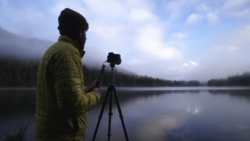
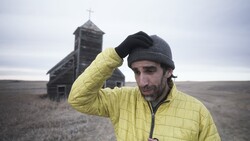
The drive north turns into the real shoot. He chases a promising bank of dark cloud into higher, foggier ground, an area roughly two hours from home that he returns to often because the weather there stays interesting all year. Even after countless visits he keeps stumbling onto new subjects: a church wedged beside a freeway, an abandoned house next to one of the ugliest buildings he's ever seen, a eucalyptus forest sitting eerie in the mist. The lesson underneath all of it is that a starting point matters less than the willingness to keep driving and keep looking, since the best frames rarely appear where you planned them.
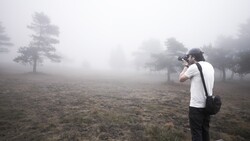
Fog is doing the heavy lifting here, and understanding why explains a lot of what makes these images work. Mist compresses depth, hides distractions, and separates a single subject from its background without any editing tricks, which is exactly what happens when he isolates a lone tree against a windmill or waits for a white horse to step clear of the herd. This kind of atmospheric shooting has grown more popular as more people move away from chasing dramatic sunrises and toward softer, moodier conditions that hold up in any season. Fog also rewards patience over timing. You don't need a narrow window of golden light; you need to be present while the scene rearranges itself, which is why he treats a cleared-up sky as bad news and a returning cloud bank as a gift. If you've been getting up only for sunrise, foggy mornings offer a far more forgiving and repeatable way to shoot.
There's a quieter thread running through the video about accepting the shot you can actually get. He talks about the total solar eclipse that crossed his home region of Galicia, an event he chose to watch with his family rather than photograph, knowing some people who traveled for the perfect composition missed it entirely to clouds. That same acceptance shows up in the small moments: negotiating with a herd of horses, waiting for a cow to wander back into place, nicking his finger on a fence and checking the date of his last tetanus shot before carrying on. It's an honest picture of what solo shooting really involves when the clock is against you.
Watch the video above to see which frames survived the morning and how he timed the windmill blades around that final tree.
Join the Fstoppers community for free
-
Post comments and join in the discussions
-
Browse the site ad-free
-
Share your work and get featured in the community
-
Compete in the photo contests for fun and prizes
No comments yet