
It’s been over a year since we reviewed the AGO Film Processor from Vintage Visual. Is this mobile film processor still a good buy in 2026? I’ll show you the good, the bad, and even the ugly about the AGO.
Oh, how time flies when you’re having fun. Since the autumn of 2024, I’d estimate I’ve processed no less than 264 frames across 135 (35 mm), medium format, and 4x5 sheet film. That’s not to mention the random experiments with various papers and other historical process oddities.
I still love the AGO processor as much as I did when I first used it, and indeed this long-term review could be considered a love story, but like all great love stories, there has to be a bit of tragedy mixed amongst the romance.
Basics of the AGO Film Processor
For those already familiar with the AGO Film Processor from my first review, feel free to jump down to the next section. If this is your first time hearing about the AGO, keep reading for a bit of background.
The AGO is a small-footprint film and paper processor designed to be used in conjunction with Paterson Super System developing tanks.
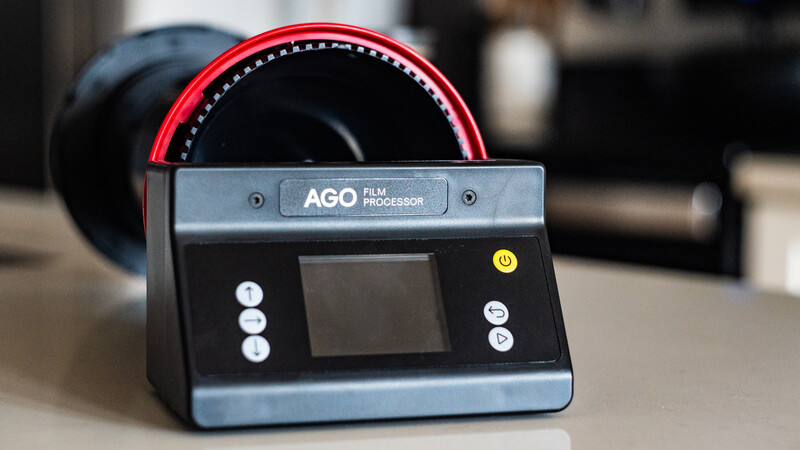
Loaded with multiple developing presets for color and black-and-white film chemistry as well as RA-4 color paper, the AGO automatically agitates and adjusts development times based on temperature to achieve easy, consistent developing.
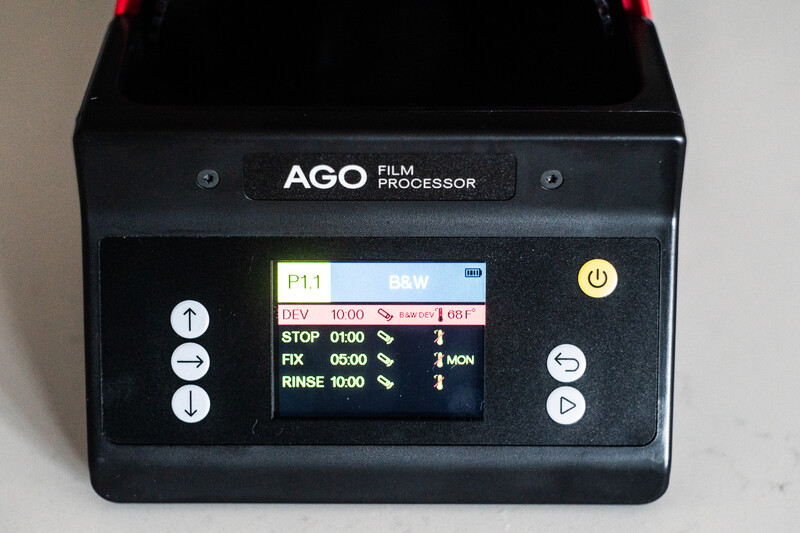
Mobility and ease of use are the features at the heart of the AGO.
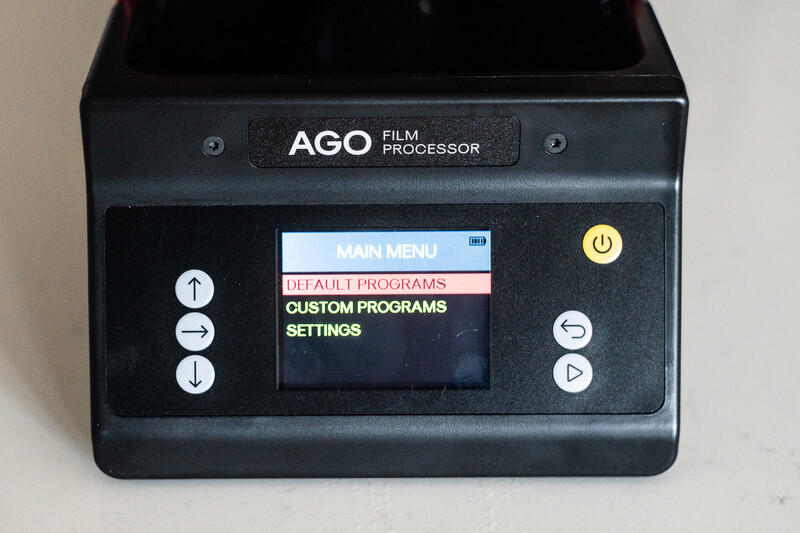
The unit is rechargeable via a USB-C charging port and features Wi-Fi connectivity for firmware updates and creating or modifying custom development programs through its browser-based interface. I fell in love with the AGO in my last review, finding only a few points that I felt could be refined and/or improved.
And wouldn’t you know it, apparently Vintage Visual actually listened to the feedback from their customers.
Improvements From Previous Models
My two main gripes (nitpicks, really) with the previous iteration (2024 model) of the AGO Film Processor were as follows:
- Splashing of chemistry while pouring into the processor
- No cover for the USB-C port
The Splash Problem
The biggest issue I encountered, especially when I first began using the AGO, was the constant splashing while pouring in my chemistry. Granted, the more I got to know the processor, the less often these spillages occurred.
Pouring your chems into the processor requires a slow and steady hand, or, alternatively, you can stand the tank upright with the processor attached to avoid this problem altogether.
To combat this problem, Vintage Visual introduced an optional AGO Quick Pour Funnel, which attaches directly to the mouth of the AGO (technically the Paterson tank).
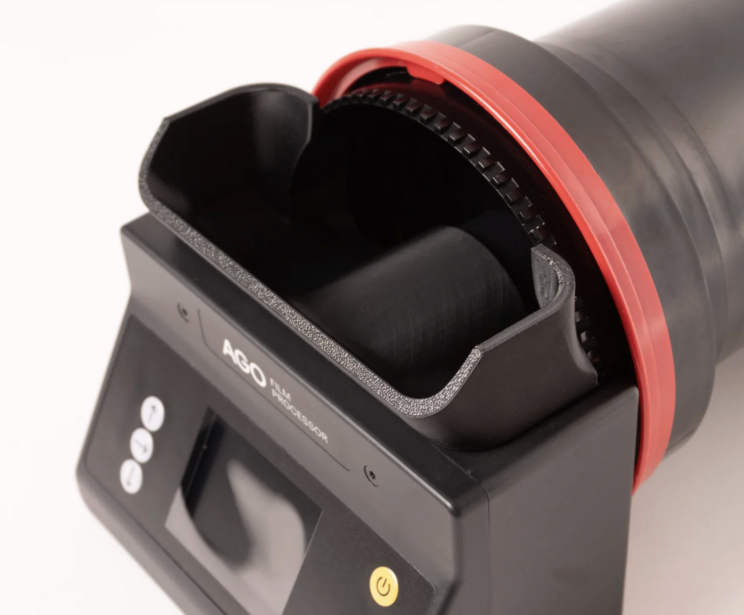
This funnel works beautifully. While using the funnel, my spills were quite literally eliminated.
Yes, I can already hear you. “Why do I have to buy an accessory?” It’s a valid point.
I do wish the pouring trough on the AGO was designed just a little bit deeper. However, to accomplish this would likely require a complete overhaul of the processor.
For me, the Quick Pour Funnel is a reasonably priced compromise at $23 (2026). Careful pouring or simply tilting the tank achieves the same result.
USB-C Port Cover
Developing film and paper with the AGO inherently requires the collision of two highly incompatible entities: electricity and liquids.
On a good day, with the correct precautions, this is a non-issue. However, accidents can and do happen.
I was quite surprised to see the charging/data port on the original AGO processor was completely unsealed. I’ll admit I was a bit apprehensive to operate a piece of equipment meant to be quite literally constantly used with water and other liquids.
The rinse stage made me particularly nervous, as the AGO is intended to remain attached to the Paterson tank while washing.
So, being my usual paranoid self, I purchased a set of incredibly cheap USB-C port covers off Amazon to give me peace of mind.
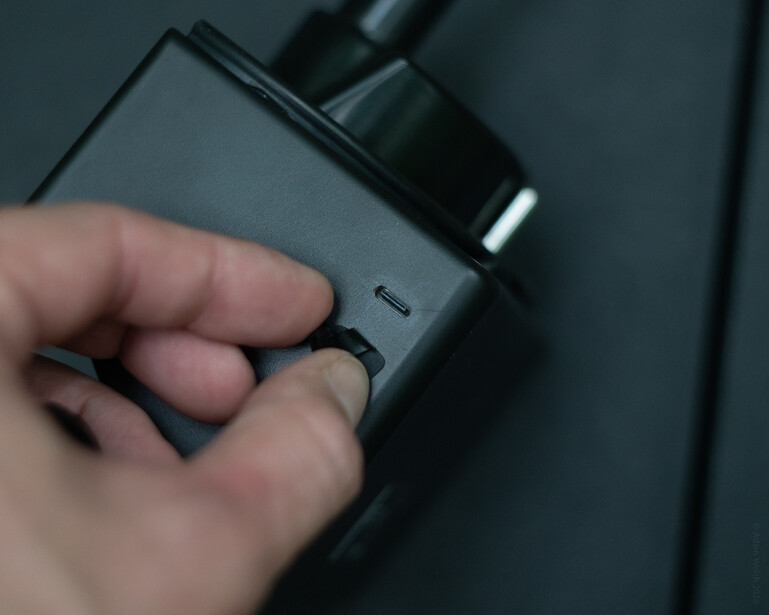
I was thrilled to see Vintage Visual also addressed this concern by including their own port plug with the 2025 model of the AGO…which I immediately lost (I found it).
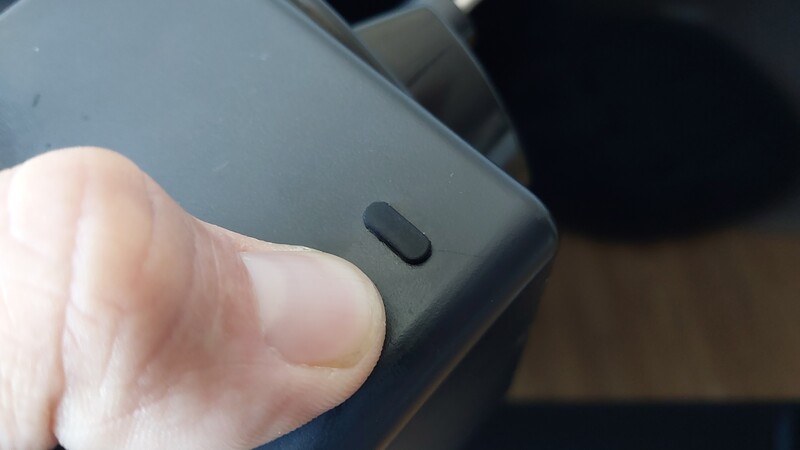
While I think it’s great the uncovered port issue was remedied, I still prefer my Amazon plugs, as they are attachable to the processor itself. This is a point I feel can still benefit from further refinements on the part of Vintage Visual.
A Slight Catastrophe
You may have noticed I keep referring to new and old models of the AGO Film Processor.
“Isn’t this supposed to be a long-term review of the AGO? Why are you talking about two different models?”
Well, this is where things get a bit awkward and where your decision to purchase the AGO Film Processor will likely be decided.
Seal Failure
There’s no way around it: the internal seals failed in the AGO. Somewhere deep within the machine, a leak developed.
Fluid (developer/fixer/water) crept into the electronic soul of the processor. This led to a literal fluid level being visible in the LCD.
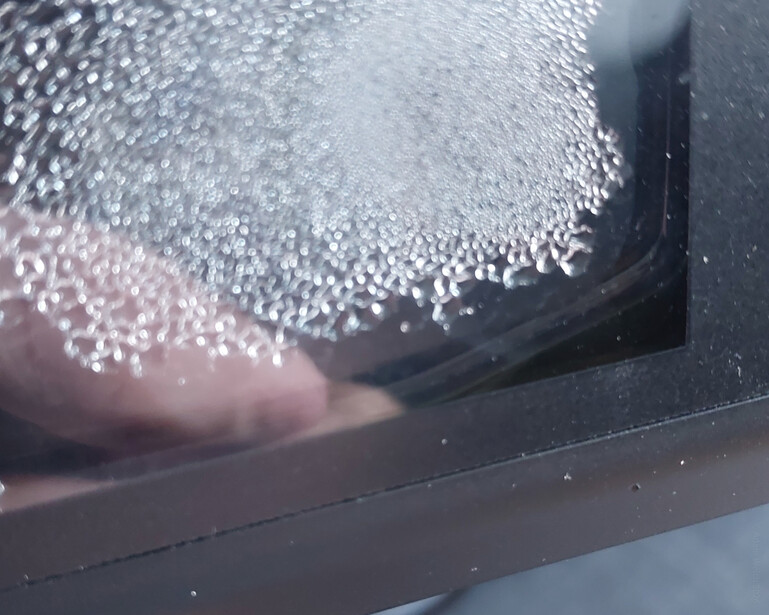
Obviously, this was a major problem, and I immediately brought it to the attention of Vintage Visual, who responded promptly regarding the issue.
Vintage Visual told me this was a sporadic yet not unknown failure. Since the unit was still under warranty, a replacement was dispatched to me along with a return shipping label for the faulty unit.
Some Good News
I used the replacement AGO processor regularly for roughly one month with zero issues. Then, in the hope of replicating the seal failure, I just put it away in my cabinet for about two months.
I didn’t touch it; I didn’t develop anything with it; I just let it rest.
I’m happy to report that after running through a roll of medium format Ilford FP4, the updated AGO seals appear to be holding strong.
Granted, I have no idea what caused the seal failure on the previous model of my AGO processor and, to that end, it’s impossible to predict the overall longevity of the unit. I suppose that could be said for any piece of photographic equipment.
Aside from this admittedly unscientific testing, I have no other way of evaluating this updated model of the processor for longevity.
Quite literally, time will tell.
Is the AGO Film Processor Still a Good Option?
That’s the $529 question: is the AGO Film Processor worth the price? As of this writing in 2026, B&H lists the AGO Film Processor with tank for $529.
My short answer is yes…yes within a certain environment and with your eyes wide open, just as it was in my initial review of the AGO.
The leaking seals of the old unit still make me nervous. However, I can ask nothing more from a company than to stand behind the products they sell, and Vintage Visual has certainly excelled in that area.
The faulty unit was promptly replaced under warranty, and I urge anyone who experiences the same issues as I did to immediately reach out to the support team.
Aside from the seal problem, the updated firmware and additional accessories make the AGO very appealing if you’re looking to invest in a “go anywhere” automatic film and paper developer.
Not to mention there are some very interesting cinematic film and large format printing tools that Vintage Visual has recently announced. One of which, the REEL Paper 8, is about to be featured in an upcoming review here on Fstoppers.
If you process a large amount of RA-4 color paper or shoot black-and-white or color film in bulk, especially E-6 or ECN-2, the AGO does remove many of the headaches from those processes. It provides consistent and convenient results virtually every time.
The flip side of the happy little coin is that, for those who shoot only a couple of rolls here and there, the price tag of the AGO processor could prove cost-prohibitive.
Whether or not the AGO is worth it for you is, of course, your call to make.
For me, as someone who lives and breathes film (for better or worse) and constantly finds themselves shooting off-grid with limited space and chemistry, the AGO is a fantastic tool.
I will continue using the AGO Film Processor for most of my development needs until I encounter a reason not to, and if that day ever comes, I’ll be sure to share it with you good folks.
See you in another year.



Join the Fstoppers community for free
-
Post comments and join in the discussions
-
Browse the site ad-free
-
Share your work and get featured in the community
-
Compete in the photo contests for fun and prizes
4 Comments
I've dove into photography at the beginning of 2025 which then also led me to be interested in digitizing old 8mm film reels. Along with many of these lots comes with old unprocessed 35mm photo and even 8mm movie film. With your experience, would you recommend a machine like this to develop these old films, some being 50 or more years old? I'd practice with fresh film for a while to get comfortable with the process before attempting to develop the antique film. Also, knowing some of the chemistry is different for the various brands and types of film is going to be fun.
I'm sorry to say...but it all depends. Is this film stock black and white? If so, generally speaking, most aged film of that vintage benefits from either stand or partial stand development with low dilution developer. There are of course many other nuances to that which might be too much info right now. To answer your question, this likely wouldn't be something overly beneficial to use expressly for processing old film. And just an FYI which you might already know, you'll need to (rather massively) over expose your vintage film due to the age. One-stop over exposed for every decade past expiration is generally an accepted guideline.
This is great insight and while it may seem trivial for those in the know, it's this perspective and expertise which make this hobby a joy. Thank you!
You're most welcome. If I can offer any more help feel free to post.