Two hours of loading sheet film at camp after a long day in the field can make large format feel like a job. How you handle the dull, repetitive parts of photography shapes how much you enjoy the rest of it, and often how the pictures turn out.
Ben Horne argues that the process deserves as much attention as the finished photograph, and sometimes more. His first example is loading large format film, where there are plenty of ways to fail. You can load a sheet upside down, mix an exposed sheet with an unexposed one, or flip a dark slide to signal a loaded holder that's actually empty, then find out in the field that nothing was there. Early on, Horne had to concentrate hard every time he loaded holders, and his mind still drifted and lost track of where he was. He now runs a set of checks, including writing the remaining sheet count on each film box so the math adds up the next time he loads. With the system doing the accounting, he can let his thoughts wander, and a task he once dreaded has become close to meditative.
He's also changed when he does it. Instead of loading at camp when he's exhausted and wants to sleep, he often loads midday, which forces him to stop, sit still, and take in his surroundings. Usually that means a roadside pullout with traffic going by, so the setting is far from idyllic. Horne applies the same thinking to cycling, where cleaning the chain and refreshing the tire sealant can seem like the chores standing between you and the ride. He enjoys that maintenance, and knowing the bike is in good shape gives him peace of mind once he's out on the road. In his view, the upkeep and the riding go together as one activity, and someone who resents the first half may struggle to love the second.
Airline pilots and surgical teams rely on written checklists for the same reason Horne does: memory gets unreliable when you're tired or distracted, and a fixed routine catches errors before they cost you. Atul Gawande's 2009 book "The Checklist Manifesto" describes how a 19-item surgical checklist tested by the World Health Organization in eight hospitals around the world cut both complications and deaths. Your stakes are lower, but the mechanism is identical. If you shoot digital, the common failures are a card that never got formatted, a battery left on the charger, or a camera still set to a high ISO from last night's concert. A short routine you run the same way every time handles those, and once it's habit, your attention goes to the light and the composition. Packing your bag in the same order, keeping a pre-shoot list on your phone, and resetting the camera to your default settings before putting it away each take a few minutes to set up. Film shooters can borrow Horne's box-labeling trick directly, and anyone who travels with a lot of gear can adapt it to batteries and cards.
The delay between shooting and seeing results is another part of his process. Horne's film goes to a lab about 40 minutes from home, and he usually picks it up around a week later. During that week, he edits the video from the trip without knowing how any of the photographs came out, so he relives the trip through the video camera's view instead of his own. By the time he scans the sheets, his memory of each scene has faded a little. That leaves him judging the photo on what's actually in the frame, without comparing it to what he hoped to capture while standing there, and he finds he's more satisfied with his work as a result. He then edits all the keepers from a trip together, with each image open as its own tab in Photoshop. He makes a small fix to whatever bugs him first about one photo, then jumps to the next, so each edit happens in comparison to the image he just looked at.
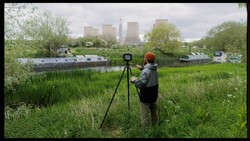
The rest of Horne's routine, including how his photos keep shifting as they move from the screen toward print, is laid out in the video above.


Join the Fstoppers community for free
-
Post comments and join in the discussions
-
Browse the site ad-free
-
Share your work and get featured in the community
-
Compete in the photo contests for fun and prizes
1 Comment
Why would anyone go through the time and expense of film photography to then digitize those images and edit them in Photoshop? He uses the images in a video. He also makes a print portfolio but never discusses the process for that. I could inderstand shooting film if he were to focus primarily on making his own prints in a darkroom, but there's no indication that he goes that route. So why shoot film if the editing and printing process is digital?