
If you're trying to choose between the original Pentax 645 and the Mamiya M645 1000S, you're not really asking about features. You're asking which one will make your portraits and landscapes look the way you want.
I shot both systems with my favorite focal lengths — Pentax 45mm and 55mm, Mamiya 75mm and 150mm — and what surprised me wasn't sharpness. It was behavior. One camera encouraged speed and familiarity. The other made me simplify and commit.
This comparison happened the way most real comparisons do: I bought one system first, learned the hard way, then found myself making my favorite images with the other. The original Pentax 645 was my first medium format camera. It gave me good photos and plenty of frustration. The Mamiya M645 1000S felt slower and simpler on paper, but it kept handing me landscapes that looked like I actually meant to make them.
And that's the real question: which camera makes you shoot like yourself?
Two 645 Workhorses, Two Very Different Kinds of Confidence
Let's set the stage. Both cameras shoot 6×4.5. Both are SLRs. Both have deep lens ecosystems. Both are "affordable" by medium format standards, which is like saying a pickup truck is affordable compared to a bulldozer. You still feel it in your wallet, and even more when you start building a real kit.
The original Pentax 645 is the camera you buy when you want medium format to behave like a big 35mm SLR. It has a comfortable grip, a modern-ish layout for its era, and a built-in meter that encourages you to keep moving. It's a working photographer's idea of medium format: take the larger negative, but don't make me fight the camera.
The Mamiya M645 1000S is the other philosophy. It's a mostly mechanical brick that expects you to be present. It's modular. It's plainspoken. It's the camera equivalent of a handshake that tells you, "No tricks. No surprises. Just do the work." When people call it a tank, they don't mean it feels luxurious. They mean it feels honest.
So why did I end up favoring the Mamiya?
Because the Mamiya kept delivering the kind of landscapes I love, and the Pentax — despite being a very capable camera — was forever tied to my first medium format learning pains.
Price Reality: What $850 Actually Buys
With $850, you can build a real starter kit — not just a body and a prayer. The Pentax 645 is usually the more affordable buy, which makes it the easiest on-ramp into 645. The Mamiya M645 1000S tends to cost a bit more, especially once you chase the lenses people actually want, but it's a system that pays you back long-term.
- Pentax path: body + 45mm + portrait lens if you shop smart
- Mamiya path: body + 75mm now, then add the 150mm when you can (or hunt for a deal)
The Learning Pains Are Real, and They Don’t Mean the Camera Is Bad
I'm not going to pretend my Pentax 645 results were weak. They weren't. The portraits have presence. The 45mm landscapes have depth. The negatives have that medium format clarity that makes you stare a little longer.
But I was learning the format at the same time I was learning the camera. That's a double tax.
Medium format punishes two things immediately: sloppy edges and sloppy exposure. Especially highlights. Especially the skies. You can get away with casual framing on 35mm because the frame is smaller, the negative is smaller, and your brain fills in the gaps. On 645, the gaps show up in the scan like an accusation. Anything messy at the edge becomes a distraction. Any blown sky turns into a blank billboard.
If you want a simple way to say it: medium format doesn't make you a better photographer. It makes your habits louder.
That's why the Pentax phase matters in this article. It taught me discipline. It taught me to check edges before I fire. It taught me to meter with intention instead of hope. And it taught me that a "nice" image is not always the same as an intentional one.
Pentax 645 and 45mm: Landscapes That Feel Big, If You Stay Disciplined

"The Bluffs of Bakersfield" Photo by Steven Van Worth. Taken with the Pentax 645 and 45mm lens.
The Pentax 45mm is a great landscape lens. It gives you enough width to build layers — foreground texture, midground shape, sky drama — without turning everything into wide angle chaos. When it hits, it hits. You get that medium format separation between planes that makes a landscape feel like you could step into it.
But the 45mm also demands that you police the edges. Wide-ish lenses love to include everything, and "everything" often includes junk: a stray branch, a bright wedge of hillside, a line that pulls your eye out of frame. That's not the lens's fault. It's the cost of going wide. You have to compose like you're editing.
The other thing the Pentax taught me here is highlight management. Bright skies are where beginners lose. I'm not saying I'm above it. I'm saying the Pentax negatives reminded me, repeatedly, that the sky doesn't care about my feelings. Expose for the highlights, then decide what you want the shadows to do.
Pentax 645 Portraits With the 55mm: Honest, Direct, and Emotion-Forward
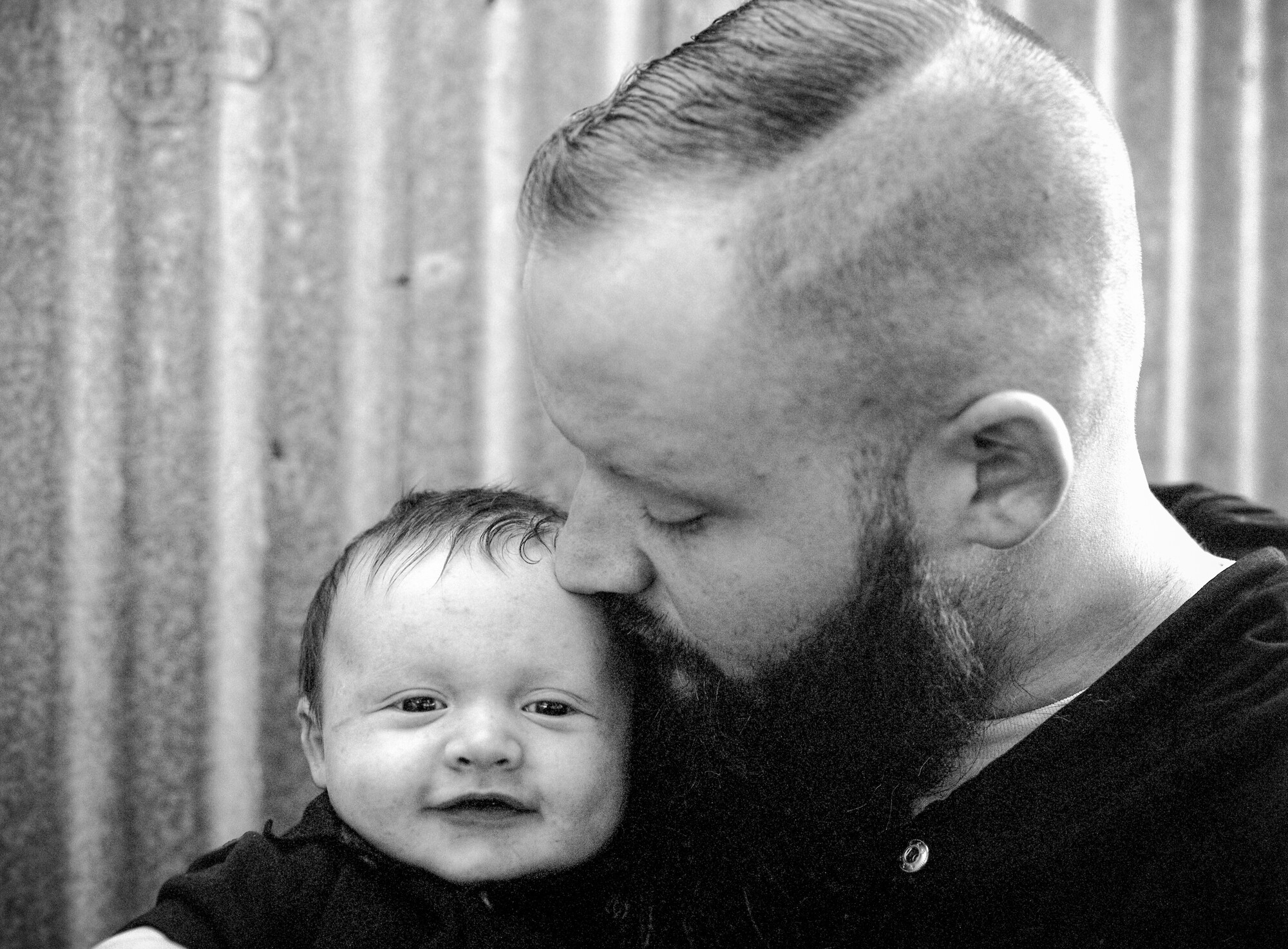
"Father and Son" Photo by Steven Van Worth. Shot with the Pentax 645 and 55mm lens on Acros 100 film.
The Pentax 645 55mm portraits are proof that the camera was never the problem. The 55mm gives you a natural portrait perspective on 645: close enough to be intimate, far enough to avoid weird geometry. It's an honest focal length. It doesn't flatter by cheating. It flatters by being calm.
The best thing about the Pentax portrait set is that the moments feel real. The dad-and-baby frame is a reminder that medium format portraits don't need studio lighting to feel special. They need presence. They need expression. They need you to slow down just enough to catch the thing that matters.
If I'm going to criticize anything, it's the same beginner medium format problem: compositions that are almost perfect but not fully committed. A hair too tight on one edge. A highlight that could be half a stop calmer. Those are small issues, but medium format makes small issues feel bigger because everything else looks so good.
The Fox Theater Frame: When Medium Format Turns 'Interesting' Into 'Graphic'The Fox Theater Frame: When Medium Format Turns 'Interesting' Into 'Graphic'
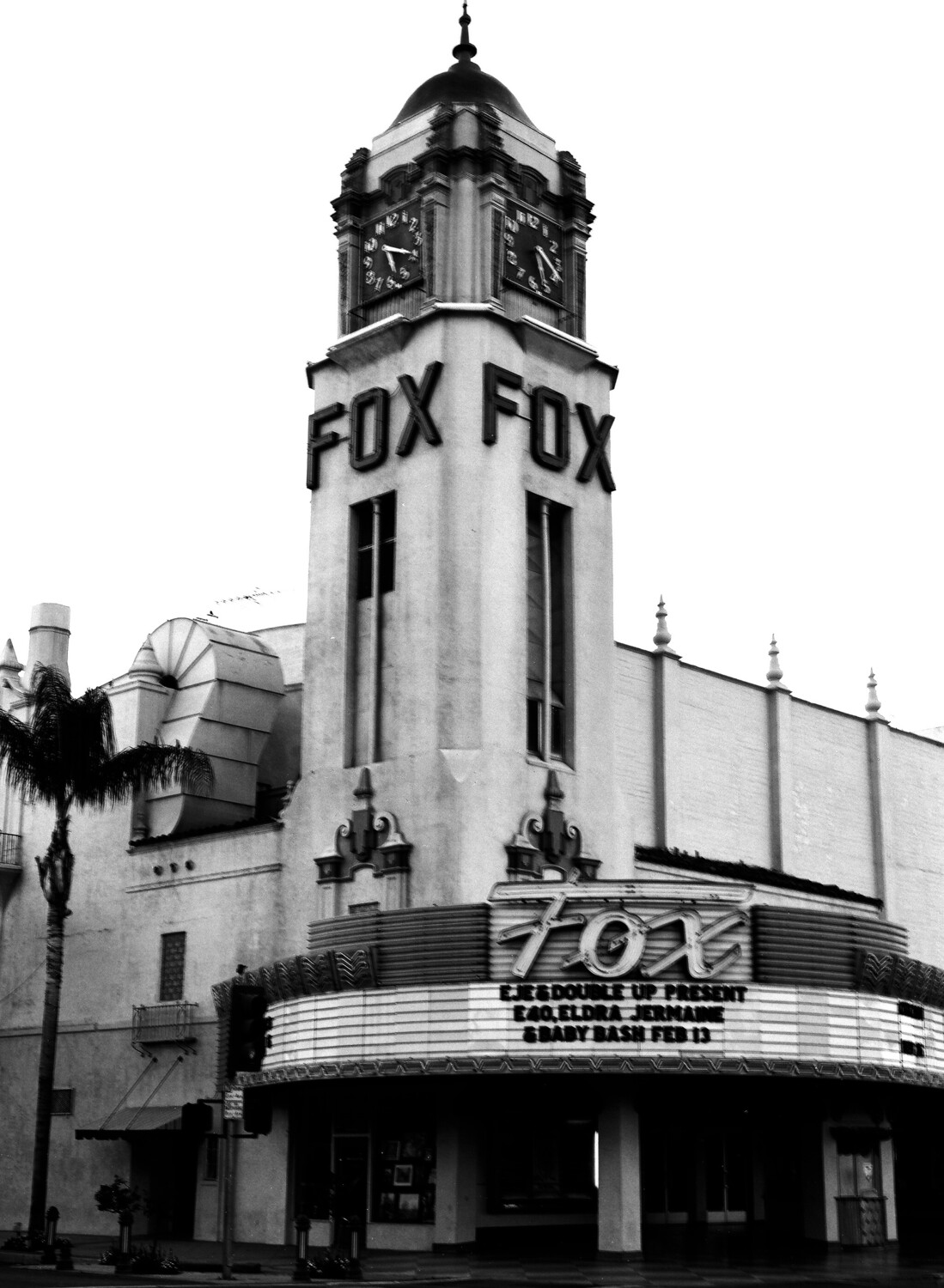
"Fox Theatre" in Bakersfield. Photo by Steven Van Worth. Shot with the Pentax 645 and 55mm lens on Ilford Delta 100 film.
This is the kind of photo that makes 645 addictive. Architecture and signage love bigger negatives because they're all about line, shape, and texture. The Pentax handles this kind of subject really well: you can treat it like a big 35mm SLR and work fast, which matters when you're shooting in town, in changing light, with cars and people moving around you.
If you want a clean "Pentax is a workhorse" example for the article, this is it.
So why didn't the Pentax win me over completely?
Because then I picked up the Mamiya and started shooting landscapes with the 75mm, and something clicked that wasn't about convenience.
Mamiya m645 1000s and 75mm: Landscapes by Subtraction
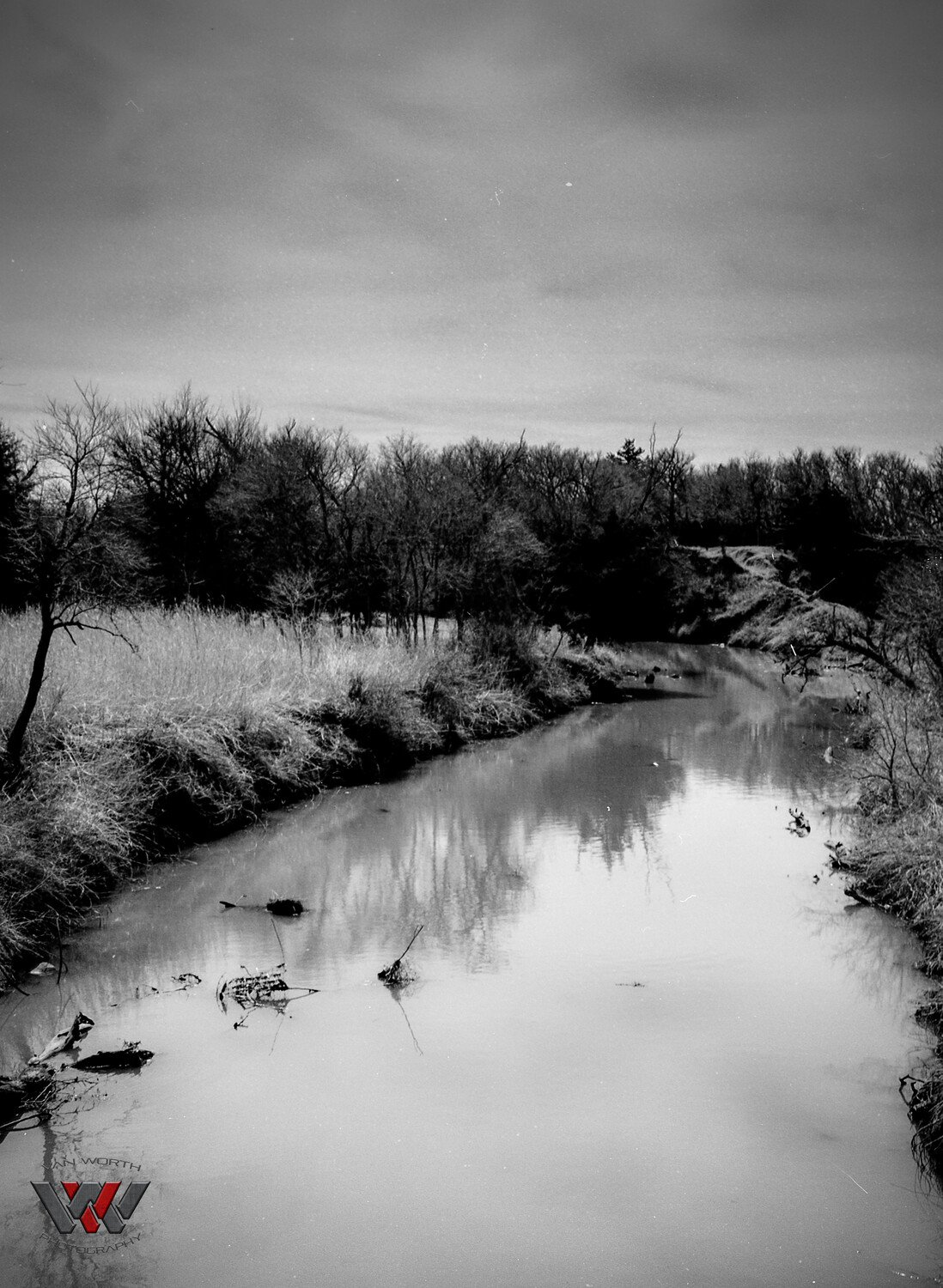
"Western Oklahoma Creek" in Thomas, OK. Photo by Steven Van Worth. Shot with the Mamiya 645 and 75mm lens on Ilford FP4+ film.
This is the frame that tells the truth: my favorite landscapes weren't about going wider. They were about simplifying.
The Mamiya M645 1000S 75mm on 645 sits in a sweet spot for landscapes. It's not a long telephoto that forces you to shoot only distant peaks. It's a "normal-plus" lens that edits. It trims the chaos. It turns a location into a composition. It makes you choose one idea.
That's what the creek series did for me. The water becomes a line. The banks become boundaries. The texture becomes the supporting cast instead of the star. You're not photographing "a nice place." You're photographing shape and movement, and tone.
And that's why the Mamiya started to feel like home. It wasn't that the negatives were magically better. It was that the lens-and-camera combination matched my instincts. I like landscapes that feel designed, not just documented. I like frames that make the world quieter than it actually was.
Consistency Matters More Than a Lucky Negative
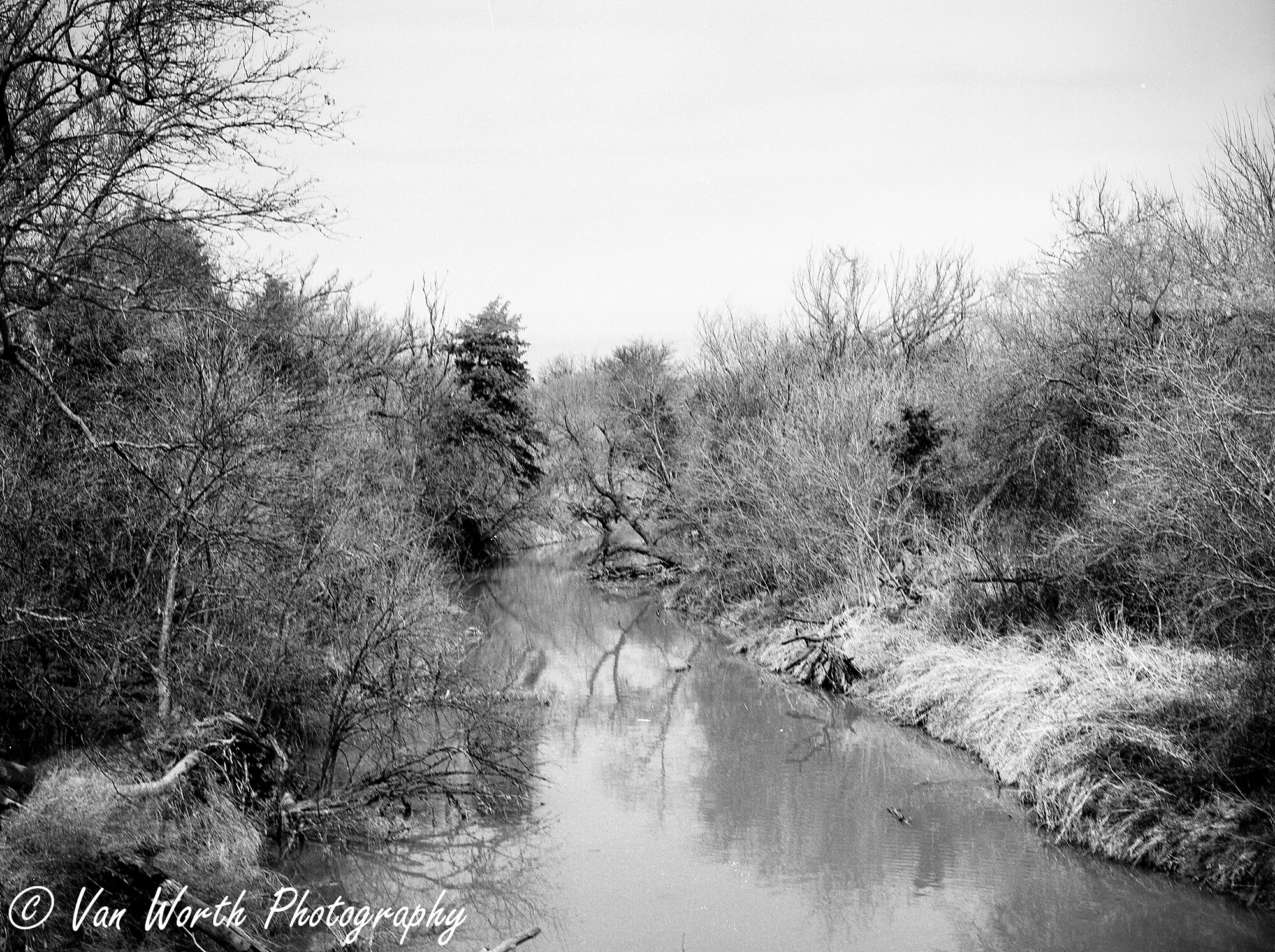
Photo by Steven Van Worth. Shot with the Mamiya 645 and 75mm lens on Ilford FP4+ film.
Anybody can get one lucky frame. The question is whether you can make a series.
The Mamiya creek set feels cohesive. The tonality holds together. The perspective is consistent. The scenes feel like they belong to the same day, the same eye, the same intention. That matters, especially when you're writing about systems instead of single images. A system is a tool you return to. It has to reward you repeatedly.
If you want an honest criticism of the Mamiya set, it's still the sky. B&W landscapes with bright skies are always a fight. If you expose for the foreground, the sky goes white. If you expose for the sky, the foreground goes moody. The good news is that moody usually looks better. The better news is that a simple yellow or orange filter can turn the sky from blank to textured without turning the photo into a special effect.
But even with the sky doing what skies do, the compositions feel stronger. That's the real difference.
The Mamiya Portrait Ladder: 75mm to 150mm, and Why It Feels Like “Two Cameras”
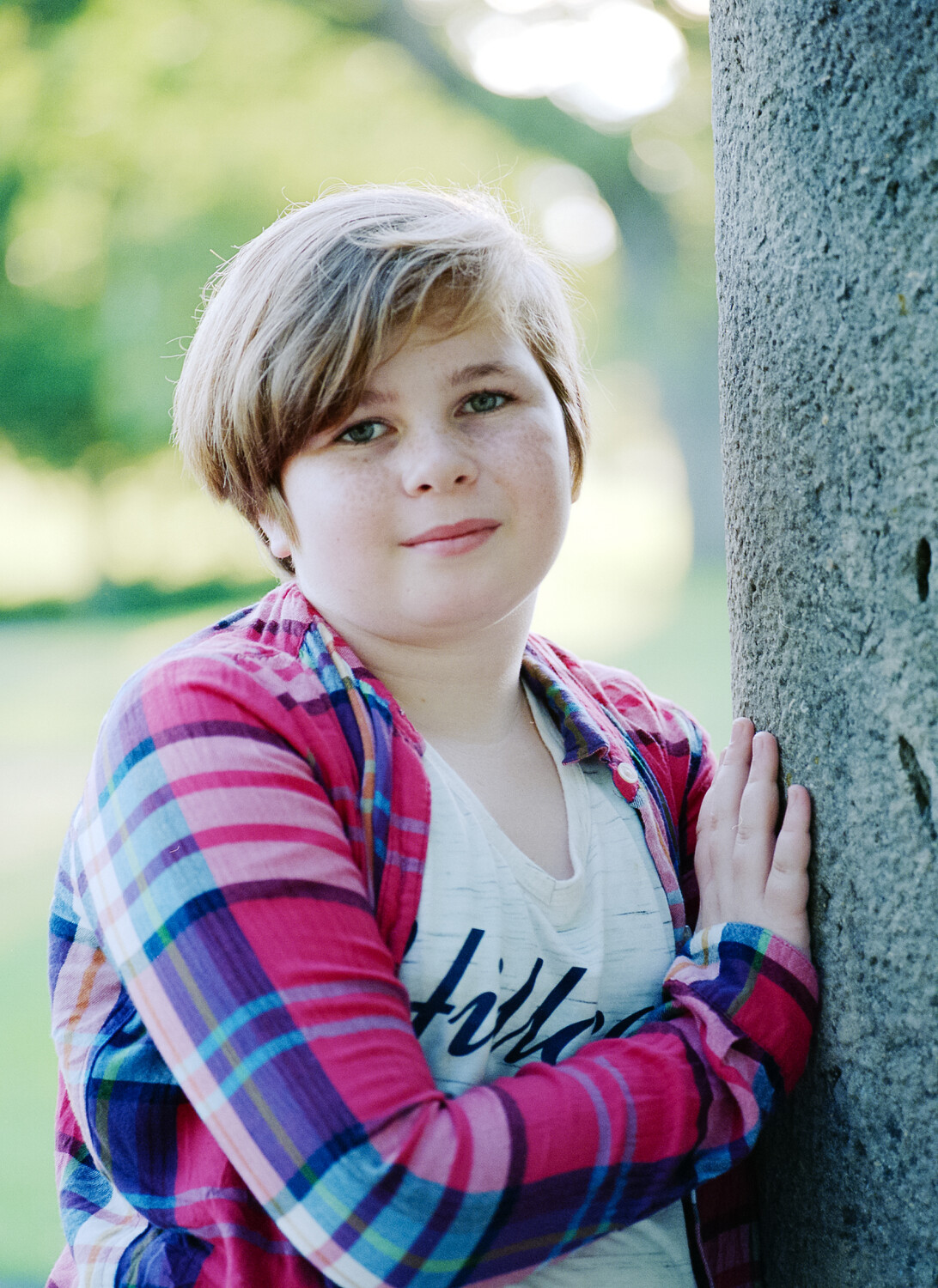
Photo by Steven Van Worth. Shot with the Mamiya 645 and 150mm lens on Kodak Portra 160 film.
The Mamiya becomes a portrait system the moment you add the 150mm.
The 75mm is your everyday portrait lens: natural perspective, clean separation, easy working distance. But the 150mm is where the system starts looking expensive, even when the kit wasn't. The 150mm doesn't just blur the background. It simplifies it. It turns messy parks and busy locations into soft-toned fields. It makes faces look calmer. It gives you that classic medium format compression that feels like editorial portraiture.
If you're a portrait shooter, the 150mm is a reason to choose the Mamiya system by itself. It's the lens that turns "nice" portraits into portraits that feel finished.
There are two practical notes here for real-world shooting. First, you need space. The 150mm makes you back up. Indoors, it can feel long fast. Second, focus discipline matters. Telephoto plus medium format equals "missed focus is expensive." When you nail it, though, you get portraits that look like you planned them.
The Waterfall Slide Frame: Range, and the Part of Film We Don’t Talk About Enough
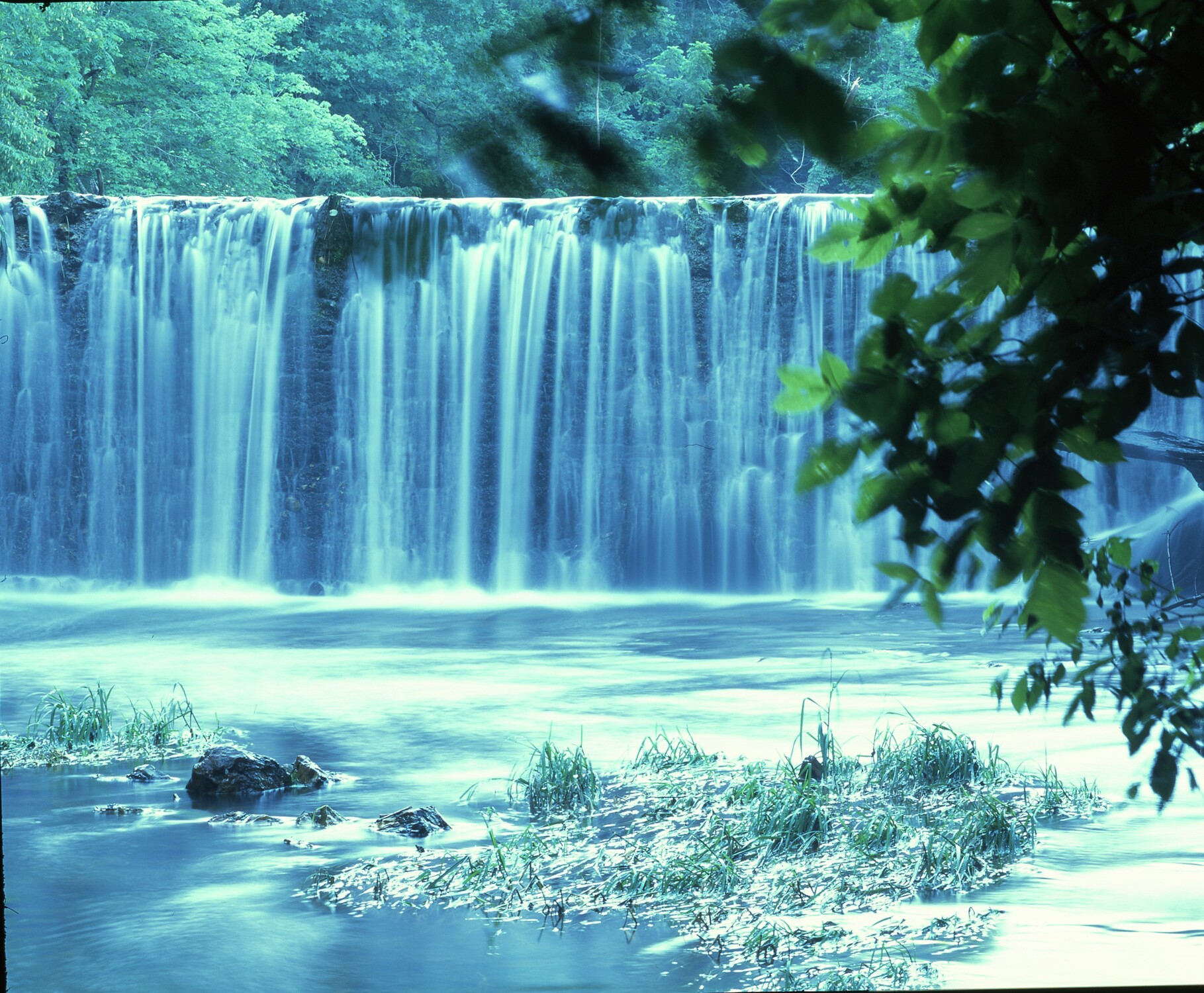
"Tiny Waterfall" at Natural Falls State Park in Oklahoma. Photo by Steven Van Worth. Shot with the Mamiya 645 and 75mm lens on Fujifilm Provia 100f film.
I'm including the waterfall because comparisons can get too serious. Sometimes you shoot film because it's fun, and because a long exposure on slide film feels like you're cheating time.
This frame also shows something practical: the Mamiya kit isn't only for one kind of work. You can shoot portraits, then turn around and make a calm landscape image with the same body. That sounds obvious, but it matters when you're choosing a system. You're not buying a camera for one photo. You're buying it for the next few years of your life.
So Which One Should You Buy?
If you want me to pretend there's a universal winner, I can do that. I can say the Pentax is more convenient, the Mamiya is more mechanical, and then we all argue in the comments about batteries.
But that's not what happened here.
The Pentax 645 is the better "on-ramp" for a lot of people. If you want medium format to feel familiar, if you want to work as you do with a 35mm SLR, if you want a camera that encourages speed, it's a great choice. And the 45mm can produce huge, layered landscapes when you treat the edges like they matter.
The Mamiya M645 1000S is the better "match" for my landscape brain. It slows me down in the right way. With the 75mm, it makes me simplify and commit. And with the 150mm, it turns into a portrait machine that rewards patience.
Here's the clean buyer's guide version.
Choose the original Pentax 645 if:
- You want medium format that handles like a big 35mm SLR.
- You shoot a mix of subjects, and you value speed and familiarity.
- You want a wide-ish landscape lens like the 45mm as a primary way of seeing.
Choose the Mamiya M645 1000S if:
- You want a mostly mechanical body with a simpler failure profile.
- You love landscapes that feel designed and edited, not just captured.
- You want the "portrait ladder" advantage: 75mm for everyday portraits, 150mm for classic compression.
My Take, After Shooting Both
The honest conclusion is that both cameras can make excellent work. The deeper conclusion is that the camera you end up loving is often the one that makes your decisions easier — not because it makes photography easy, but because it aligns with your instincts.
The Pentax taught me medium format discipline. The Mamiya rewarded it.
If you've shot either system, tell me which lens made you fall in love with it — and what you'd buy with an $850 budget today?
And if you're reading this because you're trying to pick your first 645 system, here's the advice I wish someone had tattooed on my forehead: don't judge medium format on your first roll. Your first roll is learning how loud your habits are. The second roll is you learning what the format can really do. The third roll is where you start shooting like yourself again — only with a negative that finally looks like it.
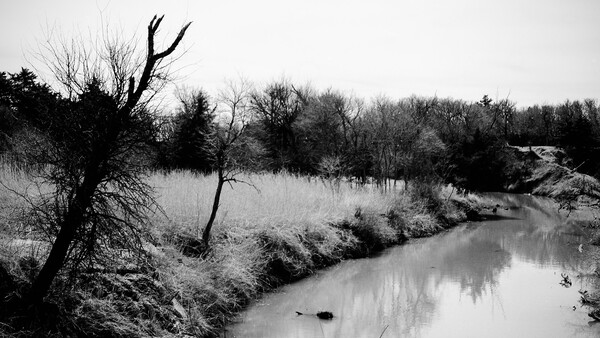
Lead image: Photo by Steven Van Worth. Shot with the Mamiya m645 1000s on Ilford FP4+ film.




Join the Fstoppers community for free
-
Post comments and join in the discussions
-
Browse the site ad-free
-
Share your work and get featured in the community
-
Compete in the photo contests for fun and prizes
6 Comments
Back in the 80s, I added a Yashicamat 124g twin lens reflex to my 35mm kit. I was impressed by the results, but frustrated by the limited lenses available. So when I joined the Smethwick Photographic Society and started getting serious about competition standard prints I swapped it for a Mamiya 645 and an increasing range of lenses. It was a lovely outfit for the time, but heavy! Then autofocus took over and I moved to Canon.
Now I've gone digital of course, and sold off my film darkroom. And I'm saving weight by using an Olympus / O M System outfit!
Back in the 1990s, I looked at 645 and went for a Pentax 67 instead. 645 was just too close to 35mm in film area, whereas 67 was MUCH bigger.
For your PENTAX 645, the lens that really rocks is the 80-160 zoom. It's heavy and long but dirt cheap these days and is quite impressive to look at. Makes a Mamiya SLR or Hasselblad seem pretty wimpy by comparison and that's kinda the whole idea...
Next, for your B&W landscape projects, you will have the easiest time with a Mamiya C-330 TLR and it's large compliment of lens pairs. This is mainly because of the need to use yellow, orange or even red filters to keep your skies from washing out, while not having to actually look through them when you compose because they're only down on the "taking" lens. Hope this helps!
Completely AI generated article. This is the last time I visited Fstoppers, made an account just to say that, goodbye
There is no 75mm lens for the Mamiya 645 1000S.
Precisely ! What is this 75mm lens of which he speaks ?!