Do you find yourself always leaning heavily on certain composition tricks that you learned as you were developing your photographic skills? Sure, they might make your more mediocre shots a little better, but casting off these creative crutches can be the first step towards making great photographs.
Being inspired by the work of other photographers and striving to emulate it in our own work is a natural part of the artistic development of a photographer. As it is in the other arts too, most of us learn by copying before we are able to attain some degree of artistic maturity and start to find our own voice.
In this age of social media, there is (for better or for worse) no shortage of other voices showing us how photography should be done. Photographers share their tips for creating beautiful, flattering portraits using longer focal lengths with wide apertures to create a shallow depth of field. Their subjects pop against a sea of dreamy bokeh, and we are suitably wowed. So this is how it’s done!
And we know that this is how it should be done because the people showing us the way have thousands of YouTube followers, and thousands of YouTube followers can’t be wrong. Right?
It’s not that there’s anything wrong with this advice per se. Shooting at wide apertures to better separate your subject from the background is a well-established approach to portrait photography. The problem with following this advice only starts when it becomes something that you automatically do whenever you’re shooting portraits—like this is somehow the only way to shoot portraits.
In this excellent and thoughtful video, Jamie Windsor discusses how easy it can be to find yourself relying heavily on these “established” approaches to photography, to the point that they can blind you to other, possibly more creative, possibilities. Jamie offers some great examples from the work of photographers who have bucked photographic convention in order to produce images that truly stand apart from the crowd.
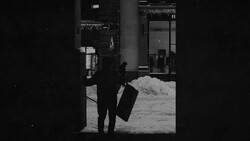
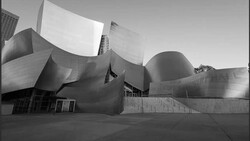
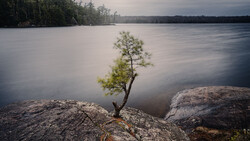
The examples that Jamie shares are a masterclass in the use of deep focus in which the entire scene is pretty much in focus—the result of using narrower apertures and wider angle lenses. Rather than relying on the separation of the subject from the background to make the image work, a set of different compositional approaches are discussed including visual layering, geometry, and the use of color and shadow.
In photography, as in skinning cats, there’s always more than one way to do it. In failing to be as mindful and engaged in our endeavor as we could be when we’re composing a scene, we risk ending up with an okay image simply because we missed the chance to make a great image.

Join the Fstoppers community for free
-
Post comments and join in the discussions
-
Browse the site ad-free
-
Share your work and get featured in the community
-
Compete in the photo contests for fun and prizes
2 Comments
It seems the art of writing an article is dead. (Or almost dead, Ivor Rackham being one of the few who still write good articles.)
Even the art of writing an abstract, i.e. a summery of the video that is advertised, seems to be dead.
Above is a tedious eight paragraphs long teaser, with as few information about the content of this 17 minute video as possible. It would've been better to copy the description Jamie Windsor put under his video himself, which is this:
The SHALLOW Depth of Field TRAP
6 ESSENTIAL TIPS for BETTER PHOTOS
—
A shallow depth of field is an easy way to immediately set your images apart from phone snapshots and smaller, cheaper cameras. but if you always default to shooting wide open, you deny yourself the opportunity to develop some really key compositional skills.
Thoughtful attention to the adjustment of your depth of field is essential, as it plays a direct role in shaping the visual impact and storytelling elements within an image. Considerate manipulation of depth of field allows you to influence and craft both the narrative and aesthetics of your photography.
This video contains 6 essential tips for getting better depth of field in your photos. I look at the work of Alex Webb to see what we can learn from his amazing work.
__________
It's shorter and much more informative than the text we get from fstoppers.
Great visual learning to remember as one walks about. Some surprises after the fact. Using Eye AF or just AF. Even long lenses without the fast f/1.2 option can do it. Like stated know your camera and lenses. When capturing wildlife I like to use the little square box placed at the center of frame, for it is like hunting with a rifle scope you track your subject keeping centered at the cross hairs. And before Eye AF that is what you did and even with people put at the eye area and you can get blurry nose tip and ears.
As for framing and thinking all the ways to frame most excellent information to train one's' eye. Framing has to be seen before the shutter click and just seeing not thinking of all the ways (just too many to remember). Great examples of off the tripod captures and many like more pixels so as to "crop" to a type. One thing most do not use for the blur/bokeh is software today and can save $ on fast glass. Or you can use, even today, prism filters like the one with a hole in the center just a few $.
1. using FE 200-600mm F5.6-6.3 G OSS + 2X Teleconverter
2. Sony FE 24-70mm F2.8 GM 70.0 mm f/3.5
3. FE 200-600mm F5.6-6.3 G OSS 600.0 mm f/6.3