

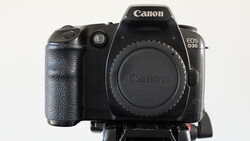
I’ve shot with a lot of cameras, film and digital—but if there’s one that’s been through it all with me, it’s the Canon 6D. This isn’t a pixel-peeping review comparing MTF charts or arguing about dynamic range. This is a look back at a decade spent with one of Canon’s most underrated full frame DSLRs. From dusty MiLB diamonds and fluorescent-lit engineering offices to golden hour family portraits and rain-soaked street photography, my 6D has quietly been the backbone of my professional and personal work.
The Camera That Almost Wasn’t
When Canon announced the 6D in September 2012, the photography forums went wild—and not in a good way. “Only 11 AF points?” “No joystick?” “Plastic top plate?” The spec sheet readers had a field day. Meanwhile, I was shooting with a crop sensor and dreaming of full frame. When I finally picked up a 6D in late 2014, I understood what the forum warriors missed: this camera was never about winning spec wars. It was about making full frame accessible and reliable. I never planned to use it for what I did, a happy surprise. Plus, it was a nice upgrade from my Canon Rebel T2i.
The Specs That Mattered and the Ones That Didn’t
Launched as Canon’s “budget” full frame, the 6D packed a 20.2 MP sensor, built-in Wi-Fi and GPS (revolutionary in 2014), and just one lonely SD card slot. The autofocus system was… let’s say focused—just 11 AF points with only the center one cross-type. The top shutter speed maxed out at 1/4000 s. No built-in flash. Frame rate? A leisurely 4.5 fps.
And yet? It never held me back.
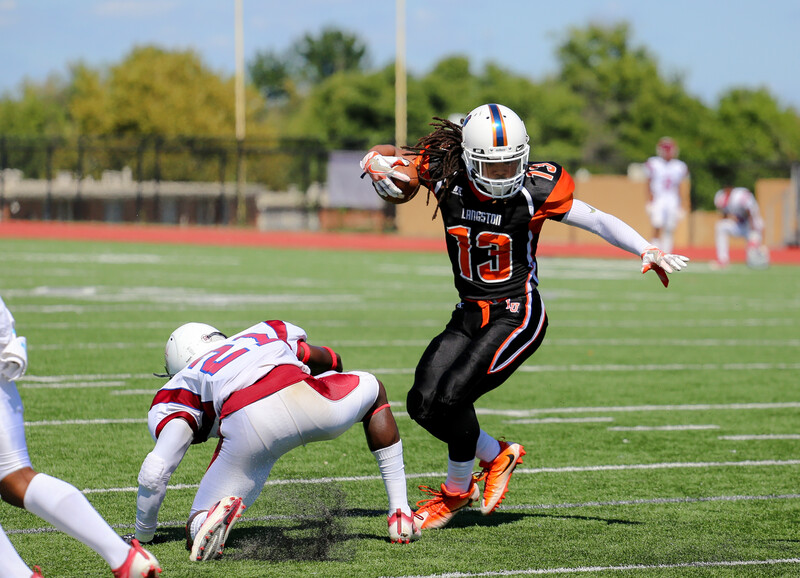
If you were shooting indoor volleyball in gymnasium lighting or trying to nail that game-winning slide at second base, you learned to use that center AF point like a surgeon’s scalpel. You learned to anticipate. You learned to pre-focus. You learned the dance between you and your subject. The 6D didn’t coddle you with 693 AF points spread across the frame. It forced you to be intentional. It made you a better photographer.
Where the 6D Truly Shined
The Low-Light Legend
The ISO performance still impresses me in 2025. I routinely shot at ISO 6400 in dim high school gyms and under those awful mercury vapor stadium lights without flinching. ISO 12,800? Usable in a pinch. The noise had character, film-like grain rather than digital mush. That full frame sensor delivered a cinematic softness that newer sensors sometimes overcorrect with their clinical perfection.
I remember one particular evening shooting the Tulsa Drillers during a rain delay. The stadium lights were dimmed, and I captured an at-bat where Matt Beaty was up at the plate. ISO 6400, 70-200mm f/4L wide open. The resulting images had this beautiful, moody quality that no amount of post-processing could replicate on a crop sensor.

Canon Colors: The Secret Sauce
Canon’s color science gets talked about for good reason. Skin tones are rendered warm and natural straight out of the camera. It’s a sensor that flatters people without making them look plastic. My portrait clients noticed—and more importantly, they bought prints.
The 6D had this way of rendering golden hour that made every senior portrait session feel magical. Those warm Oklahoma sunsets combined with the 6D’s color rendition created images that parents couldn’t resist. I’ve shot newer cameras with more resolution and better specs, but I’ve yet to find one that matches the 6D’s ability to make people look their best with minimal effort.
The Energizer Bunny
Battery life was legendary. I could shoot two full days of a youth baseball tournament on one LP-E6 battery. We’re talking 1,500+ shots without breaking a sweat. Try that with a modern mirrorless that needs a small suitcase of batteries for a wedding. During multi-day events, this wasn’t just convenient, it was crucial. Less time worrying about power meant more time focused on getting the shot.
Built Like a Tank
The magnesium alloy body of my 6D has been through just about everything I could throw at it, and then some. It’s hit concrete twice and walked away without complaint. It’s been caught in an Oklahoma thunderstorm without so much as a whisper of weather sealing. It’s clanged against dugout fencing more times than I can count and been dusted in the fine red dirt that clings to everything during baseball season. I’ve had it freeze solid during a 0 °F winter landscape shoot, thaw it out, and keep going. Even now, it still fires up every single time. Canon rated the shutter for 100,000 actuations—mine passed 250,000 a long time ago, and it’s still counting.
Real-World Portfolio: Beyond the Specs
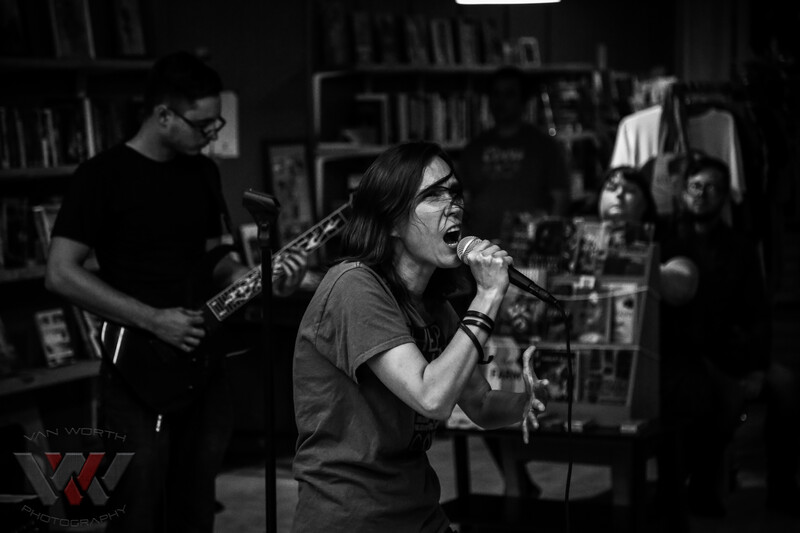
This camera’s been my silent partner across just about every type of assignment imaginable. In sports and photojournalism, it’s pressed against chain-link at minor league games for the Tulsa Drillers and the long-gone Bakersfield Blaze, crammed into dugout corners while fighting for position among other shooters, and under Friday night lights for high school football across Oklahoma. It’s survived the dim, flickering glow of indoor volleyball and wrestling tournaments, where the light feels more like candlelight than anything a camera should be expected to handle.
On the commercial side, it’s been trusted for headshots where the brief called for “approachable expertise,” slipped unnoticed through corporate events, and even done its time in real estate before drones took over the game. It’s captured product shots for local businesses and senior portraits that quietly covered my kids’ school supplies.
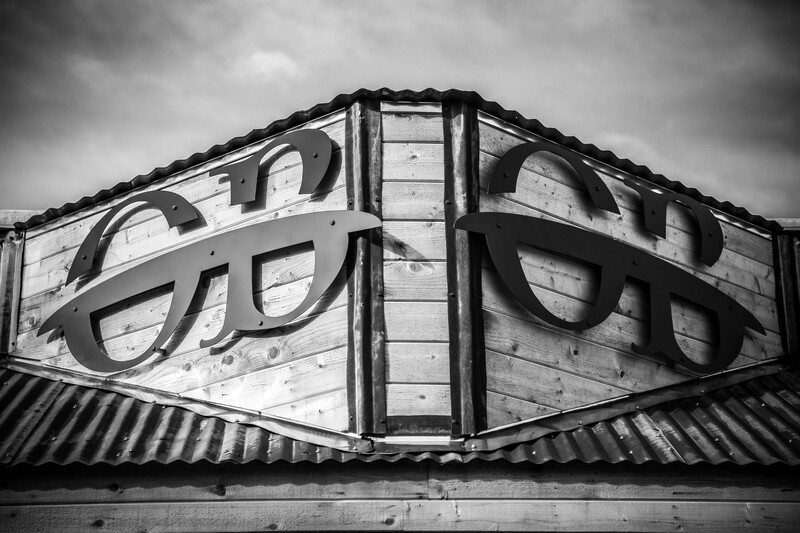
And then there are the personal projects—wandering downtown Tulsa after a summer thunderstorm, chasing bees and wildflowers in the backyard with a macro lens, documenting family gatherings from behind the camera (and missing more than a few dinners), or shooting weddings I swore I’d never take on again but did anyway for friends. Most importantly, it’s been there for the moments that matter most: my kids growing up, from first steps to first days of school.
The Glass That Made the Difference
Of course, the body is only half the story. My 6D kit has shifted over the years, but three lenses have carried the bulk of the load. The Canon EF 70-200mm f/4L has been my sports workhorse. No, it’s not the f/2.8 everyone swears by, but when you understand your camera’s ISO limits, f/4 is plenty. This lens lived on the 6D during baseball season, giving me the reach for shooting from the dugout or behind home plate, and saving my arms with its lighter weight during marathon extra-inning games.

Then there’s the Canon EF 24-105mm f/4L IS—the Swiss Army knife. It’s not the sharpest or the fastest, but it’s reliable in every setting. I’ve gone from wide group shots at 24mm to tight portraits at 105mm in seconds, often in unpredictable environments where there’s no time to swap lenses. The IS has been a quiet lifesaver in churches, conference rooms, and other tripod-hostile spaces.
And finally, the Canon EF 100mm f/2.8L IS Macro—the lens I bought for product and flower shots that somehow became my portrait champion. Its compression flatters without exaggeration, its sharpness makes eyes sparkle, and its f/2.8 aperture gives just enough separation for portraits without losing depth for groups. When a CEO’s vintage watch collection or fine detail work came calling, this lens could pivot without missing a beat.
What’s Aged Gracefully—And What Hasn’t
Even in 2025, certain things about the 6D remain rock solid: the image quality at 20.2 MP is more than enough for almost any job; the ergonomics are so second nature that every dial and button is muscle memory; the reliability is unmatched—it just works; and the raw files are a joy to work with, never demanding a supercomputer to process.
But time has caught up with it in other areas. The autofocus feels prehistoric compared to today’s standards. The rear LCD is fixed, dim, and low-res. The buffer can only hold 17 raw files before choking. The 1080p video feels like a relic from another era. And the single card slot, while never a deal-breaker, has been a gamble, one I only truly lost once during a portrait session. (Lesson learned: card quality matters.)
Why I Still Reach for It in 2025
So why do I still pack the 6D when I have access to newer, faster, more “intelligent” cameras? Because it gets out of my way. No firmware updates that rearrange menus overnight, no lag from an electronic viewfinder, no convoluted modes I’ll never touch—just aperture, shutter speed, ISO, and the image in my head.
Because it doesn’t draw attention. It’s discreet, and people relax around it, which is priceless for street work and candid moments.
Because it keeps me grounded in the craft. Shooting with the 6D feels like loading film into my Nikon F—mechanical, tactile, and deliberate in all the right ways.
And because clients don’t care about the model name stamped on the body. They care about moments, emotion, and story. The 6D still delivers all three, just like it always has.
The Film Connection
I shoot more film now than I did back in 2013. Oddly enough, I credit that to the Canon 6D. Something about that camera has always felt like a bridge between worlds—a device rooted firmly in digital technology, yet quietly fluent in the unspoken language of film.
It’s digital, sure, but it doesn’t let you get lazy. The limited AF points slow you down, forcing you to move your focus point deliberately or recompose in a way that feels closer to the tactile process of lining up a rangefinder. The reasonable—not excessive—resolution means you’re better off getting exposure right in-camera instead of leaning on endless raw latitude and post-processing safety nets. Every press of the shutter feels intentional, not like feeding an algorithm a set of variables to calculate later.
There’s a rhythm to shooting with the 6D that mirrors film work: check your light, commit to your frame, wait for the moment. It doesn’t bombard you with tech features screaming for attention. It just takes pictures—solid, honest pictures—and in doing so, it teaches restraint.
That’s why when I pick up my Mamiya 645 or slide open the back of my Canon AE-1 to thread in a roll of Portra or HP5, it never feels like a jarring leap between centuries. The muscle memory translates. The mindset translates. The 6D trained me to respect the moment, to value the decisive click, to shoot with a purpose in an age where every shot could just as easily be a throwaway.
The 6D didn’t just take pictures—it taught me patience in an impatient world. It made film and digital feel less like rival factions and more like two dialects of the same language. And once I realized that, I found myself reaching for film more and more—not out of nostalgia, but because it simply made me a better photographer.
Would I Recommend It Today?
For a new photographer in 2025? Probably not. The autofocus will frustrate those raised on smartphones. The lack of video features limits hybrid shooters. There are better options for the same money on the used market.
But for someone who values reliability over features? Who wants to learn photography rather than technology? Who needs a full frame sensor without the full frame price? The 6D remains compelling. They’re under $500 used now, less than a new iPhone.
For film shooters wanting a digital body? It’s perfect. Same deliberate approach, same emphasis on getting it right in-camera, same satisfaction when you nail the shot.
Final Thoughts: More Than Metal and Glass
The Canon 6D isn’t just a camera to me. It’s a decade of 4 AM wakeups for sunrise shoots. It’s nervous energy before big assignments. It’s the weight on my shoulder during 12-hour wedding days. It’s missed family dinners for Friday night football. It’s pride when clients tear up seeing their portraits. It’s frustration when I miss focusing on the game-winning goal. It’s satisfaction when everything clicks.
This camera has been my companion through career changes, cross-country moves, the birth of my children, and the death of print journalism. It’s captured the first days of school and last days of careers. It’s frozen time in ways that matter.
I’m not saying the Canon 6D is the best DSLR ever made. It’s not even the best camera Canon made that year. But it’s the best camera I’ve ever owned because it was there. It worked. It let me tell stories.
In a world obsessed with the next big thing, there’s something beautiful about dancing with the camera that brought you. My 6D and I? We’re still dancing.
If you’re still shooting a Canon 6D in 2025, I’d love to hear your story. What moments has it captured for you? What glass do you pair with it? Drop a comment below. And if you see me at a game or event in Oklahoma, don’t be surprised if that “outdated” DSLR is still hanging from my shoulder.
Images by Steven Van Worth.


Join the Fstoppers community for free
-
Post comments and join in the discussions
-
Browse the site ad-free
-
Share your work and get featured in the community
-
Compete in the photo contests for fun and prizes
9 Comments
this was the first camera where I was moving beyond being a hobbyist. I still have my 6D camera as well as the 6D2. Unfortunately the only EF lenses I have left are the 85 1.4 as well as the Tamron 15-30 2.8.
I then went on the EOS R and the RP as a backup. Then the R5 when someone stole my EOS R (had to use my friend's Sony A7R3 system for 8 months to save up money; I still preferred my R in terms of shooting experience and workflow). Now I'm on the R5ii as my workhorse with the R50 as my fun concert camera. And soon to be a proud C50 owner.
Love letter? Steady on, it might still be a good camera and a bargain secondhand but it is still just a camera. I used to own one and it was fine, although I hated having to calibrate lenses for front/back focus issues.
The story sounds very familiar , I also used the 70-200 f4L and 24-105 with it. And I still use it at events and concerts paired with the 70-200 alongside an EOS R with mostly the 24-105 f4L. The results are still great and the next camera to replace will be the R (probably for a R6 or R5). The 6D has gone through knocks and heavy rain, sprays of sea water, and it still works flawlessly.
Second such article on Fstoppers in the past few months. If you guys are running out of material, I'll write about how great my Contax G2 was, or my Pentax 67, or maybe my Panasonic GX7. Lemme know.
Great piece. Love how you place romance on par with tech.
I bought the 6D along with the only L lense I could afford, the 17-40, maybe 8 years ago. Weather sealing is important to me. But, although I loved the camera, I was never happy with the images. Too soft, too off focus. I moved to MFT and Olympus, intending to sell the 6D but never got around to it. Subconsciously intentional? Maybe.
So just for the hell of it I recently stuck a cheap, first generation (the best) 28-80 on the camera and took it out for a spin. Goddam but the results were good. Sharp, sharp, sharp, nice bokeh, and great colors. Then I tried the "nifty 50" and almost just as good.
I was the last to find out that the 17-40L is a stinker under f8 and because I thought the L lenses were the Canon GOATS I almost gave up a great camera. It's a keeper.
I also have a 6D , but my main camera is an EOS R, and also own a 17-40. I must admit that the 17-40 isn’t such a good lens. My copy has very soft corners at f8, waiting for an opportunity to trade it in for a Canon 16-35 L or a 15mm Zeiss. The 6D is still used as second body at events mostly with a 70-200 attached to it.
I bought my 6D in early 2013 and while I’ve since sold that one, I have another.
My main camera is an R5 with a set of 3 RF mount f/4 L zooms and the RF 50mm f/1.4L VCM, but I still enjoy using my 6D more.
My 6D has the precision matte EG-s focusing screen installed and with my old manual focus Zeiss Classic lenses (35/4 Distagon ZE, 50/1.4 Planar ZE and 85/1.4 Planar ZE) it is an absolute joy to use. The 20PM files are gorgeous and still have about the best color I’ve ever experienced in a digital camera that wasn’t a Leica M9. It handles well, is small and light, runs forever on a battery and sees in the dark.
What’s not to love?
Started with a T3i and upgraded to the 6D the year it came out. Shot several weddings, and events with it through the years. I truly fell in love with photography because of this camera, but unfortunately fell out of love for a bit because of social media "photography". Recently got the urge to shoot again after a 4-5 year break. My 6D quickly reminded me what I was missing. Great article.
Let me start off my comment by saying that I appreciate the honest and unbiased review of the 6D. It truly is a remarkable camera -- even now, in 2026. The Canon 6D was my first real step up in the full frame DSLR world. It allowed me to capture landscapes and astroscapes that I never thought were possible. Canon nailed the "color science" with the 6D imaging sensor. Having upgraded to a 6D from a 1Ds Mark II in 2013 (got during my high school senior year 2005), the difference in image quality was night and day. Don't get me wrong, the 1Ds was a great tank of a camera all of its own but, the 6D raised the bar higher, and in a much smaller package, with less button mashing to make the shot (IYKYK). I manually shoot landscapes about 95% of the time. This makes the low AF point conundrum a no-issue for me. Most of what I shoot is static or, moves at a speed where FPS doesn't really matter. I'm thankful to live in Tennessee, where a vast number of different landscapes can be found (waterfalls are my specialty).
In terms of glass used, I kept an EF 24-70mm f/2.8 L ii on it most of the time. I was able to accomplish most of my work with the expected results with that lens. Once, I rented a massive EF 600mm f/4 L to use on it for some wildlife. Yeah, the image results were incredible, but so was the size of the lens on such a small camera body. The 6D appeared to be just hanging on the lens like a tiny fanny pack on a muscular bodybuilder. HA!
In all seriousness though, I still find myself reaching for the 6D more often than not, 13 years later. It's light, stealthy and doesn't cry when it bumps against something. I plan on using it alongside my other DSLR's for quite some time. Unless I somehow strike a big living on my photography, I cannot justify shelling out more money for mirrorless cameras. Plus, there's something about the sound of the shutter and mirror mechanisms activating, when taking a photo.