
The lens is arguably the most important piece of photography equipment you own. So, make sure you're spending your money wisely.
The reality is that most modern lenses, even budget options, are optically excellent and capable of producing professional results when used skillfully. The limiting factor in most photography isn't lens quality: it’s photographer technique, lighting skills, composition ability, and understanding of how to work effectively with subjects and environments. Yet photographers continue to spend enormous amounts upgrading from perfectly capable lenses to marginally better expensive ones, convinced that these upgrades will somehow transform their photography overnight. Meanwhile, they often ignore free or low-cost improvements like learning better lighting techniques, studying composition fundamentals, or practicing consistently in challenging conditions that would dramatically improve their results regardless of equipment.
1. "You Need f/1.4 for Professional Portraits"
The obsession with f/1.4 apertures for portrait photography has cost photographers thousands of dollars on lenses that are often inferior for portrait work compared to more affordable f/2.8 alternatives, while creating technical challenges that actually make professional portrait photography more difficult rather than easier. Fast apertures like f/1.4 create extremely shallow depth of field that can be problematic for portraits where you need both eyes in focus, especially when working with subjects at slight angles or photographing couples where maintaining focus across multiple faces becomes critical. Professional portrait photographers often stop down to f/2.8 or even f/4 to ensure adequate depth of field across facial features, making the expensive f/1.4 capability largely irrelevant for actual working conditions where client satisfaction depends on sharp, properly focused images rather than maximum background blur. The cost difference between f/1.4 and f/2.8 lenses can be thousands of dollars per focal length, money that would be better invested in lighting equipment, education, or business development that actually improves professional capabilities.
The f/1.4 myth also ignores practical working conditions where extremely shallow depth of field becomes a liability rather than an asset. Wedding photography, corporate headshots, family portraits, and most commercial work require reliable focus across subjects and predictable results that f/2.8 apertures deliver more consistently than f/1.4 settings that leave too much room for focus errors and depth of field miscalculations. Professional photographers need to work efficiently and confidently, especially when dealing with clients who expect consistent results rather than artistic experiments that might or might not work perfectly. The extra cost of f/1.4 lenses rarely translates to increased bookings, higher prices, or better client satisfaction, the factors that actually determine professional success and profitability in portrait photography.
2. "Zoom Lenses Are Inferior to Primes"
Modern zoom lenses often match or exceed prime lens quality while providing significantly more versatility for working photographers, yet the persistent myth that primes are inherently superior continues to drive unnecessary purchases of multiple prime lenses that cost more collectively and provide less practical flexibility than a single high-quality zoom. This myth originated during the film era when zoom lenses had legitimate optical compromises, but current zoom technology has largely eliminated these issues while adding practical benefits that make them superior choices for most photographers working in real-world conditions. Professional photographers increasingly rely on zoom lenses because they enable faster composition changes, reduce the need to carry multiple lenses, and eliminate the time lost changing lenses during critical shooting moments when subjects won’t wait for photographers to swap equipment.
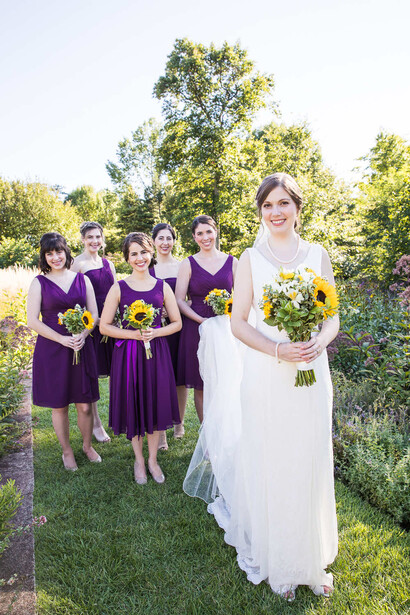
The prime lens superiority myth also ignores the creative benefits that zoom lenses provide through their ability to fine-tune composition and perspective without physical repositioning. This capability is especially valuable for portrait photography where precise framing adjustments can dramatically improve composition, and for event photography where optimal shooting positions may be fixed while subjects move throughout the frame. Many photographers who switch from prime-only setups to high-quality zooms discover that their composition improves because they can explore different framings more easily and make precise adjustments that would be impossible with fixed focal lengths. The cost of purchasing equivalent prime lenses often exceeds the price of professional zoom lenses while providing less practical flexibility and requiring more carrying capacity, lens changes, and decision-making during shoots that can interrupt creative flow and client interaction.
3. "Full Frame Is Always Better"
Crop sensor-specific lenses are often optically superior and more practical for their intended format than full frame lenses, but photographers waste money upgrading to full frame cameras and glass believing they’re getting better quality when they’re actually getting lenses that are overbuilt for their needs. Full frame lenses designed to cover larger image circles often sacrifice optical performance at the edges and corners where crop sensors don’t even use the image area, while crop-specific lenses can optimize their optical designs for the smaller coverage area and deliver superior sharpness, contrast, and image quality where it actually matters. This optical engineering advantage is particularly noticeable in wide angle and standard focal lengths where crop-specific lenses often outperform full frame alternatives when used on their intended format.
The weight and size penalties of full frame lenses become significant disadvantages. Crop-specific lenses are typically lighter, more compact, and better balanced on crop sensor bodies, creating more comfortable shooting experiences and reducing fatigue during long shooting sessions. This size and weight advantage becomes particularly important for travel photography, street photography, and any situation where discretion and portability matter. The ergonomic benefits of properly matched lens and camera combinations often contribute more to shooting enjoyment and creative output than marginal optical differences that may not be visible in real-world use.
The full frame obsession also drives premature and expensive system upgrades where photographers feel pressured to purchase full frame cameras and lenses, creating a costly upgrade cycle that may not provide meaningful improvements for their actual photography needs. Many photographers produce excellent professional work with crop sensor systems and would benefit more from investing in lighting, education, or business development rather than expensive lens and camera upgrades motivated by format prejudice rather than practical limitations. The myth that full frame equipment is inherently more professional ignores the reality that image quality depends far more on photographer skill, lighting quality, and subject matter than on sensor size or lens compatibility specifications that have minimal impact on final image results.
4. "More Expensive Glass Always Means Better Images"
The relationship between lens cost and image quality shows severe diminishing returns beyond mid-tier pricing, with expensive lenses often providing marginal improvements that are invisible in real-world use while costing thousands more than alternatives that deliver 95% of the performance at half the price. This myth is particularly damaging because it convinces photographers to overspend on premium lenses when the same money invested in lighting equipment, education, or shooting experience would provide dramatically more improvement to their actual photography results. Professional photography success depends primarily on lighting skills, composition ability, and technical execution, all areas where expensive lenses provide minimal advantages over competent mid-range options when used by skilled photographers who understand their tools.

The expensive lens trap also creates psychological barriers where photographers become afraid to use their expensive equipment in challenging conditions, limiting their shooting experiences and creative development out of fear of damaging costly gear. This equipment anxiety can be more damaging to photographic growth than any optical limitations of less expensive lenses, as photographers avoid taking creative risks or shooting in environments where their best learning and development would occur. Professional photographers need reliable tools they can use confidently in any conditions rather than precious equipment that requires special handling and creates stress during important shooting situations. The peace of mind that comes from using capable but affordable equipment often contributes more to creative confidence and professional success than marginal optical advantages of premium lenses that may never be fully utilized in practical working conditions.
5. "You Need Different Focal Lengths for Every Situation"
Master photographers throughout history built legendary careers using one or two focal lengths exclusively, proving that deep understanding of specific focal lengths produces superior results compared to collecting extensive lens lineups that prevent the focused practice needed to truly understand any single focal length’s creative possibilities. The myth that photographers need comprehensive focal length coverage drives expensive purchases of lenses that rarely get used while preventing the concentrated practice that would actually improve photographic skills and creative vision. Professional photographers often discover that limiting themselves to fewer focal lengths forces them to become more creative with composition, positioning, and perspective, leading to more distinctive and successful images than constantly changing lenses to accommodate every situation.
Henri Cartier-Bresson used 50mm lenses almost exclusively, Vivian Maier built her street photography reputation primarily with 80mm on medium format (equivalent to about 50mm on 35mm), and countless other master photographers achieved legendary status by deeply understanding specific focal lengths rather than accumulating comprehensive lens collections. This focused approach allows photographers to develop intuitive understanding of perspective, depth of field characteristics, and composition possibilities that comes only through extensive practice with consistent tools. The ability to pre-visualize images and work quickly with familiar focal lengths often produces better results than having perfect focal length options but lacking deep familiarity with any of them.
The modern obsession with focal length variety often creates analysis paralysis where photographers spend more time deciding which lens to use than actually creating images, while preventing the muscle memory and intuitive understanding that develops when working consistently with specific focal lengths. Professional efficiency and creative confidence come from knowing exactly how your tools will perform in different situations, understanding that can only develop through concentrated practice rather than constantly switching between different focal lengths that each require their own learning curve. Many photographers discover that their best work emerges when they impose focal length limitations on themselves, forcing creative problem-solving and deeper exploration of perspective and composition possibilities that extensive lens collections actually discourage through their emphasis on technical solutions rather than creative vision.
The Real Investment That Matters
Instead of chasing expensive lens upgrades that provide minimal real-world benefits, photographers should invest in education, lighting equipment, and shooting experience that will dramatically improve their results regardless of equipment limitations. A photographer with solid technical skills, good lighting knowledge, and strong composition abilities will consistently outperform someone with expensive gear but weak fundamentals, especially in professional situations where client satisfaction depends on reliable results rather than marginal technical advantages that clients cannot detect or appreciate. The money typically spent on unnecessary lens upgrades could fund workshops, online education, lighting equipment, and shooting experiences that would provide lasting skills rather than temporary equipment satisfaction.
The photography industry benefits from perpetuating gear acquisition cycles that keep photographers focused on equipment rather than skill development, but successful professional photographers understand that their earning potential depends on their ability to solve visual problems, work effectively with clients, and create compelling images under challenging conditions. These capabilities develop through practice, education, and experience rather than equipment upgrades, making skilled photographers with basic gear more valuable than inexperienced photographers with premium equipment. Focus your investment on becoming a better photographer rather than accumulating better gear, and you’ll discover that optical quality was never the limiting factor in your photographic development, because knowledge, practice, and creative vision were the real keys to creating images that matter.





Join the Fstoppers community for free
-
Post comments and join in the discussions
-
Browse the site ad-free
-
Share your work and get featured in the community
-
Compete in the photo contests for fun and prizes
28 Comments
All excellent points!... As your first point kinda hinted at, saleable quality may not be determined by what a photographer eye would see. That said, your wedding example, I would be inclined to give a '2', but recognize that the client may still love it. Either way, I don't think the picture was helping the case of the argument, it just looks like something I could quickly snap with my cell.
Good article.
Ps, a FD 50mm f1.4 runs about $100.00 if someone wants a fast portrait lens and easily adapts to a R series camera.
I us a FL 58mm f1.2 on my R7 and it cost a fraction of a RF 50mm f1.2.
For portraits it's amazing.
Excellent points. For about 25 years back in the film days I had 24, 35, and 105 for the Nikons and a 50, 80 and 150 for the Hasselblad, which were about the same equivalents as the Nikkors. That was all I really needed. Today I find the quality of the Fuji XPro3 with the f2 lenses perfectly fine.
It says,"Zoom Lenses Are Inferior to Primes".
Well, a quick look at the MTF's indicate that this is true.
Well technically a 'zoom-lens' is inferior to a 'prime' pound for pound at the same focal-length. Although there has been whole articles on this site that have compared indistinguishable pictures. I think the point is, that the gains No Longer justify the drawbacks. Simply-Put: 1) Primes cost more 2) With a Prime your stuck well with just one focal-length.
Stuck with one focal length?? Why do you say that like a single focal length is a problem? Completely different purposes. Zooms will always have the disadvantage of size and weight plus not everyone needs a large, weighty lens with so many different focal lengths.
I'm sure you can come up with scenarios where a single prime floats your boat. Such as staged events. More power to ya. For much of my very beginner days I ran around with a single L-24mm prime, and didn't even think too much about other lens focal lengths. Hey many of us grew up with cameras with unattachable lenses, or worse instant store-bought ones. This is a new era for the photographer. We don't have to think of being married to one focal-length. I don't have to get so close to the married couple, i can zoom-in. When you mention 'weight': The converse has been put forward as having to carry multiple primes, and then taking the time to change lenses. Plus with many modern lenses, weight is also no longer as big a factor, unless your trying to go for a really expensive heavy f/2 zoom that goes out past 100mil or something like that.
Another factor to consider is durability. Expensive professional lenses tend to be well made and built to last. Their clients might not be able to tell the difference in image quality, but the photographer will have the reassurance that their equipment is not going to let them down in the middle of a shoot. Professional lenses can take the knocks and bumps of day-to-day use without falling apart. It’s worth spending extra, if you depend on them for a living.
For amateur photographers, on the other hand, it doesn’t make sense to spend a fortune on lenses, when cheaper ones will do the job well enough.
I used to follow a Canon forum where it was about bragging rights, who can talk down APS-C bodies and consumer zooms the most, and who has the most "L" lenses in their gear list (and I laugh at the ones who make the "L" red). People on those forums obsess over MTF charts and plots of sensor noise vs ISO, and pixel peep in the corners to find minuscule differences that nobody can actually see in real-world photographs.
The obsession with ultra fast primes has always baffled me. Seeing a portrait where only a single eye is in focus is, well, idiotic. Yes, they do look better when you back off and do a full body shot, but you can do those shots with an F2 zoom just as well.
F/2.0 zooms are crazy expensive. For $600-800 you can get an 85/1.8 that’s phenomenal. F/2 zooms are also huge and heavy, and I don’t ever want to carry those around.
True, but they can easily replace multiple primes. But yes, high quality 85mm lenses are readily available.
Absolute correct!
Only point for the GM/L etc. lenses is sometimes the really fast autofocus! Cheaper or older lenses have most times much slower or inferior motors...
BUT: I'm personally in the sports/event/concert photography since the "film days" (Canon FTb and AE1p) and did e.g. photos at Volleyball german first league and also high league baseball (ok, in Germany :)) - just with manual focusing, without the help of "peaking" etc. And I scanned and retouched some years ago b/w photos of a well known photographer who made exceptional photos in the 50s with a (compared to our standards) real slow Leica M3 with its rangefinder - neither thought one can do such photos with such an equipment...
And today: yes, 12 years ago I sometimes needed the 1.4 of my 50mm (with a Sony A55, so in reality more a 80mm) during yery dim lighted guitar concerts. Since 2014 I use the A77 II and all I take with me to concerts or events is a Tamron 24...70/2.8 and an old Minolta 70...300/4...5.6. Even this "old beast" of a camera has more than enough ISO capabilities to go with that. Ok, for events (not for sports or concerts) I have a Godox 860II flash light in my rucksack.
And why I stick to this old Sony beast: it has in my opnion the best ergonomics I have ever felt/seen (though a bit heavy, esp. with the extra grip I have always mounted) with a hand sleeve at the side. I can carry this this combo for hours around without any pain. Between I had also an A7 III and A7S II. But at the max after 30 minutes I was tired/exhausted, my fingers were prickling... Only cam with comparable ergonomics I have ether used is a Nikon 3Ds...
And I still switch sometimes/often to manual focusing (with peaking) - it's so much faster to see what parts are in focus...
And for "quality": the A55 (a real amateur cam) lived for 23 months with heavy outdoor use (open airs with rain etc.) and 180.000 shots and was replaced on warranty by Sony (though those cams/shutters are built for around 50.000 shots). Don't know the shots with the A77 II, after 11 years and its only "problems" are a slightly defect rubber eye piece and that I soon have to buy new batteries (that are becoming to be a little rare)...
And for "quality" again: two friends/colleagues used Canon 5D II/III: their cams had much more "problems" - falling of of lenses at least three times because of defective lens mounts (just falling off! no false usage, just broken lens mounts)!
greetings from Bremen/Germany
With Fuji I started with a 35 1.4 and nothing else and got sucked into thinking that was the only way to go. Perhaps because with Pentax, there just weren't the options. Over time added all the fast primes with the Viltrox 75 1.2 and 27 1.2. I didn't ignore zooms for IQ reasons, I just prefer primes and getting in and out of the action with my feet. The old Fuji 16-55 was great - but for me, outside of professional uses a standard zoom was always lazy person's lens. And a lump.
But looking back over my old Pentax images, I really love the story telling I achieved with the f2.4 and f4 primes. The Sigma 18-35 1.8 and 8-16 f3.5-6.3 images are great even stopped down.
Now with all the smartphone faked shallow depth of field images, that is what is being rammed down our throats and we are conditioned to thinking that is what makes a good photo. Even though the vast majority of camera photos just lack authenticity and are a poor substitute. Then the whole obliterate the crap out of anything interesting in the picture brigade. It's intriguing until the masses have access to the look and the veil is lifted. Now it just looks clichéd and boring.
Have been consciously stopping down with my faster lenses a long time now, and finding compositions where the background added to the story and wasn't just to be blown out. The Viltrox's are great for photographic w4nking - and outside of profi uses that's mostly what it is. The 27 1.2 has character due to it's flaws... but so does the 35 1.4 at about 1/3 the size and offers better bokeh to boot. The 75 1.2 is fun... but best stopped down a bit, and the 90 f2 is all round better on that mount.
So, I'm ridding myself of a number of lenses that are just unnecessary for my use. Starting with the Viltrox 27 and 75. Recognising the lack of absolute need for f1.4 is the first step to recovery! A slower zoom - either Fuji 16-55mkii or sigma 17-40 - will replace a number of lenses. I just need to learn to treat the zoom like a prime to avoid boring compositions.
I will keep probably 3 fast lenses though as the benefits go beyond blurry backgrounds:
- f1.4 or faster just has a big low light advantage
- the best optical formulas are usually reserved for these lenses.
- stopping down to f2 or f2.8 you are getting closer to the sweet spot of an f1.4 lens, which is where a slower lens is at its weakest.
- f1.4 lenses tend to have better build
So the biggest myth is that f1.4 lenses limit you to f1.4 and that there no advantages other than that shallow depth of field.
I'm on board with all but number 3. I'm sure there are a few reasons to drop to apsc but 99 percent of the time I'm all in with FF
The fact that you are all in with the others, which highlight exactly why FF is just unnecessary for most people, yet you are unwilling to let go of FF - shows just how effective marketing and in particular social engineering is.
Better DR, better low light, Better selection of lenses in just a slightly bigger body. I also feel like my sony full frame bodies are too small so that might give you a clue where I am coming from.
FF bodies being small is irrelevant when FF lenses are twice the size and sometimes price. FYI I use FF for the reliable AF over my actual favorite fun camera, Fuji. While high ISO is better on FF and so is DR, i was never dissatisfied with the crop image unless the lighting was garbage. In truth, the differences between the 2 formats are almost insignificant and are really a case of diminishing returns depending on specific needs of course.
FF lenses are only bigger if they are wide aperture. We got some tiny FF lenses with f4 apertures.
As far as price is concerned I usually buy used on ebay and I have a bigger selection especially if you are willing to adapter older lenses.
And then you come back to what's the point of going FF for someone focussing on those lenses. Only worth it if you really need that pro sports level AF, focus on the ultra wide end or and plan to buy the super fast lenses.
You only gain 1 stop of dynamic range, which can be surpassed instantly by an f2 lens Vs that f4 full frame. Same with low light.
I agree with all the points presented. It seems we've drifted away from the mindset of "what can I do with what I have" and investing time and effort into improving individual skills and towards the mindset of "I need expensive gear to take good photos". For many years I used the same equipment to capture images that were perfectly acceptable to everyone including myself, and upgraded either when the gear was physically worn out or damaged, or when I reached the limits of what I could do with it.
Great article. to your point most of the quality glass has been bought used. I got some nice L glass form the used market and use a adapter to use on my new mirrorless camera.
All valid points, however I think point 1 and 3 need a bit of balancing. The quality of smaller sensors is absolutely good enough, in fact some of my top images were shot with a Micro Four Thirds camera, because that is my travel go-to kit. BUT: if I want shallow DOF from these sensors, point 1 needs a review: You will want f1.4 glass (and could get away with f1.8 most of the time), otherwise you will not achieve the really shallow look you get from FF 2.8 or faster glass. But to be fair, the f1.4 options in the MFT world (or f1.8 Options in the APS-C world) are far more affordable than their FF equivalents. In fact, an OM-1 with a 45mm f1.8 will give my Sony with an 85mm a run for its money at a fraction of the size and weight under most citcumstances....
Your are right Alex !
A couple of things i dont agree with.
Zoom lenses are as good or better than primes? Maybe the best zoom can be better than a bad prime but if your blanket statement were true, they wouldnt make primes.
FF lenses can suffer at the edges but crop dont use that part of the lens? Uh yeah crop lenses do use the edges of their lens. Only when using FF lenses on a crop camera does your statement ring true.
You can look at it as a question of "how much is it worth to get 0.1% gain?" with modern lenses. Then there are the drawbacks to carrying primes as pointed out in my comment above. Then you may have to carry more 'primes' in your bag to make up the balance, but are you really gaining anything over just using the 'zoom'? Then compare those pics of the same objects with the pics you took with the same lenses. There has been articles on this.
Nowadays, a 24 70 2.8 or 70 200 2.8 lens has enough quality for almost any situation, in the most conventional uses of professional photography.