
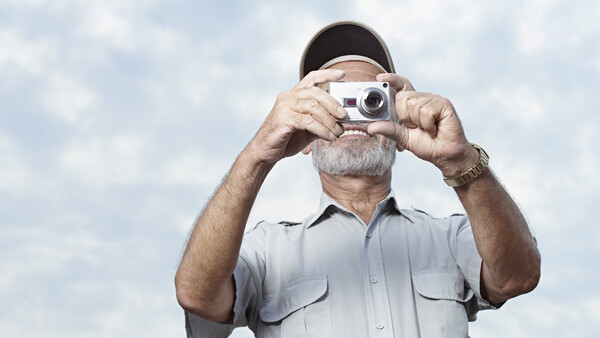
I bought a Canon 7D because it had a bigger number than the 6D, more autofocus points, and a faster burst rate. I thought I was buying the better camera.
What I did not understand was that the 6D's larger sensor would have given me cleaner high-ISO performance, shallower depth of field, and better dynamic range, all things that mattered far more for the portraits and low-light work I actually wanted to shoot. The 7D was excellent. But I bought it for the wrong reasons. If I could go back and sit down with myself the week before that purchase, here is what I would say.
1. Understand What You Are Actually Buying
A camera is not a single product. It is a sensor, an autofocus system, an ergonomic design, and a lens mount that attaches you to an ecosystem you will invest in for years. The body is temporary. The lenses follow you.
Before you buy anything, learn what the major specs actually mean in practice, not just which numbers are bigger. Sensor size affects depth of field, noise, and dynamic range. Autofocus point count matters less than autofocus reliability and subject tracking. Burst rate matters only if you shoot action. Video specs matter only if you shoot video. A camera with fewer headline features but a larger sensor, better ergonomics, and access to excellent lenses will serve you better than a spec-sheet champion that does not match the kind of photography you actually want to do.
2. You Do Not Need Full Frame to Start (and May Never Need It)
I just told you I bought the wrong camera because I did not understand sensor size. That does not mean the answer is always full frame. APS-C and Micro Four Thirds cameras produce stunning images, and they are lighter, cheaper, and paired with excellent lens ecosystems. The Fujifilm X-T50, the Nikon Z50 II, and the Canon EOS R50 are all capable of professional-quality results in the right hands.
Full frame gives you advantages in low-light noise, depth-of-field control, and dynamic range. Those advantages are real. They are also irrelevant if you are still learning to compose a frame, read light, and direct a subject. You can develop every fundamental skill in photography on a crop-sensor camera, and many working professionals never switch to full frame because they do not need to. Buy what you can afford, learn on it thoroughly, and upgrade only when you have hit a specific, articulable limitation that a larger sensor would solve. If you want proof that camera choice matters less than skill development, The Well-Rounded Photographer puts eight instructors in front of you across eight genres, and the principles they teach apply regardless of whether you are shooting full frame, APS-C, or Micro Four Thirds.
3. The Body Matters Less Than the Lens
This is the advice every experienced photographer gives and every beginner ignores, because camera bodies are exciting and lenses are not. Bodies have launch events, hype cycles, YouTube reviews with dramatic thumbnails, and internet arguments about who won the spec war. Lenses just sit there being glass.
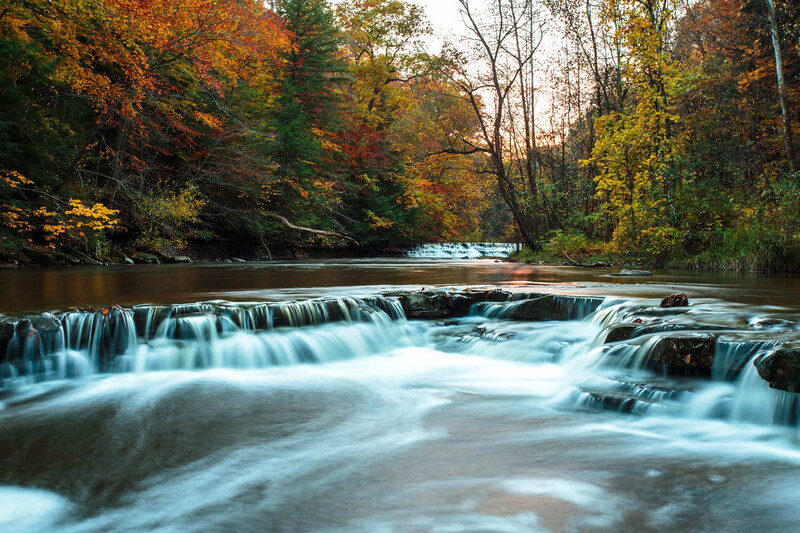
But a sharp, fast lens on a mediocre body will produce better images than a mediocre lens on a flagship body. A 50mm f/1.8 prime, which costs $100 to $250 depending on the mount, will transform the output of any camera it is attached to. It will give you background separation, low-light capability, and optical sharpness that no kit zoom can match at any focal length. If you have $1,500 to spend, put $1,000 into the body and $500 into a prime lens rather than $1,500 into the body and nothing into glass. You will not regret it.
4. Megapixels Are the Least Important Spec on the Box
Twenty-four megapixels is enough to print a sharp 20x30-inch image. Most people will never print anything larger than 16x20. The difference between 24 and 45 megapixels is invisible on a screen, invisible on social media, and invisible on any print smaller than a restaurant mural.
What megapixels do affect is file size, storage requirements, and how fast your computer can process the images. More megapixels means larger files, which means more hard drive space, slower imports, and a computer that needs more RAM and processing power to edit smoothly. If your computer is three years old and you buy a 60-megapixel camera, your editing workflow will slow to a crawl and you will have paid extra for resolution you cannot use and your hardware cannot support.
When comparing cameras, look at autofocus performance, dynamic range, high-ISO noise, ergonomics, and battery life before you look at megapixels. Those specs affect every image you take. Megapixels only matter when you print very large, which is almost never. And when you do sit down to edit, the processing speed of your workflow matters more than the resolution of your files. Mastering Adobe Lightroom covers catalog optimization and editing efficiency so that whatever megapixel count you end up with, your computer can handle it smoothly.
5. The Camera Does Not Matter Nearly as Much as the Light You Put It In
The single biggest variable in how a photograph looks is not the camera, the lens, or the editing. It is the light. A $500 camera in beautiful golden-hour light will produce an image that looks better than a $5,000 camera under fluorescent ceiling fixtures. Every time.
Light has quality (hard or soft), direction (front, side, back, overhead), color (warm, cool, neutral), and intensity (bright, dim, mixed). Learning to see these qualities and position your subject relative to them is the skill that separates compelling images from flat ones. You do not need a studio strobe or a reflector to start. You need a window. Stand your subject next to a window with indirect light, turn their face toward it, and take a photo. That image, shot on any camera at any price point, will look better than 90% of the direct-flash snapshots taken on cameras that cost ten times as much. If you want to deepen your understanding of how light shapes the face and how to control it with and without equipment, Illuminating the Face: Lighting for Headshots and Portraits covers the full spectrum from window light through studio setups.
6. Auto Mode Exists for a Reason, and There Is No Shame in Using It While You Learn
The photography internet has decided that manual mode is the only "real" way to shoot. This is nonsense. It is gatekeeping disguised as education, and it discourages beginners from picking up the camera because they feel like they need to master exposure theory before they are allowed to take a picture.
Use Auto mode. Take a thousand photos in Auto mode. Learn what compositions excite you, what subjects you are drawn to, what light you respond to. Those instincts are more important than knowing the relationship between aperture and shutter speed, and they can only be developed by shooting, not by reading.
When you start noticing that the camera's automatic choices are not matching your vision (the background is not blurry enough, the motion is not frozen, the image is too dark), that is when you move to Aperture Priority or Shutter Priority and start taking control of one variable at a time. The progression is natural, and it happens faster when you are shooting constantly rather than studying exposure charts and feeling paralyzed. For a structured path through this progression, from Auto through semi-automatic modes to full manual control, Photography 101 walks through each step with practical shooting exercises.
7. Your Phone Camera Is Legitimately Good, and Learning Composition on It Costs Nothing
The camera in your pocket right now shoots raw, processes HDR in real time, simulates depth of field, and fits in your jeans. It is not a toy. It is a legitimate learning tool that removes every possible barrier to shooting today.
You do not need to buy a dedicated camera to start learning photography. You need to start looking at light, composing deliberately, and shooting with intention. Every composition principle, every rule of light, every instinct about timing and subject placement transfers directly from phone to dedicated camera. The phone is not a lesser tool for learning. It is a zero-cost training ground that removes every possible excuse for not shooting today.
When you outgrow it (and you will, because dedicated cameras offer larger sensors, faster autofocus, interchangeable lenses, and true optical viewfinders), the skills you built on the phone come with you. Nothing is wasted.
8. You Will Buy Accessories You Do Not Need
The checkout page will suggest a UV filter, a camera bag, a cleaning kit, a memory card wallet, an extra battery, a remote shutter release, a screen protector, a rain cover, and a lens hood. You will buy most of them because the camera felt like an investment and protecting that investment feels responsible.
Some of those accessories are genuinely useful. A spare battery is essential. A decent memory card with adequate speed and capacity is non-negotiable. A basic lens cleaning pen or blower will serve you for years. Beyond that, wait. Do not buy a camera bag until you know what gear you carry regularly and how you carry it. Do not buy filters until you understand what they do. Do not buy a remote shutter release until you own a tripod and have a reason to use one. Buy the camera, one good lens, a card, and a battery. Shoot for three months. Then buy whatever you have actually needed and could not do without.
9. The Camera You Buy Will Feel Obsolete the Moment the Next Model Is Announced
Six months after you buy your camera, the manufacturer will announce the successor. It will have better autofocus, more megapixels, and a feature you did not know you wanted. The internet will tell you it is time to upgrade.
Do not upgrade. Your camera takes the same photos the day after that announcement as it did the day before. The sensor did not degrade. The lens did not get softer. The autofocus did not slow down. Nothing changed except your awareness that something newer exists, and that awareness is not a photographic problem. It is a marketing problem.

Shoot your current camera until you can articulate a specific limitation it creates in your work. "I need better low-light autofocus because I shoot indoor events" is a reason to upgrade. "The new model exists" is not. The photographers whose work you admire most spent years with a single body, learning its limits and working within them. The images that made them known were not made on the newest camera. They were made on the camera they had.
Every photographer looks back at their first serious camera purchase and sees the mistakes they made. The wrong body, the wrong lens, the unnecessary accessories, the spec-sheet fixation that led them away from what they actually needed. Those mistakes are not failures. They are tuition. But if this article saves you even one of them, the camera you buy tomorrow will serve you better and longer than the one I bought when I was standing where you are now.


Join the Fstoppers community for free
-
Post comments and join in the discussions
-
Browse the site ad-free
-
Share your work and get featured in the community
-
Compete in the photo contests for fun and prizes
No comments yet