

The entry-level camera market has withered. Companies that once competed fiercely for first-time buyers have largely abandoned the sub-$1,000 segment, preferring to chase higher margins on enthusiast and professional equipment. But slim pickings isn't zero pickings.
For those of us who prefer the peace of mind that comes with a manufacturer warranty, who want to give a genuinely new camera as a gift, or who simply enjoy that fresh-out-of-the-box experience, a handful of excellent options remain available at prices that won't require a second mortgage. These aren't compromise cameras designed to upsell you later. They're genuinely capable tools that happen to cost less than many photographers expect. Here are five cameras you can still purchase brand new for under $700 that actually deserve your attention.
The Vlogger's Secret Weapon: Nikon Z30
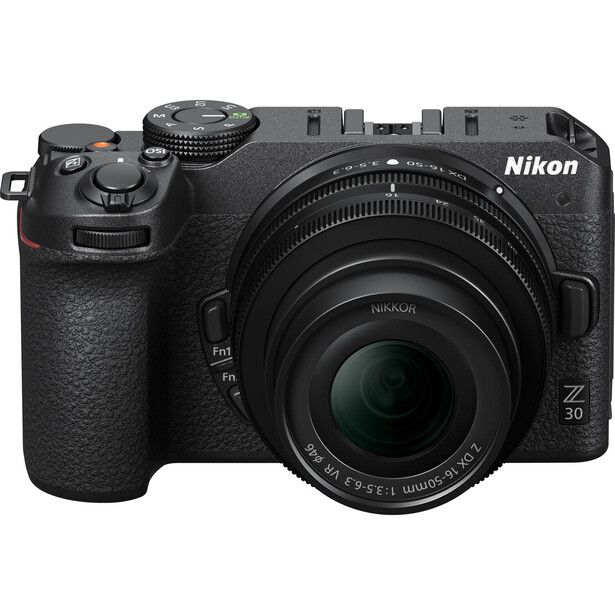
When Nikon engineers sat down to design the Z30, they made a counterintuitive decision that turned out to be brilliant: they removed the electronic viewfinder entirely. At first glance, this seems like corner-cutting to hit a price point, but Nikon understood something important about their target audience. Content creators who film themselves rarely, if ever, hold a camera up to their eye. They work from tripods, gimbals, and outstretched arms, composing shots on rear screens. An EVF on a vlogging camera is essentially dead weight that adds cost without adding value. By eliminating it, Nikon carved out space and budget to focus on what actually matters for video creators.
The result is a compact body that shares the same excellent 20.9 MP APS-C sensor found in the more expensive Z50, paired with a fully articulating touchscreen that flips forward for self-shooting. In a market where many budget cameras impose significant crops when recording 4K video, the Z30 delivers uncropped 4K at 30 fps, meaning your wide angle lens actually behaves like a wide angle lens when you need to capture yourself at arm's length. A small but thoughtful detail that vloggers will appreciate is the front-facing tally light, a tiny red indicator that confirms the camera is actually recording. Anyone who has ever finished what they thought was a perfect take only to discover the camera wasn't rolling will understand why this matters.
Key Specs
- Sensor: 20.9 MP APS-C CMOS
- Video: 4K UHD at 30p (uncropped), 1080p at 120p
- Screen: Fully articulating touchscreen
- Weight: 350 g (body only)
The trade-off here is straightforward: without a viewfinder, photography in bright outdoor conditions becomes an exercise in frustration. Screen glare makes composition difficult when the sun is out, and there's no optical alternative to fall back on. If you need a camera that transitions seamlessly between stills and video, the Z30 will leave you wanting. But if video is your primary focus and photography is an occasional bonus, this camera punches well above its weight class.
The Autofocus Overachiever: Canon EOS R50
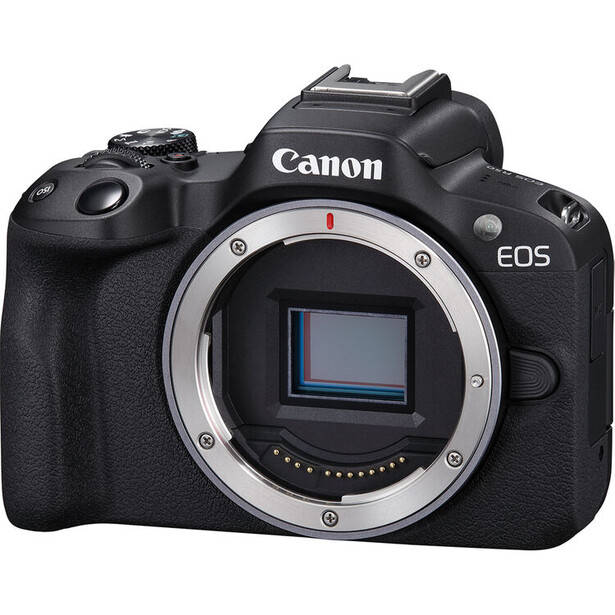
For beginners who haven't yet developed the reflexes to nail focus manually or the experience to anticipate where subjects will move, this camera is essentially a safety net. Hand it to someone who has never operated anything more complex than a smartphone, point them at a running child or a hyperactive dog, and they will come back with sharp images. If you want to take your portrait work further, Illuminating the Face: Lighting for Headshots and Portraits pairs perfectly with the R50's excellent subject tracking. The R50 also oversamples its 4K video from a 6K readout, producing footage with more detail and less aliasing than cameras that capture 4K natively. Add in a burst rate of 15 fps with the electronic shutter, and you have a camera that handles fast action far better than its price tag suggests.
Key Specs
- Sensor: 24.2 MP APS-C CMOS
- Autofocus: Dual Pixel CMOS AF II with subject tracking
- Video: 4K at 30p (oversampled from 6K)
- Burst Rate: Up to 15 fps (electronic shutter)
The price Canon pays for this miniaturization is control. Physical dials and buttons are sparse, and adjusting settings often means navigating touchscreen menus rather than spinning a wheel. Photographers who learned on cameras bristling with physical controls may find this approach irritating. The R50 is designed for a generation that grew up swiping screens, and it makes no apologies for that orientation.
The Social Media Specialist: Sony ZV-1F
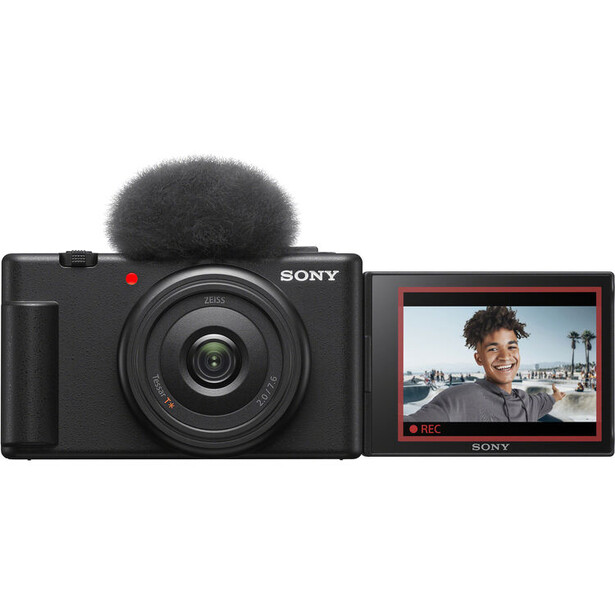
At its core, this is a point-and-shoot with a fixed 20mm-equivalent f/2.0 lens and a one-inch sensor that dramatically outperforms smartphone cameras in low light and dynamic range. But the magic is in the thoughtful features Sony included for social content. Product Showcase mode automatically shifts focus from your face to whatever object you hold up to the camera, then returns when you lower it. The camera uses contrast detection autofocus rather than phase detection, so these focus transitions aren't instantaneous, but they're smooth enough for casual content. Background Defocus is a dedicated button that blurs the background for portrait-style shots without requiring any understanding of how aperture works. The built-in three-capsule directional microphone captures clear audio without external accessories. Sony even added native vertical video support for creators whose audience lives on TikTok and Instagram Reels.
Key Specs
- Sensor: 20.1 MP one-inch Exmor RS
- Lens: 20mm-equivalent f/2.0 prime (fixed)
- Autofocus: Contrast detection
- Video: 4K at 30p with vertical video support
- Audio: Directional three-capsule microphone
The limitation is baked into the design: you cannot change the lens. If that 20mm-equivalent field of view is too wide or not wide enough for your needs, you're stuck with digital zoom that degrades image quality. There's no upgrade path, no kit to expand into, no adaptation to different shooting scenarios. The ZV-1F does one thing extraordinarily well, and if that thing aligns with your needs, it's hard to beat.
The Aspiring Filmmaker's Best Friend: Panasonic Lumix G7
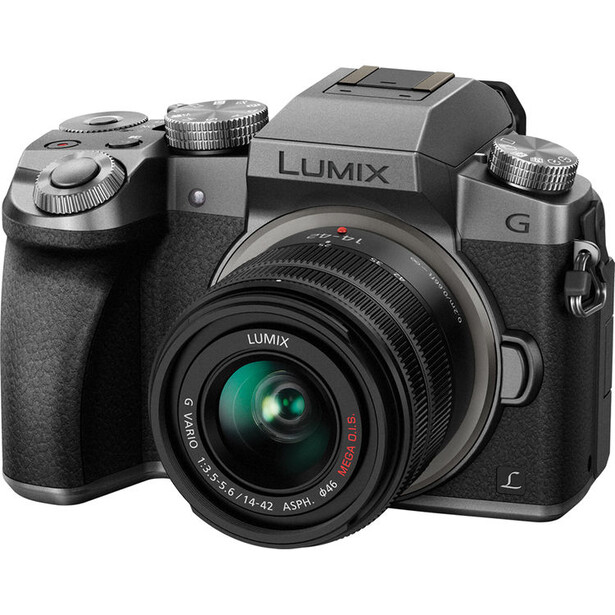
The G7 shoots 4K video at 30p and 24p, records internally to affordable SD cards, and includes features like focus peaking, zebra patterns for exposure warning, and a fully articulating screen that lets you monitor yourself from any angle. It has a proper high-resolution OLED electronic viewfinder, a 3.5mm microphone jack for external audio, and a body that actually feels substantial in your hands. The Micro Four Thirds lens ecosystem behind it is vast and affordable, with excellent cinema-style manual lenses available for a fraction of what full frame equivalents cost. Film students and YouTube creators have been cutting their teeth on this camera for years, and there's a reason for that.
Key Specs
- Sensor: 16 MP Live MOS (Micro Four Thirds)
- Video: 4K UHD at 30p and 24p
- Viewfinder: High-resolution OLED EVF
- Input: 3.5mm microphone jack
The weakness is autofocus. The G7 uses an older contrast-detection system that works adequately for static shots but tends to hunt and pulse when tracking moving subjects in video mode. Walk-and-talk vloggers will struggle, and fast action is essentially off the table without manual focus skills. This is a camera that rewards deliberate, controlled shooting. Set up your tripod, nail your composition, lock your focus, and the G7 will deliver results that embarrass cameras costing several times more. Just don't expect it to do the thinking for you.
The Purist's Entry Point: Canon EOS R100
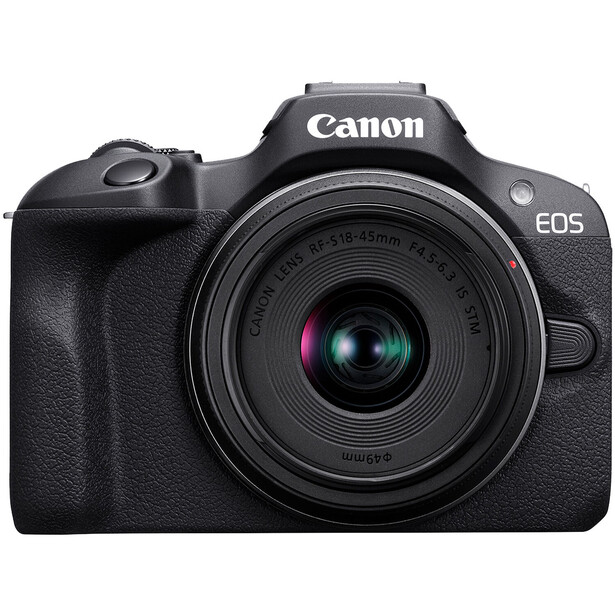
Attach an inexpensive Canon RF 50mm f/1.8 STM to this body and you can produce portraits with the kind of background separation and optical character that social media users associate with professional photography. The sensor captures light with fidelity that belies the camera's budget positioning. For photographers who care about stills and nothing else, who don't need articulating screens or touchscreen menus or 4K video without crop, the R100 represents an intriguing value proposition. You're paying for what matters and skipping what doesn't.
Key Specs
- Sensor: 24.1 MP APS-C CMOS
- Lens Mount: Canon RF
- Autofocus: Dual Pixel CMOS AF (stills and 1080p; contrast detect in 4K)
- Weight: 356 g (with battery)
The compromises are significant and intentional. The rear screen is fixed and non-touch, a throwback to camera design from nearly a decade ago. Navigating menus requires physical button presses, which slows operation considerably. Video performance is poor, with a heavy crop in 4K that makes the mode nearly unusable for serious work. Canon clearly designed this camera for a specific user: someone who wants to take beautiful still photographs without paying for capabilities they'll never use. If that describes you, the EOS R100 makes surprising sense.
The Bottom Line
Spending $2,000 or more on a camera is unnecessary for most new photographers. If your goal is content creation, the Nikon Z30 and Sony ZV-1F handle video with aplomb. If you want to learn filmmaking fundamentals, the Panasonic Lumix G7 remains the classroom standard for good reason, and pairing it with Introduction to Video: A Photographer's Guide to Filmmaking will accelerate your learning curve dramatically. If you prioritize stills above all else, the Canon EOS R50 and Canon EOS R100 offer image quality that punches well above their sub-$700 price tags. For anyone just getting started, Photography 101 covers everything from camera basics to post-processing fundamentals.
The gear doesn't make the photographer. But having a good tool in your hand certainly doesn't hurt.





Join the Fstoppers community for free
-
Post comments and join in the discussions
-
Browse the site ad-free
-
Share your work and get featured in the community
-
Compete in the photo contests for fun and prizes
No comments yet