Your camera’s exposure meter is not a truth machine, and that mismatch is why you end up with frames that look too dark, too bright, or just “off.” Once you stop treating the meter like a judge and start treating it like a starting point, you get faster and more intentional with light.
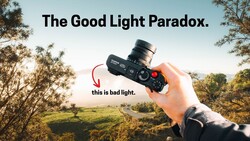
Coming to you from Martin Castein, this practical video walks through why the camera keeps “changing its mind” about exposure, even when the scene feels straightforward. Castein frames the internal meter as a guess at the average brightness of the whole scene, not a measurement of what you meant. That idea alone can unclog a lot of frustration, because it explains why a backlit subject so often comes out wrong. If the background is bright, the camera tries to protect it, and the person goes dark. If the background is dark, the camera lifts everything, and the mood you wanted gets washed out.
He then shows a simple outdoor example that makes the point without drowning you in theory. In aperture priority, the camera produces a technically decent frame, but it is not the look he’s after. Instead of fighting the scene, he nudges exposure compensation down by a stop, then pushes it further, and you can see the mood shift quickly. The useful part is not the exact number he lands on. It’s the habit: decide what you want the image to feel like, then tell the camera how far off its guess is. That mindset is the difference between “the light ruined it” and “the light gave me options.”
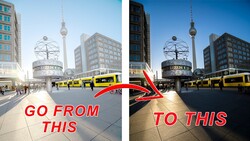
The video also gives you a clean way to think about backlight so it stops feeling like a problem you need to avoid. Place the sun behind your subject and pay attention to what sits directly behind them, because a darker backdrop can turn that edge light into a clear rim along hair and shoulders. That rim is not a secret setting. It is placement and timing, and it shows up when you stop chasing a neutral exposure and start choosing a look. He also pushes against the rigid rule that highlights must always be saved. If the bright area is an empty sky, blowing it out can be a choice that creates a clean, soft, airy frame, and the rest of the image can still carry the picture.
Where it gets especially helpful is when he shifts into metering modes, because that is where people start assuming the camera is doing something mysterious. He describes the “whole frame” metering option as one big guess and spot metering as a small-area guess, with the key point that both can be wrong in consistent ways. Once you learn your camera’s pattern, you stop checking every shot like you don’t trust yourself. He also flags a modern trap: mirrorless screens can look brighter or darker depending on ambient light, and your eyes adapt, so you can feel like exposure is fine and still get home to files that are one or two stops off. He references older DSLR habits too, including using bodies like the Nikon D600 and the Nikon D3S, where the rear preview was not always a reliable judge and the meter and histogram carried more weight. Check out the video above for the full rundown from Castein.




Join the Fstoppers community for free
-
Post comments and join in the discussions
-
Browse the site ad-free
-
Share your work and get featured in the community
-
Compete in the photo contests for fun and prizes
No comments yet