Leica prices have climbed into a range where the purchase can quietly change how you think about every other piece of gear you own. If you have ever wanted a premium camera and then felt your brain pull you back toward rent, trips, kids, or retirement, this video hits that nerve.
Coming to you from Dave Herring, this blunt video lays out what Leica’s current pricing looks like in 2025 and how it shifted from a year ago. Herring narrows the conversation to the M and Q lines, not the whole Leica catalog, and he does not treat the increases like a temporary glitch. He walks through real list prices for bodies like the Leica M11 and its variants, then points out how fast “normal” Leica money turns into something that feels detached from day-to-day life. He also calls out the emotional part directly, including the itch to want a camera you cannot justify on practical grounds, which is where a lot of people get stuck. He keeps the focus on the decision you have to make, not on defending the brand.
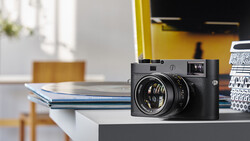
The most useful part is when Herring separates “worth it” from “I can technically afford it,” then gives a few situations where the price can make sense. If the goal is native M-mount glass, his argument is simple: the look comes from the lenses, and the lenses were designed to be used on an M body. He talks about adapting M lenses to other systems and noticing a difference, then pushes the obvious follow-up: if you are paying for that lens character, the body choice is part of the deal. He also leans into the hybrid idea, where the same lenses can move between digital and film bodies like the Leica M6, which is a specific workflow, not a vague lifestyle claim. There is also a newer entry point he mentions, the Leica M EV1, framed as the lowest rung in a still-expensive ladder.
Then the video shifts into the reasons Leica is not worth it, and this is where it stops being polite. First, if you are not going to use the camera, the purchase is dead weight, even if resale value is strong. Second, if you crave tech-forward features, Herring says the M and Q lines will annoy you, because they are not built to win the spec race, and you will keep noticing what you did not get for the money. He contrasts that with buying other systems when you want modern performance, and he references his own time with the Leica SL2-S without turning it into a takedown. The more personal “not worth it” test is his “checkbox” idea: if a camera does not solve a real gap, it becomes a high-priced object that hangs around until you sell it.
Herring’s checkbox example gets uncomfortably specific, and it is probably the part you will recognize fastest. He sold a Leica Q2 because it stopped fitting how he wanted to shoot, then later realized he lost something the Q made easy: handing a camera to family so someone else can get real photos of you in the moment. That leads into his current wrestle between the Leica Q3, the Leica Q3 43, and the Leica Q3 Monochrom, not as trophies, but as tools that might get used differently than an M. He also draws a hard line on financing, basically saying debt for a hobby should make you pause, and his “buy used, buy patiently” advice lands like a practical exit ramp, not a moral lecture. Check out the video above for the full rundown from Herring.




Join the Fstoppers community for free
-
Post comments and join in the discussions
-
Browse the site ad-free
-
Share your work and get featured in the community
-
Compete in the photo contests for fun and prizes
5 Comments
The hard truth is that camera associated photography equipment prices have gone up greatly over the past five years regardless of brand. Between the inflation that has been seen throughout the world to the tariffs on imported cameras that are faced by US customers. The Fujifilm XT 30 that I bought in 2020, today is selling used for within $50-100 of what I paid new and it's replacement the XT 50 is $600 more expensive.
Leica is an easy pinata to swing at, always has been and always will, nothing to see here.
Leica will always be the unique camera brand that many criticise yet deep down inside respect and want...similar to wanting a new or used Porsche 911...Our top Leica store in Berlin is doing very well, and talking to the sales people there, they state that their best customers are not German, but tourists from China, Russia. Japan ,USA, UK, India, Korea and so on...that little red dot on Leica cameras has left a very positive impression world wide.
Even looking at the M EV1 (as I don't like rangefinders), it just lacks a number of features I consider deal breakers, namely a decent grip, IBIS (for slow shutter speeds without needing a tripod) and an articulating screen. My A7CII is nowhere near as well crafted a camera as a Leica but with the aforementioned features and a much less expensive price, for me Leica is simply not an option.
It’s always been a wanted system, small compact, desired luxury and touted as the best lenses on earth. People find it hard not to have it that mysterious bokeh, the insane perception of quality knowingly not the state of the art in time just the best build. Its an object of art but not your run and gun shooting machine so compromised in many areas make it a consistent challenge can I make or am I capable of making great images with it…that’s the lure
I got back into digital photography about five years ago. At the time, I decided to purchase a used Fujifilm X-E3 for $450 delivered to see if I would continue my hobby.
The prices of some of the big name players in photography has gone into the up beyond the cost of living several times. I have decided to continue to use my X-E3 instead of replacing it.
I do own a couple of Leica M lenses which I purchased shortly after purchasing my camera. However the price difference between the Leica and other notable lenses has continued to increase.
It saddens me that the Leica has become the toy of the rich and not the tool of quality photography that it was designed to be