Apple has officially announced the latest MacBook Air, now powered by the company's M5 chip. The updated laptop brings a meaningful performance bump, doubles the base storage to 512 GB, introduces Wi-Fi 7 and Bluetooth 6 via Apple's new N1 wireless chip, and keeps the same thin, fanless aluminum design that's made the Air Apple's best-selling laptop for years.
What's New
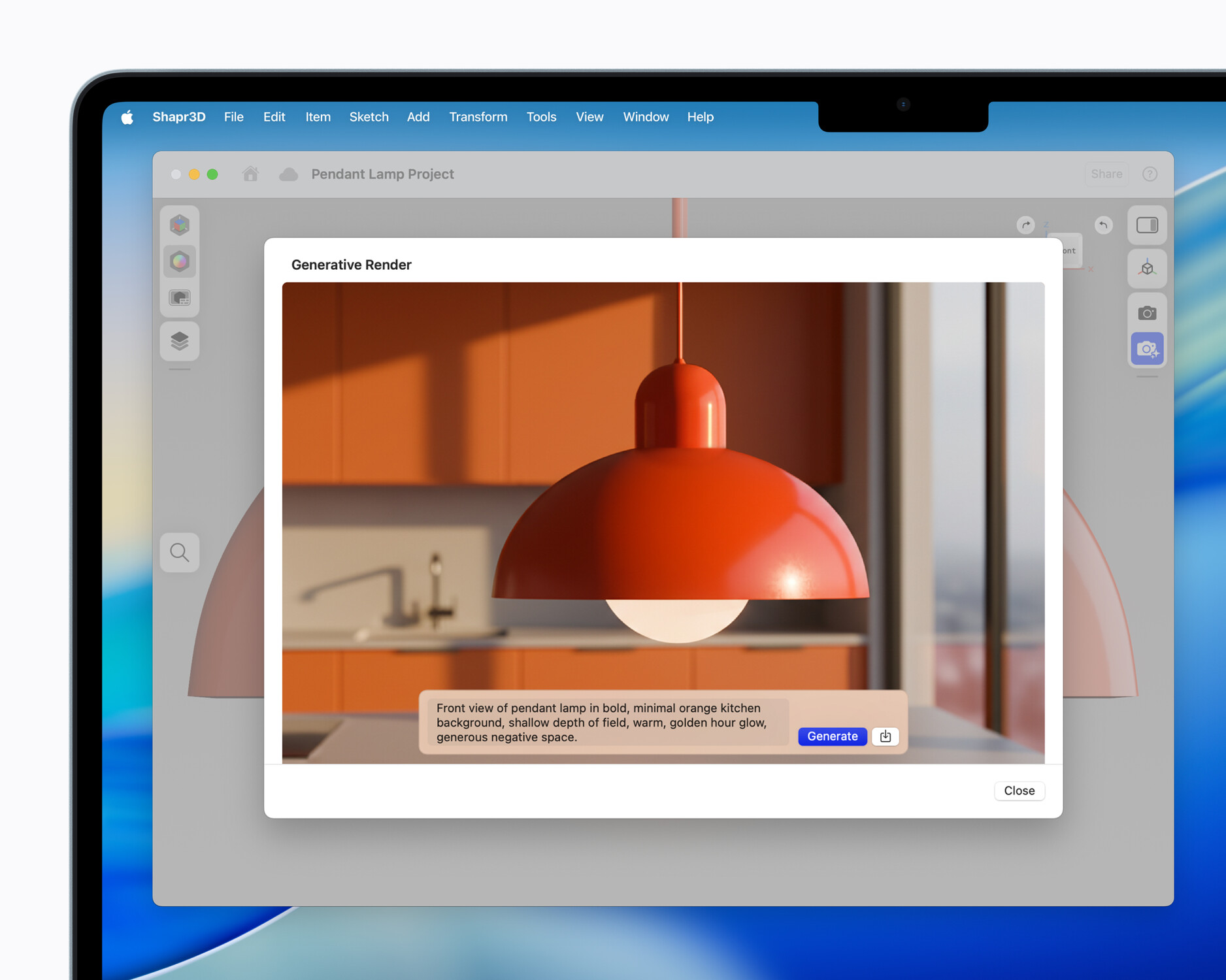
The headlining change is the M5 chip, which features a 10-core CPU and up to a 10-core GPU. Each GPU core now includes what Apple calls a Neural Accelerator, which Apple says delivers up to four times faster AI task performance compared to the M4 MacBook Air and up to 9.5 times faster than the M1 model. The M5 also brings enhanced shader cores, a third-generation ray-tracing engine, and faster unified memory with 153 GB/s of bandwidth, a 28% improvement over the M4.
Storage has been doubled across the board. The base configuration now starts at 512 GB instead of 256 GB, and the MacBook Air is configurable up to 4 TB for the first time. Apple also says the new SSD delivers twice the read and write speeds of the previous generation. RAM options remain unchanged at 16 GB, 24 GB, and 32 GB of unified memory.
The other notable hardware addition is the N1 wireless chip, which brings Wi-Fi 7 and Bluetooth 6 to the MacBook Air for the first time. The previous M4 model shipped with Wi-Fi 6E and Bluetooth 5.3.
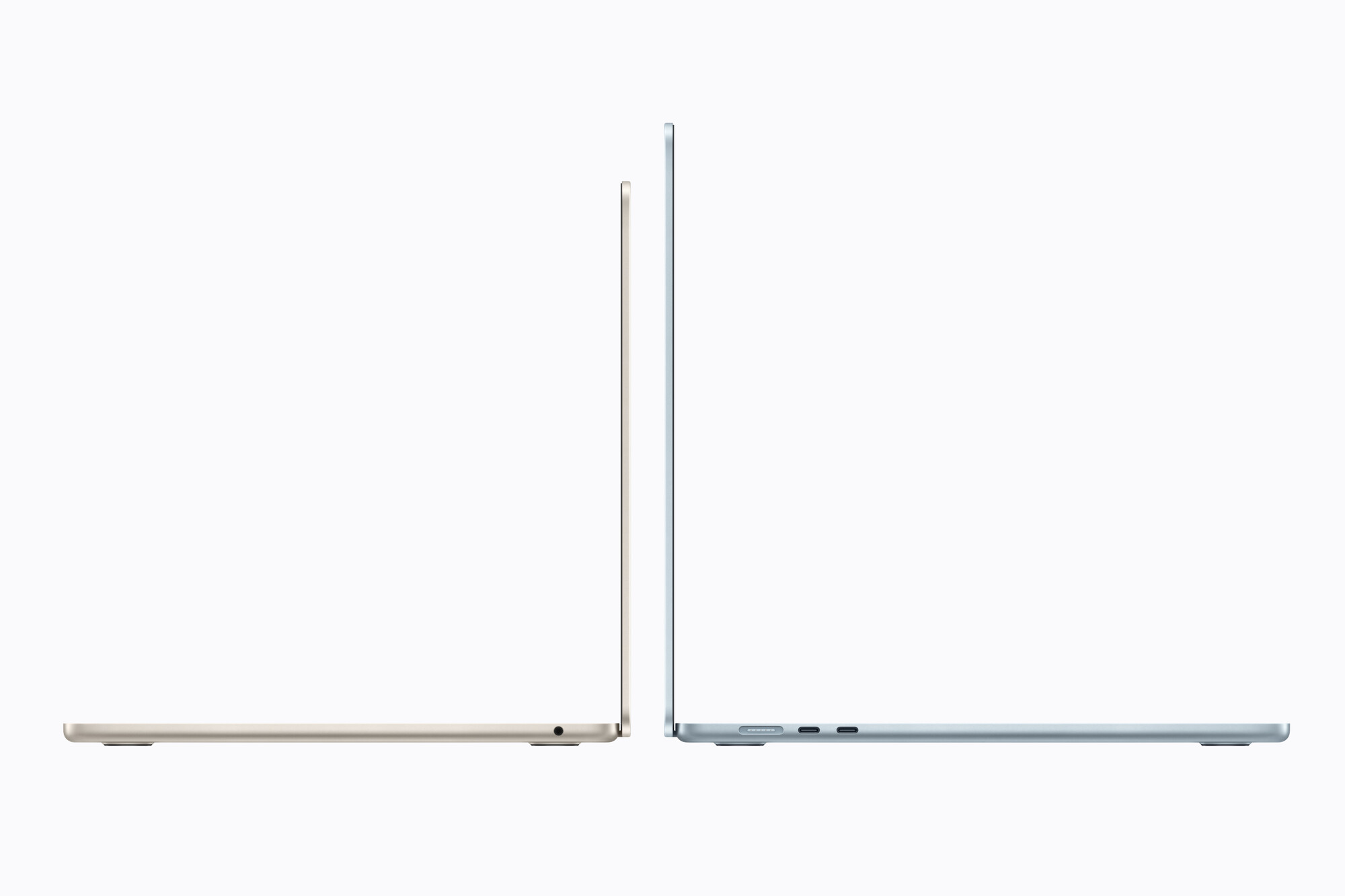
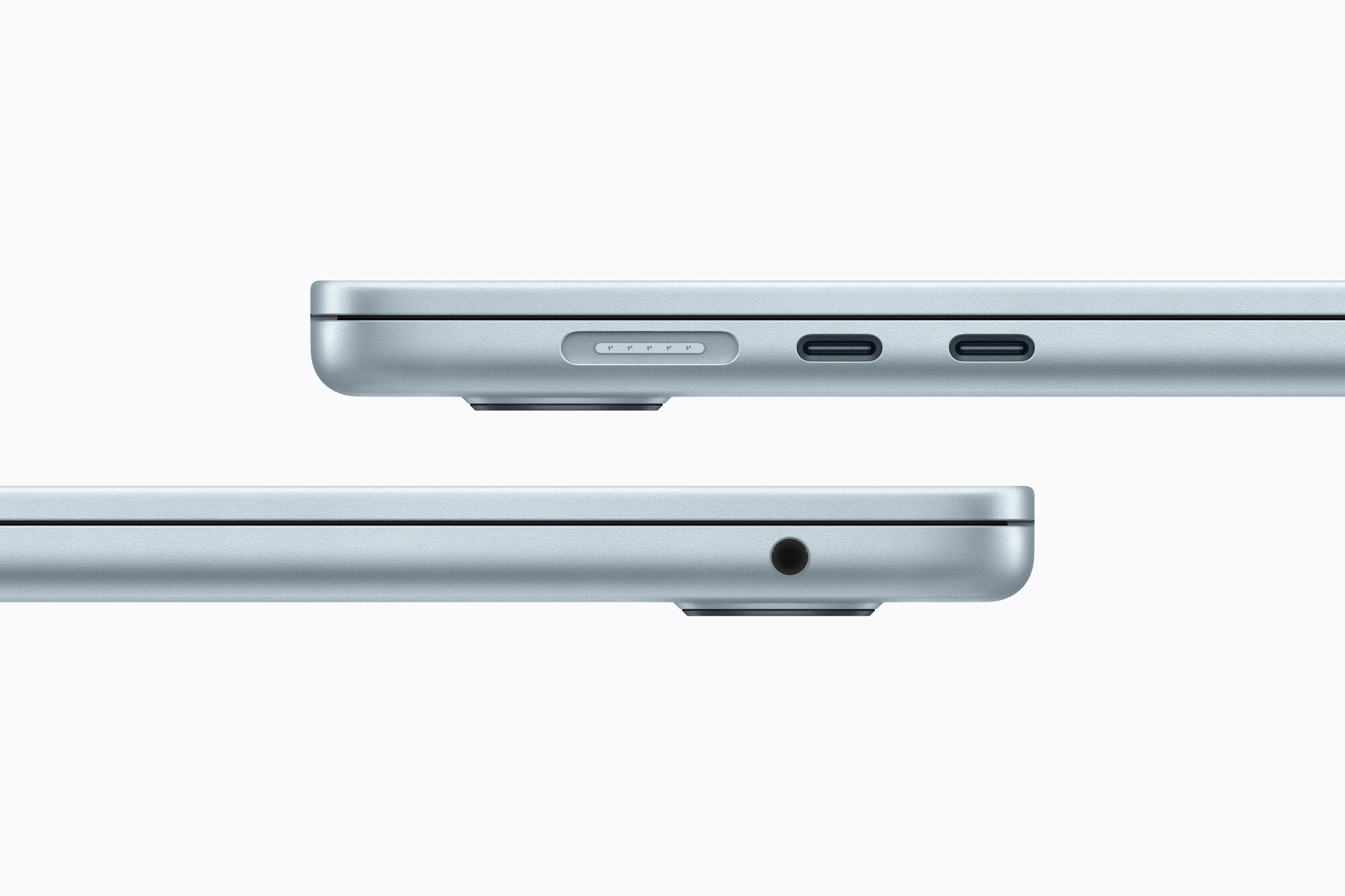
The rest of the design and feature set carries over from the M4 model. The MacBook Air retains its Liquid Retina display (13.6 inches or 15.3 inches, depending on the model), 12 MP Center Stage camera, MagSafe charging, two Thunderbolt 4 ports with support for up to two external displays, and up to 18 hours of battery life. It continues to ship in four colors: sky blue, midnight, starlight, and silver.
On the software side, the MacBook Air ships with macOS Tahoe and Apple Intelligence.
Performance
Apple provided several benchmark comparisons:
- AI video enhancement in Topaz Video: up to 6.9 times faster than the M1 model, up to 1.9 times faster than M4
- 3D rendering with ray tracing in Blender: up to 6.5 times faster than M1, up to 1.5 times faster than M4
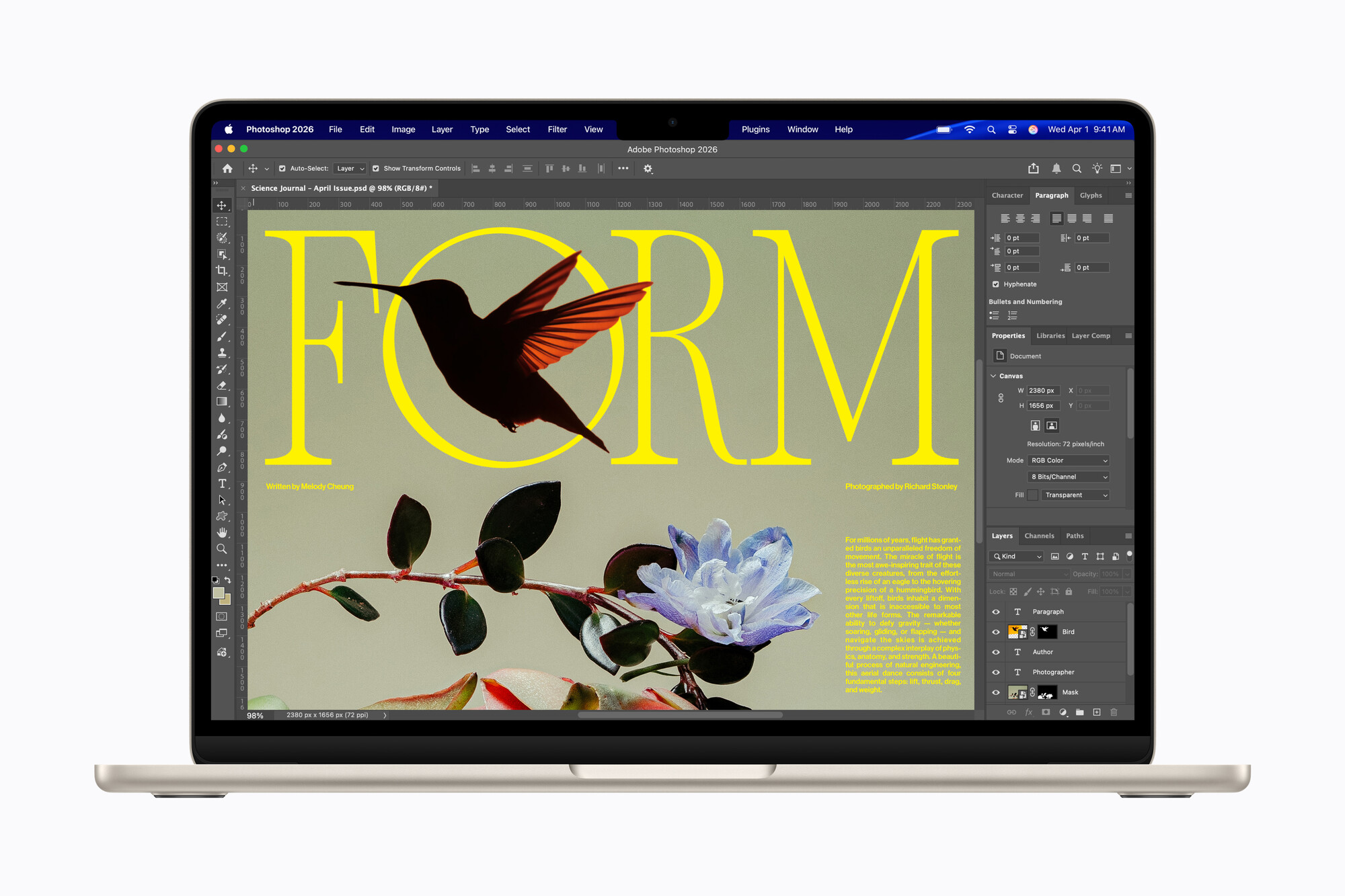
- Image processing in Affinity: up to 2.7 times faster than M1, up to 1.5 times faster than M4
- Web browsing: up to 50% faster than a comparable Intel-based PC laptop
Key Specs
- Chip: Apple M5 (10-core CPU, up to 10-core GPU, 16-core Neural Engine)
- Neural Accelerator in each GPU core
- Unified memory: 16 GB standard, configurable to 24 GB or 32 GB
- Memory bandwidth: 153 GB/s
- Storage: 512 GB standard, configurable up to 4 TB
- SSD speed: 2x faster read/write versus previous generation
- Display: 13.6-inch or 15.3-inch Liquid Retina, 500 nits, 1 billion colors
- Resolution: 2,560 x 1,664 (13-inch) / 2,880 x 1,864 (15-inch), 224 ppi
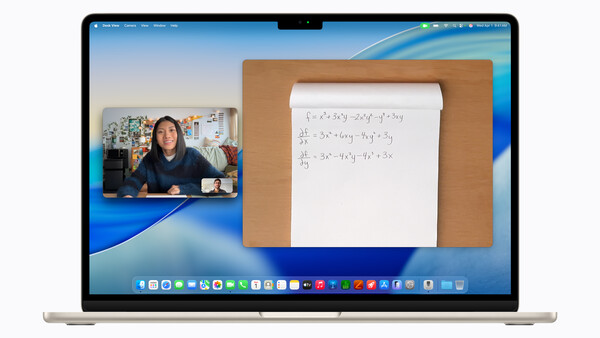
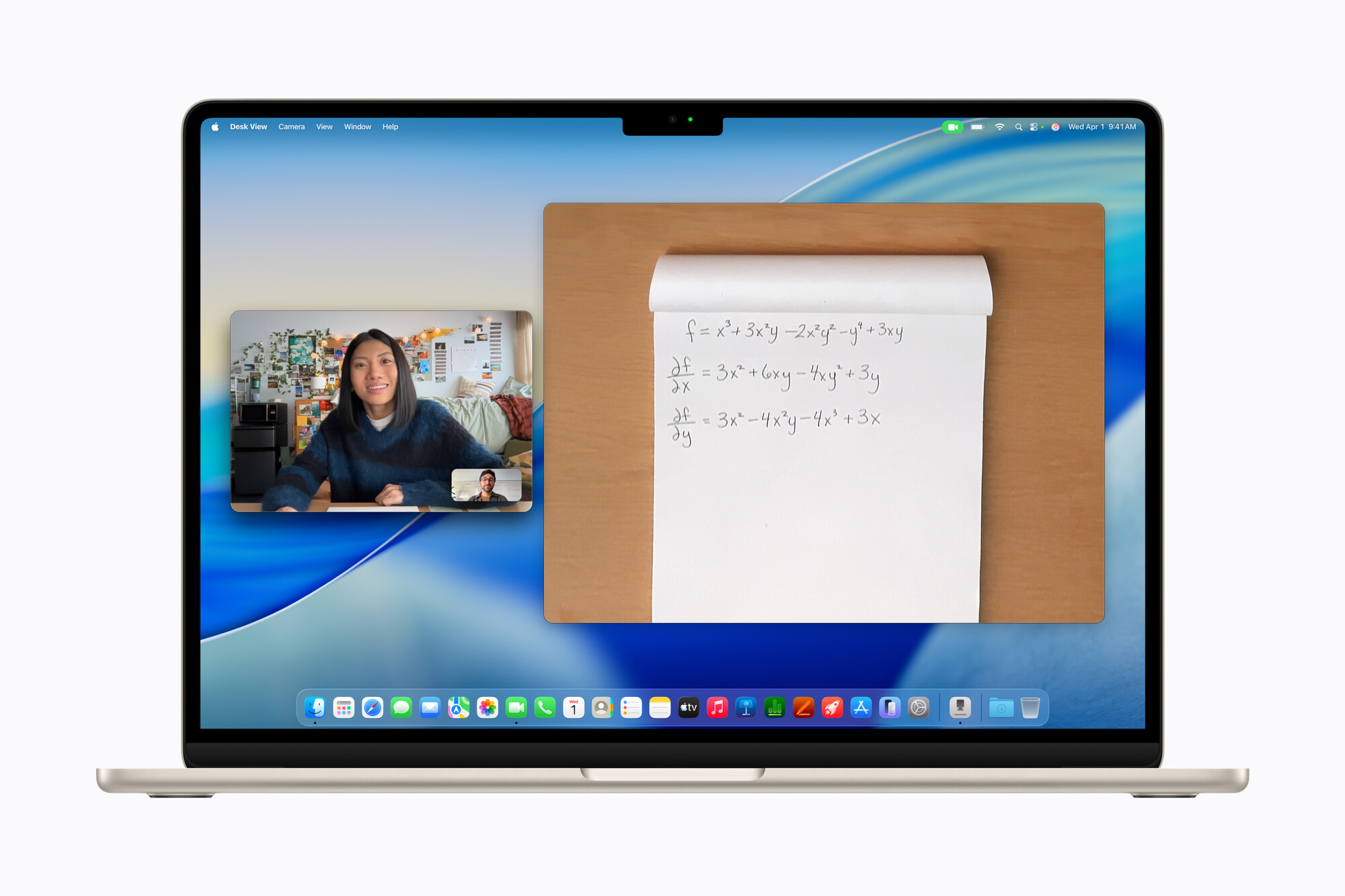
- Camera: 12 MP Center Stage with Desk View support
- Wireless: Wi-Fi 7, Bluetooth 6 (Apple N1 chip)
- Ports: 2x Thunderbolt 4 (USB-C), MagSafe, 3.5 mm headphone jack
- External display support: Up to two external displays
- Battery life: Up to 18 hours
- Audio: Three-mic array, immersive sound system with Spatial Audio and Dolby Atmos
- Design: Fanless aluminum, available in sky blue, midnight, starlight, and silver
- Hardware-accelerated codecs: H.264, HEVC, ProRes, ProRes raw, AV1 decode
- OS: macOS Tahoe with Apple Intelligence
Why It Matters for Photo and Video Creators
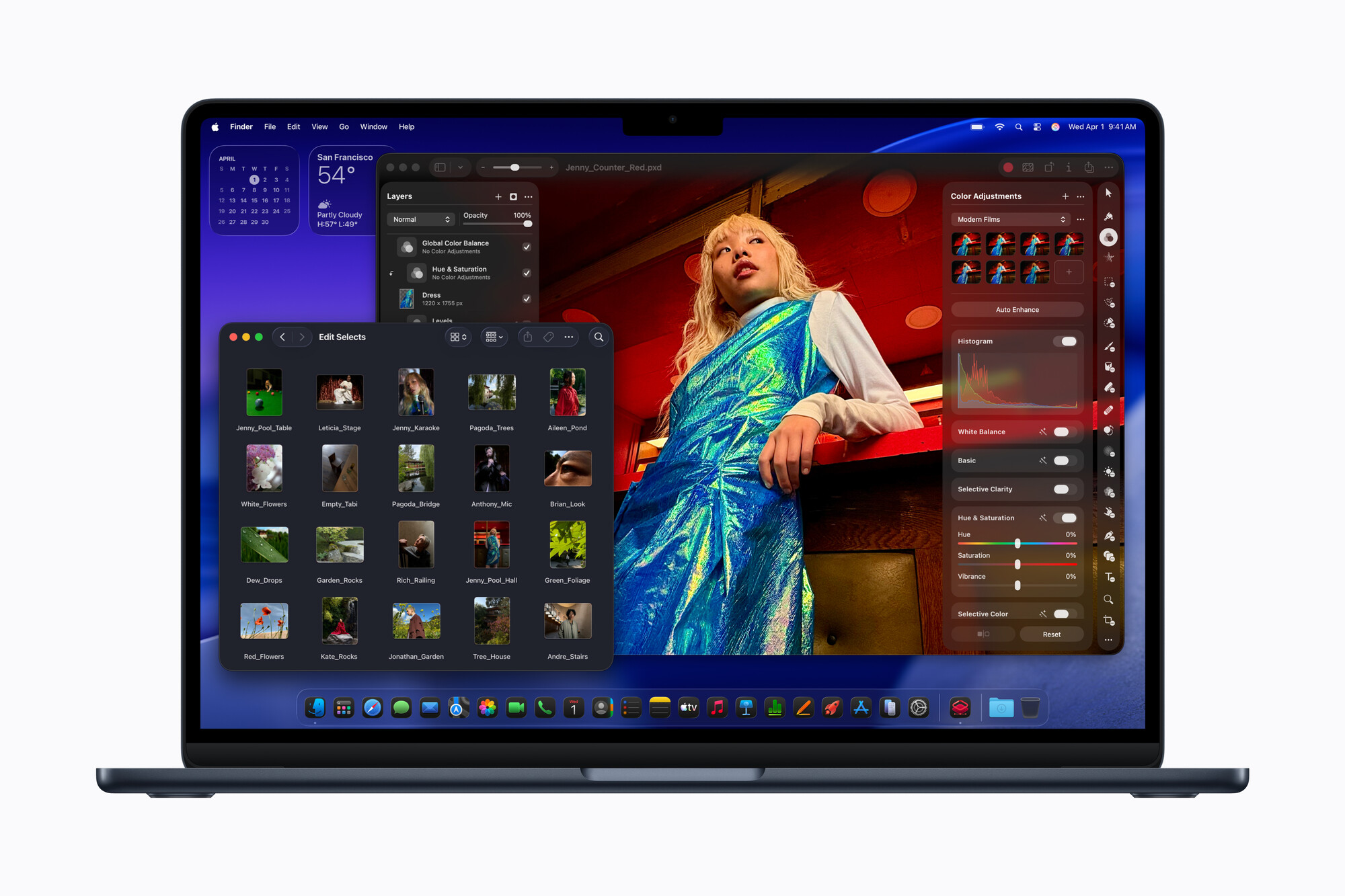
The MacBook Air has long been one of the most popular laptops among photographers and videographers who need a portable editing machine without the bulk and cost of the MacBook Pro and is my personal favorite machine. The M5's performance improvements are particularly relevant for creative workflows. Faster image processing in apps like Affinity, improved GPU-based rendering in tools like Blender, and significantly faster AI task performance all translate directly to the kind of work photo and video professionals do every day, whether that's batch processing raw files, running AI-assisted edits, or rendering 3D composites.
The doubled base storage to 512 GB is a welcome change for creators who regularly work with large photo libraries and video files. The previous 256 GB starting point was a genuine limitation for anyone shooting in raw or working with 4K and higher video. Being able to configure up to 4 TB means the Air can now hold substantially more project files without relying on external drives.
Hardware-accelerated ProRes and ProRes raw encode and decode is also worth noting. For videographers who shoot in these formats, the MacBook Air can handle playback and editing natively without taxing the CPU, keeping things smooth even on a fanless machine.
The faster SSD speeds, improved memory bandwidth, and Wi-Fi 7 support round out a machine that's increasingly capable of serving as a primary editing laptop rather than a secondary travel machine. For creators who don't need the sustained workload headroom of the MacBook Pro, the M5 MacBook Air offers a compelling balance of performance, portability, and price.
Pricing and Availability
The 13-inch MacBook Air with M5 starts at $1,099, while the 15-inch model starts at $1,299. Education pricing is $999 and $1,199, respectively.
"The new MacBook Air with M5 brings incredible performance and even more capability to the world's most popular laptop," said John Ternus, Apple's senior vice president of Hardware Engineering. "With M5, MacBook Air powers through a wide range of tasks, from everyday productivity to creative workloads, and is even faster for AI."


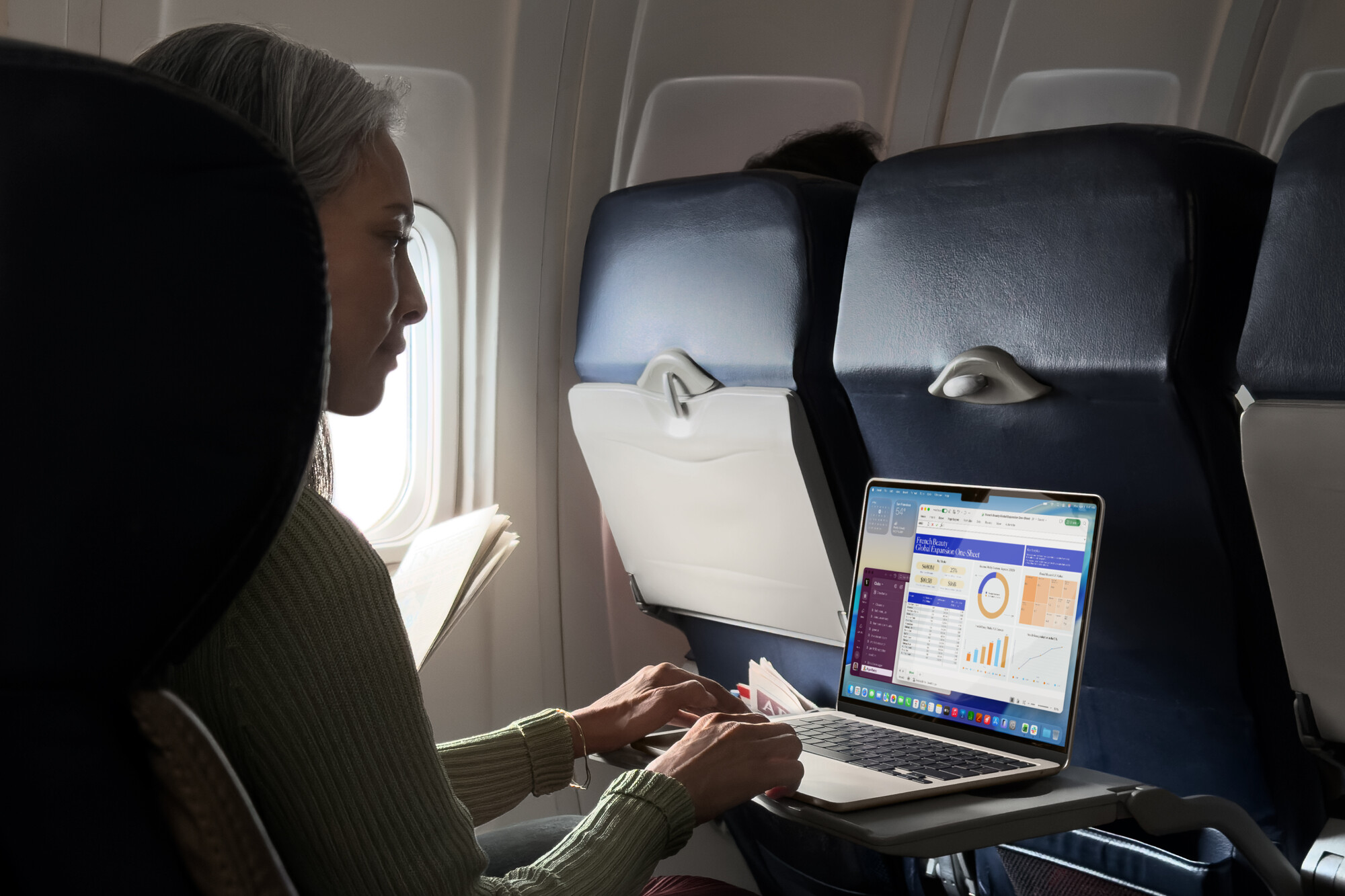
The M5 MacBook Air represents a meaningful update to a laptop that already had a strong reputation as the default recommendation for most people. Whether you're a photographer looking for a lightweight editing machine, a videographer who needs ProRes support on the go, or someone who simply wants a fast, quiet, all-day laptop, the new Air checks most of the boxes. The $100 price increase over the M4's starting price is offset by the doubled storage, and for anyone still on an M1 or Intel-based MacBook Air, the performance gap is now substantial.





Join the Fstoppers community for free
-
Post comments and join in the discussions
-
Browse the site ad-free
-
Share your work and get featured in the community
-
Compete in the photo contests for fun and prizes
No comments yet