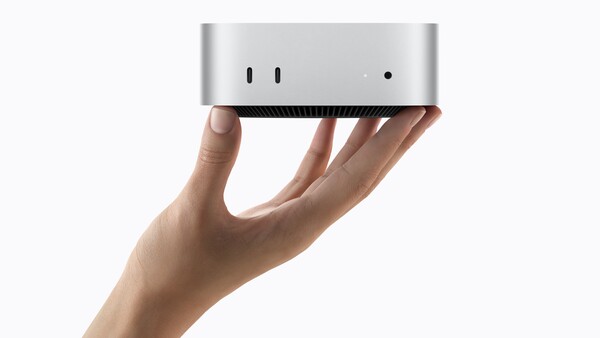
Apple has announced updated versions of the Mac mini with M6 and Mac mini with M5 Pro, bringing faster CPU, GPU, storage, and AI performance to the compact desktop while adding Wi-Fi 7, Bluetooth 6, faster Ethernet, and genlock support. Preorders open August 25, 2026, with the computers scheduled to begin shipping on September 22, 2026.
The physical concept remains unchanged: Mac mini continues to put desktop-class Apple silicon into a small enclosure, but Apple is positioning the latest generation for a wider range of demanding local workloads. The M6 model receives the larger generational update, while the M5 Pro configuration is aimed at users working with more demanding video, 3D, AI, development, and data-processing tasks.
According to Apple, the M6 version delivers up to four times faster AI performance, twice the graphics performance, twice the storage performance, and 40% faster CPU performance compared with the previous M4 generation. These are Apple-provided performance figures rather than independent benchmarks.
Mac mini With M6
M6 introduces a 12-core CPU, two more CPU cores than the previous generation, along with a 12-core GPU that likewise gains two cores. Each GPU core now incorporates a Neural Accelerator, a change intended to improve workloads that can take advantage of GPU-based machine learning and AI processing.
Apple also includes what it describes as a dual 16-core Neural Engine. Standard unified memory remains 16 GB, with configurations available up to 32 GB, while memory bandwidth rises to as much as 170 GB/s.

Apple says the new system can process prompts in LM Studio up to 13.5 times faster than the Mac mini with M1 and up to 4.8 times faster than the Mac mini with M4. The company also claims spreadsheet calculations in Microsoft Excel are up to 2.3 times faster than on the M1 system and up to 1.5 times faster than on M4. Gaming with ray tracing in Cyberpunk 2077: Ultimate Edition is rated at up to twice the performance of the M4 model.
Those comparisons are based on Apple's own testing, so they should be treated as indications of the expected generational improvement rather than direct predictions of performance in every application.
Mac mini With M5 Pro
The higher-end version uses M5 Pro, with configurations offering up to an 18-core CPU and 20-core GPU. The GPU includes an enhanced shader core, third-generation ray tracing, and Neural Accelerators in each GPU core.
Memory capacity is considerably higher than on the M6 version, topping out at 64 GB of unified memory with bandwidth of up to 307 GB/s. That additional capacity and bandwidth are likely to matter more than peak benchmark numbers for users handling large video projects, complex 3D scenes, local AI models, or other workloads that need substantial shared memory. Apple specifically cites editing ProRes Raw files, running larger local AI models, working with large datasets, and handling complex 3D scenes among the intended uses.
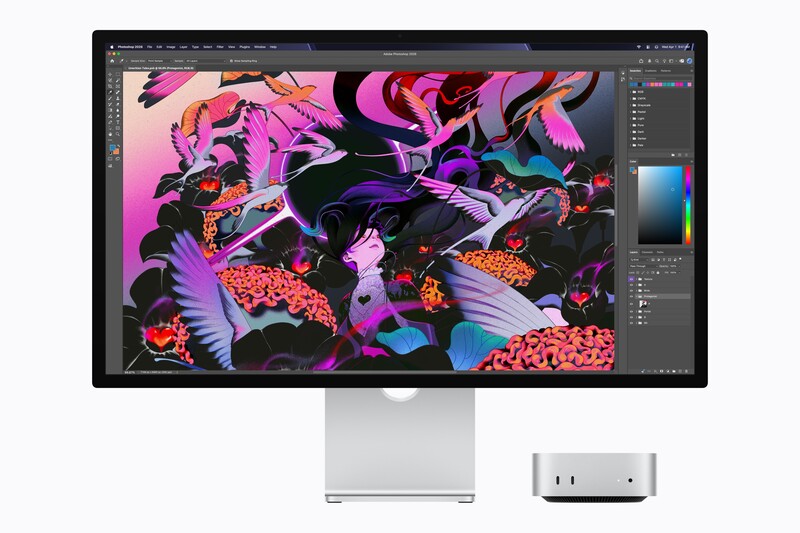
For performance, Apple says M5 Pro provides up to 8.5 times faster LLM prompt processing in LM Studio than the Mac mini with M2 Pro, as well as up to four times the performance of M4 Pro in the same test. Ray-traced rendering in Blender is claimed to be up to 4.5 times faster than M2 Pro and up to 1.4 times faster than M4 Pro. In Affinity, Apple reports image-processing performance of up to 2.1 times that of M2 Pro and 1.5 times that of M4 Pro.
Key Specifications
- Mac mini with M6: 12-core CPU; 12-core GPU; Neural Accelerator in every GPU core; dual 16-core Neural Engine; 16 GB standard unified memory; configurable to 32 GB; up to 170 GB/s memory bandwidth; up to four times faster AI performance than M4; up to twice the graphics performance of M4; up to twice the storage performance; up to 40% faster CPU performance; three rear Thunderbolt 4 ports; two front USB-C ports supporting USB 3; HDMI; headphone jack with high-impedance headphone support; 2.5 Gb Ethernet standard with 10 Gb available; Wi-Fi 7; Bluetooth 6.
- Mac mini with M5 Pro: up to 18-core CPU; up to 20-core GPU; Neural Accelerator in every GPU core; enhanced shader core; third-generation ray tracing; up to 64 GB unified memory; up to 307 GB/s memory bandwidth; three rear Thunderbolt 5 ports; two front USB-C ports supporting USB 3; HDMI; headphone jack with high-impedance headphone support; 2.5 Gb Ethernet standard with 10 Gb available; Wi-Fi 7; Bluetooth 6.
- Creator and production features: genlock support over USB-C for synchronization between a display and camera; support includes the iPhone 17 Pro; Thunderbolt 5 on the M5 Pro version can also be used when clustering multiple Mac mini systems for large on-device AI workloads.
- Software: ships with support for macOS 27 Golden Gate and the next generation of Apple Intelligence; Siri AI is planned as part of macOS 27, initially in beta.
- Mac mini with M6 pricing: starts at $899 in the U.S.; education pricing starts at $799.
- Mac mini with M5 Pro pricing: starts at $1,699 in the U.S.; education pricing starts at $1,599.
- Ordering: preorders begin August 25, 2026; customer deliveries and retail availability are scheduled to begin September 22, 2026.
Connectivity Gets a Useful Upgrade
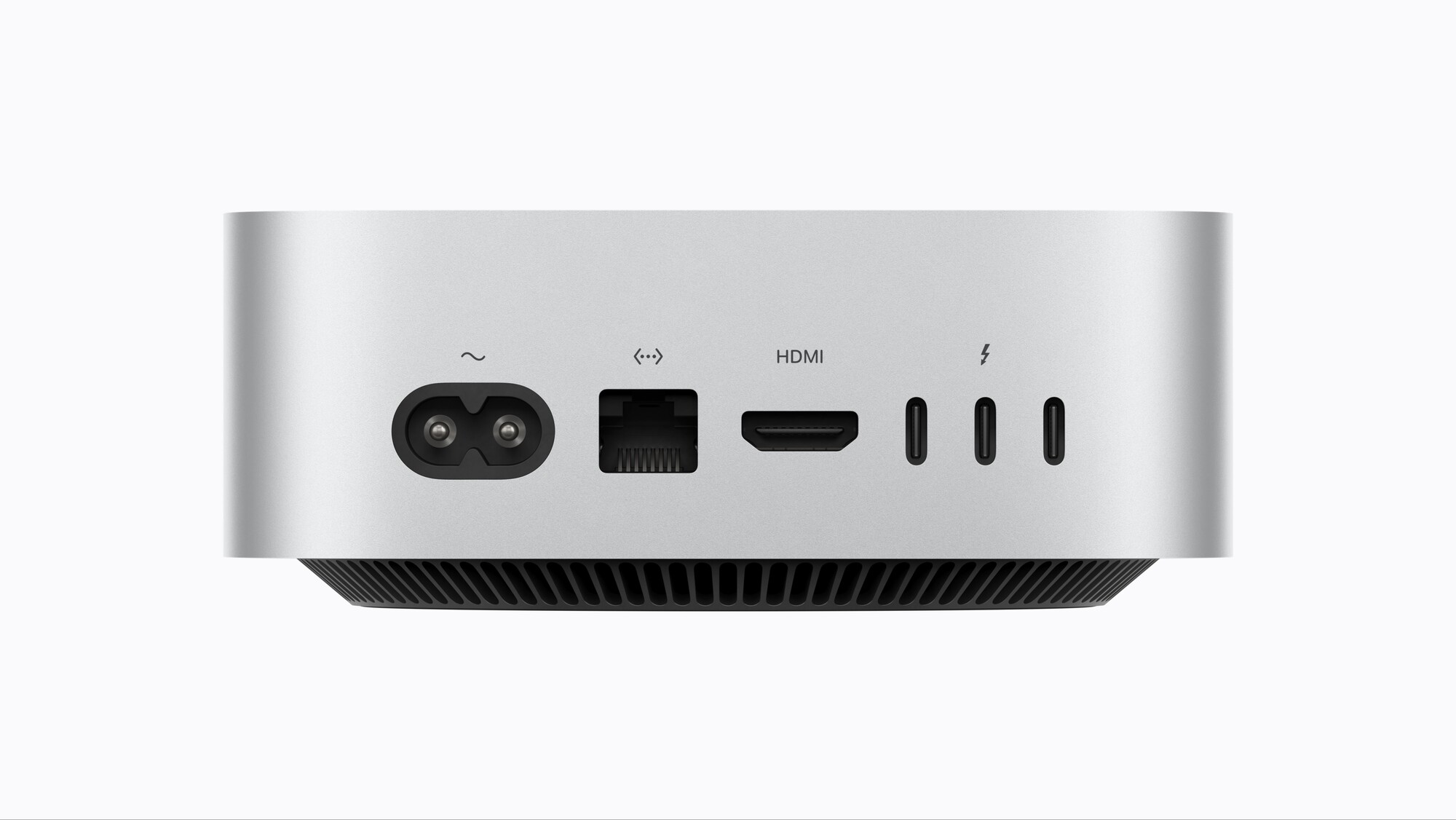
Both systems move to Wi-Fi 7 and Bluetooth 6 and now include 2.5 Gb Ethernet as standard, with 10 Gb Ethernet available as an option. For studios regularly moving large photo catalogs, video files, or project data across network storage, the faster standard wired connection is a practical improvement.
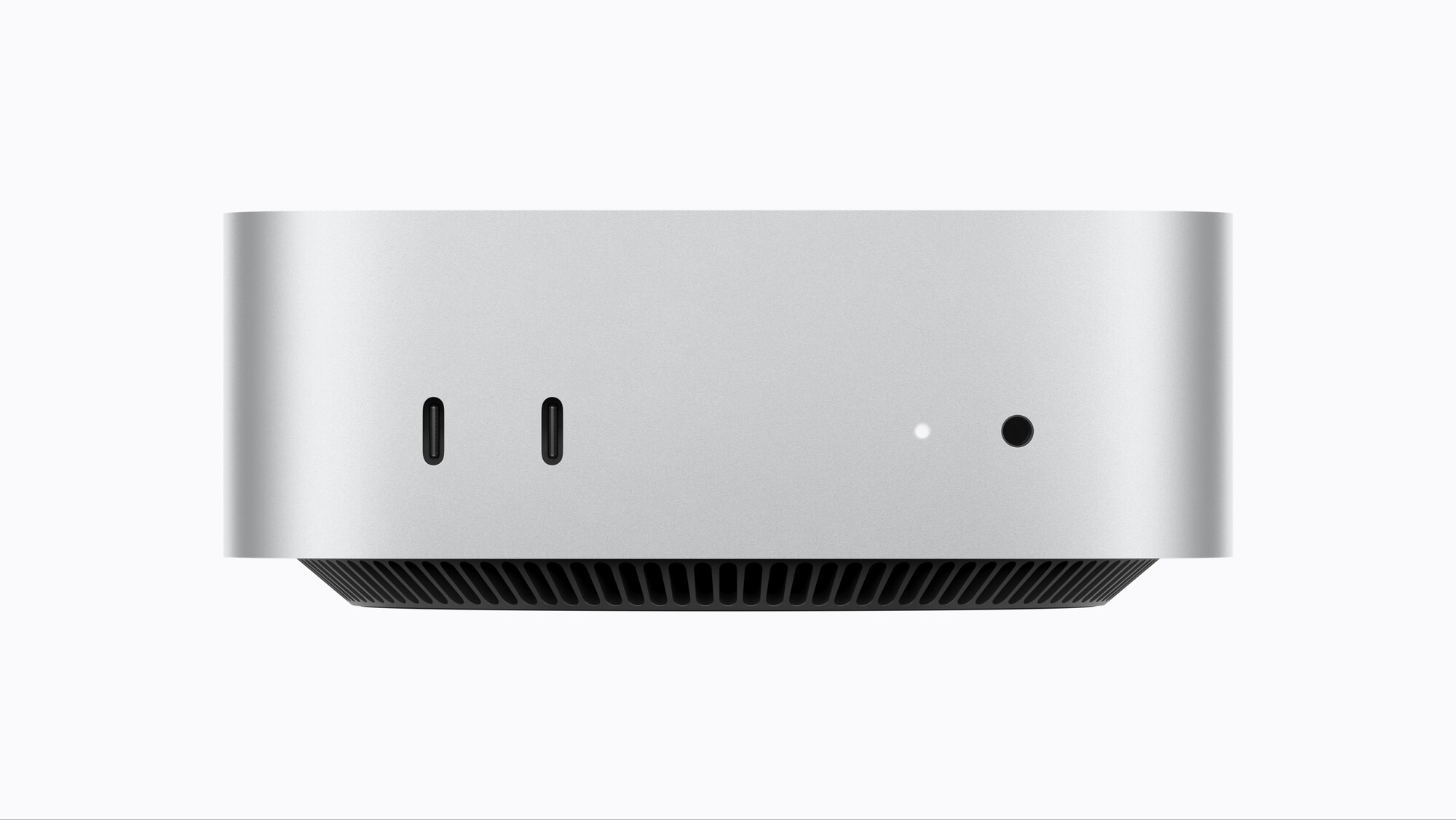
The front remains straightforward, with two USB-C ports supporting USB 3 alongside a headphone jack that supports high-impedance headphones. On the back, the M6 model provides three Thunderbolt 4 ports, while the M5 Pro version steps up to three Thunderbolt 5 ports. Both models also include HDMI and Ethernet.
The more unusual addition is genlock support through USB-C. Genlock allows multiple components in a production environment to operate from synchronized timing, which can be important in multi-camera video, broadcast, virtual production, and other workflows where precise frame synchronization matters. Apple says the feature can synchronize a display and camera and specifically mentions the iPhone 17 Pro as a supported camera.
For creators operating several demanding systems, Apple is also highlighting Thunderbolt 5 as a way of connecting multiple M5 Pro Mac mini systems for workloads involving large AI models running locally.
macOS 27 and Apple Intelligence
The new hardware is paired with macOS 27 Golden Gate. The release introduces Siri AI alongside additional Apple Intelligence features and changes to several standard Mac applications.
Apple says Siri AI will be able to use information from messages, email, and photos as personal context, respond to questions, and perform tasks across applications. It is also being integrated into Spotlight and systemwide context menus, while Visual Intelligence can be used to ask about material currently displayed on screen.
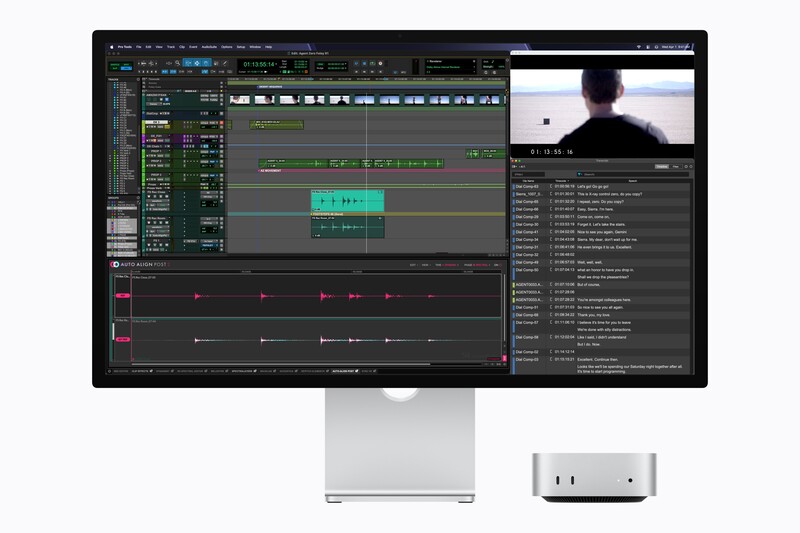
Other changes include additional organizational and browsing tools in Safari, natural-language automation creation in Shortcuts, and new photo-editing functionality in Photos. Apple is also making interface changes to Liquid Glass, including revised toolbars, sidebars, window shapes, and menu bar icons.
Some of these features are still in testing. Apple says macOS 27 will be released as a free software update in the fall, while Siri AI is expected to arrive as a beta later in 2026. Feature and language availability will vary.
Why This Matters for Photo and Video Creators
For photographers, the most immediately relevant numbers may be the GPU, memory, and image-processing improvements rather than the AI marketing surrounding the launch. Apple specifically reports Affinity image processing that is up to 1.5 times faster than M4 Pro on the M5 Pro configuration. Actual gains in Lightroom, Photoshop, Capture One, or other commonly used photography applications are not provided in the release, so those will require independent testing.
The M5 Pro model's 64 GB memory ceiling and 307 GB/s of memory bandwidth are also significant for heavier creative work. Because Apple silicon uses unified memory shared between the CPU and GPU, memory capacity can become important when working with large images, complicated composites, high-resolution video, 3D applications, or local AI tools.
For video users, the combination of ProRes Raw support, Thunderbolt 5, higher GPU performance, and genlock is more notable. The latter is particularly interesting because synchronization has traditionally been a concern associated with dedicated production equipment rather than a small general-purpose desktop. A Mac mini that can be incorporated more easily into synchronized capture and display environments could have uses in studio, broadcast, multicamera, and virtual-production setups.
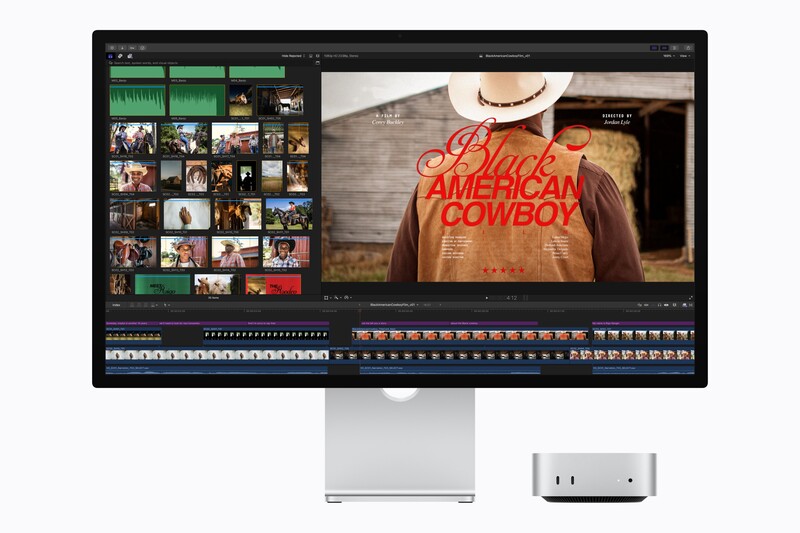
Local AI processing is another major theme of this update. Apple specifically mentions photo and video upscaling and large diffusion models among M5 Pro workloads. Regardless of how much creators use generative AI, the underlying improvements to GPU compute and memory bandwidth could also benefit conventional machine-learning features such as masking, noise reduction, subject recognition, transcription, and other accelerated tools, provided individual applications are optimized for the hardware.
Connectivity matters as well. A 2.5 Gb Ethernet connection as standard is useful for studios pulling source footage or image libraries from network-attached storage, while the optional 10 Gb connection is more appropriate for workflows built around high-speed shared storage.
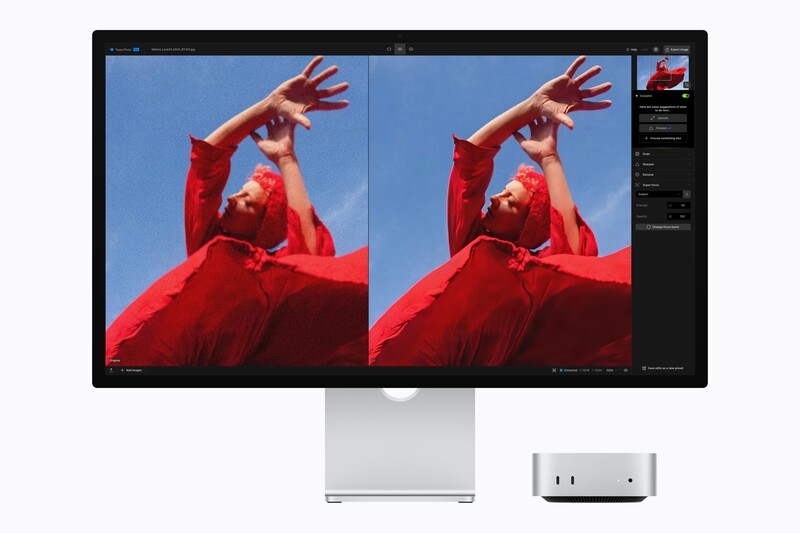
Thunderbolt 5 on the M5 Pro model should also be more relevant to video professionals routinely working with fast external storage and other high-bandwidth peripherals. Apple additionally lists the Studio Display and Studio Display XDR among the display options associated with its current Mac lineup.
Pricing and Availability
The M6 Mac mini starts at $899 in the U.S. The M5 Pro model starts at $1,699.
Apple opened preorders on August 25, 2026, in 30 countries and regions. Deliveries, Apple Store availability, and availability through authorized resellers are scheduled to begin September 22, 2026.
Conclusion
The latest Mac mini update is less about changing the computer's physical concept and more about increasing the amount of processing power and connectivity available within it. The M6 version receives broad improvements to CPU, GPU, storage, and AI performance, while the M5 Pro version provides substantially more memory, greater memory bandwidth, Thunderbolt 5, and additional headroom for demanding creative applications.
For photographers and video creators, genlock may be the most unusual new feature, while the faster GPU, higher memory limits, improved networking, and Thunderbolt 5 support are likely to have wider day-to-day relevance. Apple's benchmark claims suggest sizeable improvements in several workloads, but the practical value will ultimately depend on performance in the specific photo, video, and production applications creators actually use.






Join the Fstoppers community for free
-
Post comments and join in the discussions
-
Browse the site ad-free
-
Share your work and get featured in the community
-
Compete in the photo contests for fun and prizes
3 Comments
With the newer, faster CPU design, the base M5 Ultra may be a better value than an upgraded M5 Max.
As someone who is still on a PC, I wonder if this would be a good way to dip my feet back into the apple ecosystem? Without AI, learning to make that transition to Mac from PC was just too time consuming but maybe now is the time to do it.
Edit: Wait, is the Ultra you mentioned the $10-20k version? That is insane! I had no idea Apple even made computers that expensive.
No, the base M5 Ultra is $5500 US. It only has 96GB or RAM, but I'd be willing to be the new CPU/GPU/RAM integration will provide more performance than a beefed up M5 Max for about the same price. I similarly went the M1 Max Studio route because of GPU supply issues and the MOBO designs (too few PCI-E slots for a true workstation along with minimal Thunderbolt).