

Cameras still act like they’re living in 2008: closed boxes that capture files and little else. Meanwhile, smartphones became cultural powerhouses by embracing apps, and the gap is only getting wider.
Smartphones changed what photography means, and not in a subtle way. They didn’t just put decent cameras in everyone’s pocket. They redefined the act of taking a picture into a continuous cycle of capture, edit, and publish, all contained in a single device. That shift was powered less by the camera hardware itself and more by the app ecosystems that surrounded it. Editing apps, social networks, AI-powered filters, and cloud storage created an environment where photography wasn’t just about making images, but about instantly doing something with them. By contrast, dedicated cameras remain stubbornly closed. Even in 2025, the core experience is the same as it was a decade ago: capture files, transfer them awkwardly to another device, and only then begin to work with them. The cameras themselves are static boxes, immune to the creative vibrancy that apps bring to phones.
That gap might have been tolerable when the primary market for cameras was professionals and hardcore enthusiasts, people who expected to spend hours at a computer fine-tuning raw files. But the cultural ground has shifted. Many people taking pictures today began their photography lives with smartphones, where speed and fluidity were built into the experience from day one. They are accustomed to tapping a screen, sliding a few filters, and sharing to the world instantly. For them, the idea of buying a thousand-dollar camera only to discover that it makes their workflow slower feels like madness. In a landscape where immediacy, flexibility, and constant updates are the norm, dedicated cameras risk becoming relics unless they evolve into something more than isolated tools.
Smartphones Set the Standard
The iPhone didn’t become the most influential camera of all time simply because it had good lenses or clever sensors. What made it transformative was the convenience and the App Store, which gave developers a playground to build tools that extended the phone’s capabilities far beyond what Apple alone could imagine. Suddenly, your camera wasn’t just a camera; it was a portal to Snapseed for editing, Instagram for sharing, VSCO for filters, or Lightroom Mobile for professional-grade tweaks. That abundance of choice and flexibility is what made smartphones into true creative hubs. The hardware mattered, but the ecosystem turned the hardware into a lifestyle.
Over time, that model became not just attractive but expected. Young photographers growing up with phones never had to think about file transfers, card readers, or desktop workflows. They never had to wait until later to share what they just shot. To them, photography isn’t an isolated activity but a continuous loop, one where immediacy is baked into the process. That expectation bleeds into every corner of culture, from social media influencers who must post within minutes to journalists covering breaking news. Dedicated cameras may capture technically superior images, but if those images live in isolation until they can be transferred and processed, the cultural relevance is lost.
Cameras Are Still Stuck in the Past
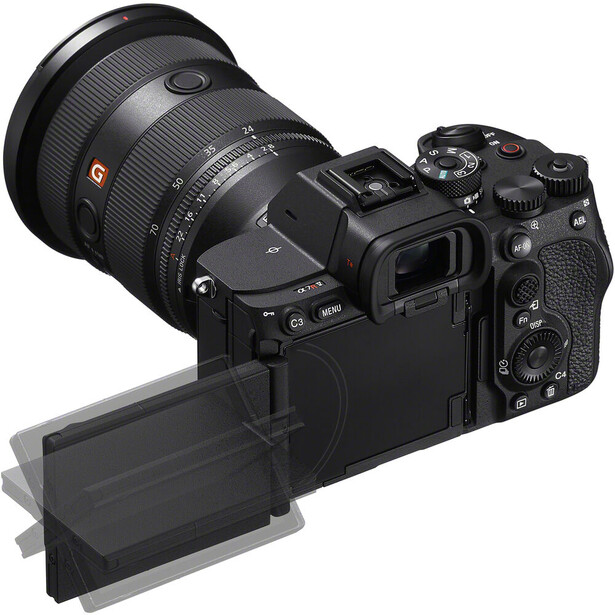
Traditional camera makers, by contrast, still treat connectivity as a novelty rather than a necessity. Wi-Fi and Bluetooth are offered as features, but they are often poorly implemented, buried in confusing menus, and paired with smartphone apps that feel like afterthoughts. Transferring a handful of JPEGs to a phone can take longer than editing an entire TikTok clip. Firmware updates are infrequent, often limited to minor autofocus tweaks or bug fixes, and rarely add genuinely new features. Beyond that, the cameras are static: once you buy them, their capabilities are essentially frozen in time.
The New Camera User
The demographics of camera buyers have shifted dramatically over the past decade. Gone are the days when most new photographers cut their teeth on film or entry-level DSLRs. Today’s buyers are far more likely to come from smartphones, and they carry with them the habits and expectations shaped by that environment. They aren’t used to waiting, exporting, or batch processing. They expect their camera to behave like a phone: immediate, connected, and frictionless. When those expectations aren’t met, the experience feels broken.
Even professionals are not immune to these pressures. In sports, news, and event photography, the ability to publish quickly can matter as much as the quality of the shot. Wire services demand immediacy, and editors want images delivered while the event is still happening. A camera that allowed for in-device editing and direct publishing could transform those workflows. Instead, professionals rely on cumbersome FTP setups, tethered laptops, or assistants rushing memory cards back and forth. The irony is that both casual users and working pros are pushing for the same thing: speed. Cameras that can’t adapt to that demand risk being left behind by both ends of the market.
The Promise of a Camera Ecosystem
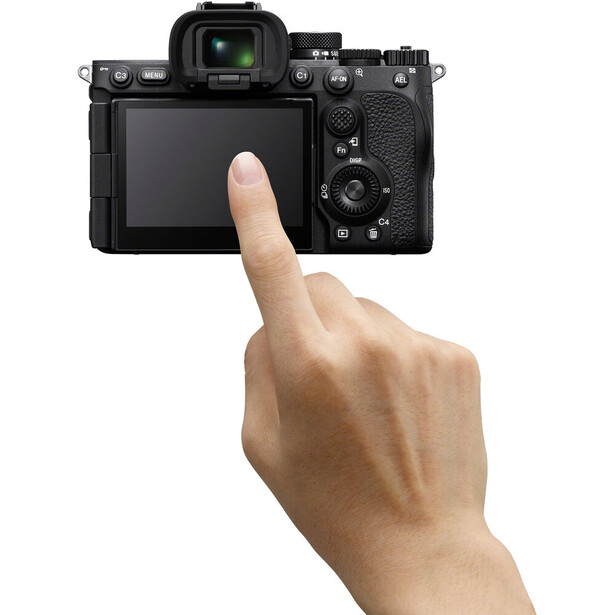
So what would it look like if cameras actually embraced ecosystems? Imagine an app marketplace built into your Sony, Canon, or Nikon body. Third-party developers could create custom film simulations, LUTs, or filter packs tailored for different shooting styles. Computational modules could add AI-powered noise reduction, HDR stacking, or portrait enhancements directly in-camera. A social media app could let you capture, edit, and post to Instagram or TikTok without ever leaving the device. For professionals, specialized apps could handle metadata tagging, tethered workflow customization, or even niche tools like astrophotography stacking.
The Developer Dilemma
Of course, opening cameras to apps doesn’t automatically mean developers will flock to them. The reason the iPhone App Store exploded was scale. Billions of potential users guaranteed that even niche apps could find an audience large enough to be profitable. Cameras, by contrast, sell in the low millions globally each year. From a developer’s perspective, that’s a rounding error compared to the smartphone market. Why spend months building a noise reduction plug-in for Sony cameras when you could build a mobile app that instantly reaches tens of millions of people?
This is the core dilemma. Without enough users, ecosystems risk becoming ghost towns. The only way to overcome that is with deliberate effort from camera makers themselves. They would need to offer incentives like revenue-sharing programs, development kits that simplify porting from existing platforms, or subsidies that seed the ecosystem until it gains traction. They might also lean on cross-platform frameworks that allow apps to run on both cameras and phones, increasing the potential market. Without these steps, the dream of a vibrant camera app store will remain a fantasy, no matter how much sense it makes in theory.
Lessons From Other Industries
History is full of examples that show ecosystems can transform hardware categories. Apple’s App Store turned the iPhone from a niche gadget into a cultural powerhouse by giving developers a reason to invest. DJI drones gained staying power by tying their hardware to apps that made flying intuitive and editing seamless. GoPro carved out a niche by integrating tightly with mobile software, ensuring that action cameras weren’t just about capture but also about sharing. Even gaming consoles, which sell in the tens of millions rather than billions, sustain thriving ecosystems because the communities are strong and the tools compelling.
Cameras are not inherently different. They just suffer from inertia and conservatism. Manufacturers fear losing control, so they wall off their systems. But if drones, action cams, and game consoles can sustain ecosystems with smaller audiences, there’s no reason cameras couldn’t as well — if the will existed. What’s missing is vision, not feasibility. The companies have the technology, but not the mindset to embrace openness.
The Risks of Staying Closed
The alternative is grim but predictable. Cameras remain what they are today: specialist tools for enthusiasts and professionals, culturally irrelevant to everyone else. Migrating smartphone users will try them, hit the wall of friction, and retreat back to their phones. Professionals will keep relying on clunky workarounds, leaving cameras themselves feeling like frozen relics. Meanwhile, phones will keep sprinting ahead with computational tricks, AI enhancements, and frictionless workflows that make dedicated cameras look increasingly outdated.
The danger isn’t extinction. Cameras will always have a niche. The danger is irrelevance. A closed system ensures cameras will remain on the margins, admired by specialists but ignored by the broader culture. They will become like high-end audio gear or mechanical watches: respected, even loved, but fundamentally separate from mainstream life. That might be acceptable for some manufacturers, but it’s a huge cultural loss for photography as a whole.
Conclusion: Platform or Niche?
The camera industry faces a crossroads. It can remain closed, continuing to make static boxes that capture excellent images but frustrate users with outdated workflows. Or it can take the leap into ecosystems, transforming cameras into platforms that evolve with their users. Doing so won’t be easy. The scale problem is real, and developers won’t line up without incentives. But history shows that ecosystems can flourish in smaller markets if the tools and communities are compelling enough.
In a world where immediacy, editing, and publishing matter as much as capture itself, a camera without an ecosystem is already behind the curve. If manufacturers cling to their closed systems, cameras will shrink into irrelevance, surviving only as niche tools. If they open up, they have the chance to reclaim cultural relevance and become everyday creative platforms again. The choice will determine whether cameras remain artifacts of the past or evolve into essential tools of the future.



Join the Fstoppers community for free
-
Post comments and join in the discussions
-
Browse the site ad-free
-
Share your work and get featured in the community
-
Compete in the photo contests for fun and prizes
8 Comments
Well past time.
I couldn’t agree more with the sentiment of this article. It boggles me that the wi-fi connections of even recent cameras are still so slow that it is faster to use a card reader to transfer images. Why do camera manufacturers insist on putting image editing functions on cameras? Surely most people edit on something with a larger screen?
You are so right! What we want from our interchangeable lens cameras is to create masterpieces, not to share quick snaps with friends on social media - that stuff is what cell phone cameras are for. And of course, built-in effects, filters, and editing functions are NOT the way to create true masterpieces. We want to use real computers with huge high-res calibrated monitors for fine tuning out masterpieces. Camera makers are severely misreading their market if they think we want quick gimmick stuff in our cameras. We take our images very seriously and hence, we edit & share accordingly.
If casual users are served so well by their smartphones for fast processing, computational editing and connectivity, what’s the incentive to even purchase a dedicated DSLR or mirrorless camera? A smartphone user isn’t likely to drop two or three grand on a camera for no good reason, especially if the majority of casual camera users are simply sharing low-resolution photos with friends and family, and anything more than a cellphone is just another unnecessary device to carry around.
The only professionals that I can imagine who are dependent upon speed would be the photojournalists. Otherwise technical image quality for a professional is typically the highest priority, and as long as there’s a clear distinction in that regard, I’m happy with a camera stuck in the past. I doubt camera sensor or lens quality has improved in the last ten years. In fact, the added features of most new cameras are simply annoying. I would no more want to connect with iCloud or push a single button to edit my images in-camera than vacation in Death Valley in the summer.
Photography is an art form from my perspective where deliberate, slow, and thoughtful are paramount to speed and artificial convenience. If it takes a couple minutes to download my pictures back at home, that’s hardly a major inconvenience. I can’t even conceive of trusting a camera app to edit a picture in the manner that I would choose while doing the work on a large desktop monitor. And if the camera is doing all the computational thinking, then it's just a small step before AI replaces photography. Be careful what you wish for.
Agree with everything you said. Firstly, can’t think why most photographers with dedicated cameras need to edit immediately then upload to the internet instead of doing it later on a large monitor.. Secondly, with smartphones the perfect internet device, plus better ergonomically, surely all that’s needed is better wireless connectivity between camera and phone, then all the editing can be done on the phone, not ruining the camera experience clogging it up with internet connectivity, apps and much poorer battery life. Makes no sense when we already have smartphones.
A SIM card slot would definitely help the consumer camera-to-cloud workflow instead of connecting to a phone that is connected to the internet, just go more directly!
I would be down to try and develop some other tethering apps for Sony cameras if they had made the SDK completely open without restrictions for what people can come up with it. Great hardware and software to make the photos, but terrible software for getting it out without taking the card out, plugging it into a phone or computer. Wireless transfer just doesn't feel like it is up to speed with all the times I have tried it out, and being able to have the SDKs without restrictions to make my own passive tethering app to make transferring photos from my camera to my phone and over to a local NAS on my LAN would be a dream.
I am not willing for my camera to have any compromises that are designed to appeal to the younger crowd who are not quite as serious about fine art photography as I and my contemporaries are.
I am now a bit of an older guy who is very persnickety about image quality, who has all the time in the world to download and edit images, and who doesn't really care about sharing my images with others. So I want a camera system that fits MY needs, and don't care if it meets the needs of others who are different than me.
Broadening the photographic community and welcoming in thousands of other photographers who have a different mindset than I do ..... how exactly is that going to make my life better?
I want apps in my camera and I want my camera to have the functionality that my smartphone has, but only for the things that help me personally, like being able to run birding apps on my camera when I am in the field photographing birds. Being able to run Merlin, eBird, and YouTube on my camera would be a godsend!
But I sure as heck don't want these idiotic filters and film simulation things to be applied to my files. The only right way to shoot is to shoot in full RAW format and then edit at home on a large, high resolution, calibrated monitor. Anything else is gimmicky and should be scorned, not encouraged.