The idea that 12 megapixels is not enough has been repeated so often that you might accept it without testing it yourself. The Sony ZV-E1 challenges that assumption in a way that forces you to rethink how much resolution you actually need.
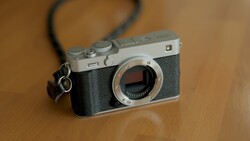
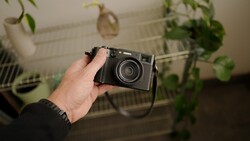
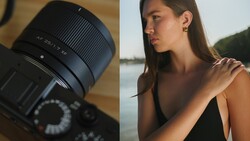
Coming to you from Mitch Lally, this practical video puts the Sony ZV-E1 side by side with the 40-megapixel Fujifilm X-E5 in a real shoot with a professional model. On the back screen, the ZV-E1’s JPEG files look shockingly sharp despite the modest resolution. Face tracking locks on reliably, focus holds, and nothing about the shooting experience feels limited in normal conditions. When you view the images without zooming in to pixel level, the difference between 12 and 40 megapixels is far less obvious than online debates would suggest. That alone should make you pause before dismissing lower-resolution cameras.
Once the files hit the computer, another surprise shows up. The raw files average around 17 MB, which makes backing up over 1,000 images fast and painless. Importing into Lightroom is quick, previews build without delay, and the overall workflow feels lighter. If you shoot often, that efficiency changes how editing sessions feel. There is a tradeoff, though. Lally composes in a 4x3 aspect ratio, and that crop trims the effective resolution even further, closer to 10 megapixels in some cases. If you also crop frequently, especially beyond 1.5x, that margin gets thinner.
The most interesting part centers on Lightroom’s Super Resolution feature. Starting with a 12-megapixel file, the tool generates a version with roughly four times the pixel count, pushing it toward 48 megapixels depending on the original crop. After added sharpening, the upscaled images look more detailed than expected. Next to a native 40-megapixel file from the X-E5, the difference is visible when zoomed in close. The Fujifilm file holds more natural detail and depth at 100 percent view. Zoom out to a normal viewing distance, and the gap narrows enough that you may not notice without careful inspection.
That raises practical questions. If most images live on Instagram in a 4x3 frame, heavy resolution often gets compressed away. If prints rarely exceed A1 size, 12 megapixels stretches further than critics claim. At the same time, there are limits. The ZV-E1 lacks a viewfinder, which becomes frustrating in bright sun when the rear screen washes out. It also relies on an electronic shutter, which can introduce rolling shutter artifacts with fast motion. And if the camera doubles as your main video body, constant switching between photo and video settings gets old fast. Resolution ends up being one of the smaller concerns compared to handling and shooting flexibility.
You start to see the real tension here. More megapixels give you cropping freedom and cleaner large prints. Fewer megapixels give you smaller files, faster turnaround, and surprisingly sharp results when handled well. The comparison images in the video make that tradeoff clearer than any spec sheet. Check out the video above for the full rundown from Lally.
Join the Fstoppers community for free
-
Post comments and join in the discussions
-
Browse the site ad-free
-
Share your work and get featured in the community
-
Compete in the photo contests for fun and prizes
4 Comments
For years, the company I worked for used Canon 40D for portraits, only 10 mp. It was well built, reliable and looked great when printed.
This is more like a camera review, and on that note he was saying he was doing both RAW and Jpeg. One very important thing about Jpeg and that is settings just for Jpegs, you need a book full of info to know what and how. One is D-Range Optimizer the settings can be Auto or level 1-5 this is for shadows mainly but you can use Sony IEDT edit and change in post.
Another thing no matter the print there is a distant view.
With Sony also you can select AUTO and there are two levels of auto to choose from one that is great for night portraits using a flash on the camera where it take two images and puts together, just saying learn all of the camera.
I started with the A7SM1 mainly it would bracket 5 at +/- 3EV, it was HDR days because of lack of dynamic range of DSLRS at the time and for 3 years of use I fell in love with doing Astro MW's where you get daytime bright foreground with pin point stars above and colors of all including vegetation colors like during fall leaf's of many colors and with stars above, everyone will say PS'ing but not for in 2015 the Sony A7SM1 did it for all.
12MP is way enough I now have the A7SM3 and the A7R5 and can get the same image with each but faster with the A7RMV due to the higher MP using PhotoPills app putting in camera model and lens MM and selecting mode you want you will get to use a faster SS with the A7RM5.
But like who will be looking with a magnifying glass, a poster size print on a wall lit by a lamp will pop as much as the 61MP of the A7RM5.
And today SW editors one and all have the ability to upsize to your heart content.
right to left
1. 2015 A7SM1 + FE 10-18mm (15-27mm in 35mm) f/4 OSS in full Frame mode at 12mm 2015
2. A7SM1 + FE 10-18mm (15-27mm in 35mm) f/4 OSS in full Frame mode at 12mm 2015
fit.
3. yes a 10MM lens and the A7RV cropped down
4. A7Rv and 10mm Lens
All on metal prints at poster size on a walls in doctors offices as gifts for keeping me going.
No one can believe the images are real or that the sky as the trail of stars like these show.
so 12MP does it job, remember it is the company doing the prints and how they also make the image
12 megapixels is enough for things like thumbnails and passport sized photos, but not much more than that due to a lack of fine detail. While people made due with the low resolution similarly to how people made due with 480p, 720, and 1080p in the past, it was always a begrudging acceptance.
With that in mind, super basic use, 24mp can work as an absolute bare minimum, e.g., basic web sharing no pixel peeping. Though ideally at least be 2026 standards, most people will want to at least be in the 40-100 megapixel range, with 100mp being a good balance for a little pixel peeping/ exploring details within an image.
12mp is enough for big prints and totally unnecessary for passport sized photos.
I have just had a 16mp photo printed at 48cm x 32 cm and even scaled up to that print size the software set the PPI at 350. 200 PPI would have been more than enough for a usably sharp print so I could have had it printed at 80cm x 50 cm, ie huge, at 200 PPI and it would still have been sharp even to look at close up.
By the same token a 12mp photo would print very well at 48 cm x 32 cm at 200 PPI.