When three cameras are on the chopping block and only one gets to stay, the choice reveals a lot about how you actually shoot. The Canon R6V, up against the C50, the C80, and the R6 Mark III, ended up winning that fight for reasons that have less to do with specs on paper and more to do with what a camera lets you do in the field.
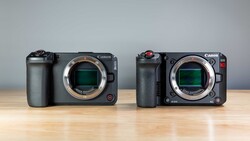
James Reader walks through the Canon R6V as essentially a scaled-up Canon R50V, and that comparison sets the tone for the whole review. The body feels lightweight, a touch more plastic than the C50, but solid, with an excellent grip that stays comfortable even with larger glass. There's no EVF and no mechanical shutter here, so stills shooters are working with a 12-bit electronic shutter. Reader points out that the power switch placement beats the C50's, which is buried in the photo-video dial and easy to knock in a bag, and the fully articulating screen is brighter with a cleaner interface that rotates for vertical shooting.
Image quality is where Reader spends much of his time, having already reviewed this same sensor in the C50 and the R6 Mark III. The 4K footage stays sharp without the clinical digital look, and shooting CLog 2 gives colors that need almost no work in post, with that familiar Canon warmth on skin tones even under green casts or heavy underexposure. He calls the biggest compliment simple trust in the file: drop it into DaVinci Resolve and you know what you're getting. Open gate is his favorite look from the camera, and the 3:2 aspect ratio makes reframing for YouTube, Instagram, and everything else painless. There's also 7K raw, which he describes as the cleanest Canon raw implementation he's used, well ahead of the original R5.
Stabilization is the real deciding factor between the R6V and the C50, and it's the section worth watching closely. The R6V has IBIS, the C50 does not, and Reader had grown frustrated with the wobbles on the R6 Mark III when using wider lenses. Canon tweaked the IBIS system here, and after a lot of testing he confirms the improvement is real, with the RF 24mm VCM holding up far better than it ever did on the older body. Longer focal lengths with the RF 85mm f/1.4 look world class. Where things fall apart is the ultra wide end, and the specific focal length where wobble becomes a problem is worth hearing from Reader directly.
The IBIS story here connects to a broader shift in how solo shooters are building their kits. Canon's VCM primes, like the 24mm f/1.4, are lightweight and fast, and in-body stabilization is what makes them viable for handheld work without a gimbal or a tripod. For years the trade-off was clear: pick a stabilized zoom and accept the compromise, or carry stabilization hardware everywhere. A body with capable IBIS quietly rewrites which lenses you reach for, and Reader's own experience bears that out, since he filmed more and experimented with more unusual glass simply because the camera removed the friction. If you shoot mostly alone, travel light, and want prime lenses in the bag, that freedom tends to matter more than any single spec, and it explains why so many hybrid shooters are gravitating toward bodies that stabilize whatever you mount.
When Reader lines the R6V up against the C50 and C80 in side-by-side grades, the results surprised even him. The standard 4K image across all three is close enough that he doesn't think he could tell them apart outside a direct comparison. The C50 keeps a very slight edge in shadow and highlight cleanliness, and the C80's raw actually came out a touch noisier than both. Autofocus and battery life both favor the R6V, which he credits to Canon's photo-first operating system reacting faster than the more deliberate Cinema EOS focus. His final call, and the specific cameras he decided to sell, closes out the review. Watch Reader break down the full three-way comparison and his keep-or-sell verdict in the video above.





Join the Fstoppers community for free
-
Post comments and join in the discussions
-
Browse the site ad-free
-
Share your work and get featured in the community
-
Compete in the photo contests for fun and prizes
No comments yet