
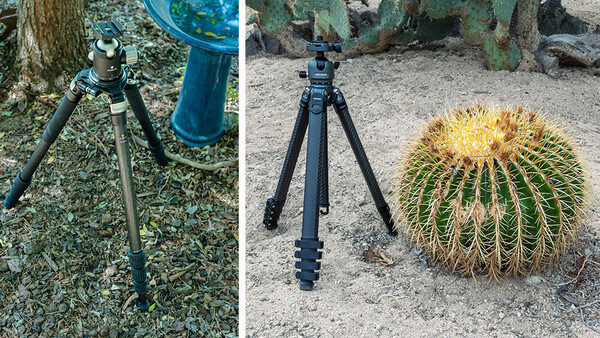
You've noticed that tripods come with two basic kinds of locks: twist locks and lever locks. They're quite different. Which should you purchase? I'll tell you my experiences and observations.
Twist Locks
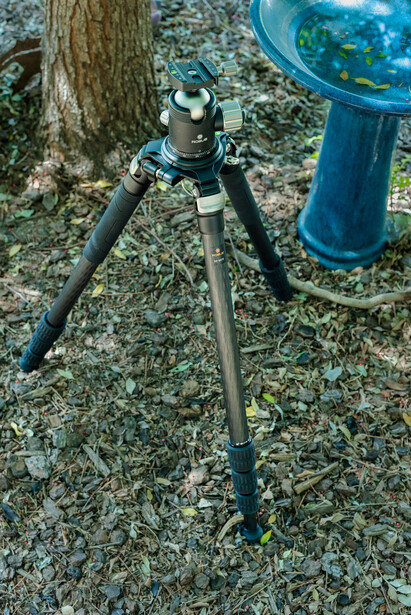
The Robus RC-5570 has high-quality twist locks.
I generally like twist locks, or collar locks, but I feel that you have to really go out of your way to make sure that they are locked down because occasionally, if you are not careful, they can slip.
Using Twist Locks
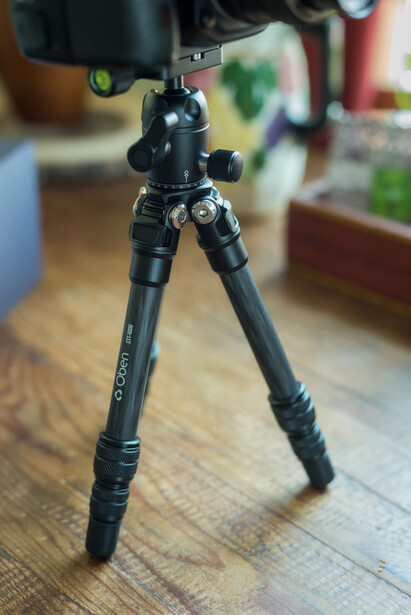
A great advantage is that you can grab all the twist locks and loosen them simultaneously and deploy everything quickly. You can also, after collapsing the legs, tighten them all down in one motion as well. This is especially true of well-made tripods.
This maneuver is relatively quick. However, in practice, I believe lever locks are still faster when setting up the tripod. I'll mention why later.
Maintenance of Twist Locks
If you photograph in really sandy, dirty places like I do (desert, beach), they can eventually get sand caught in them, and you have to take the tripod apart, clean it, and lubricate the locks with marine grease. This is, in practice, not really a bad thing, as I've only had to take my tripods apart once or twice in the last eight or nine years, and it's rather simple to do, although as I write this, I think it's time for one more cleaning.
One more thing worth mentioning: if you store your tripod with the twist locks overtightened for long periods, the seals inside can compress and weaken over time. A light snug is all you need when putting it away.
Lever Locks
I do use lever locks as well.
In fact, I began using lever locks. Below are the lever locks on the first tripod I ever had.
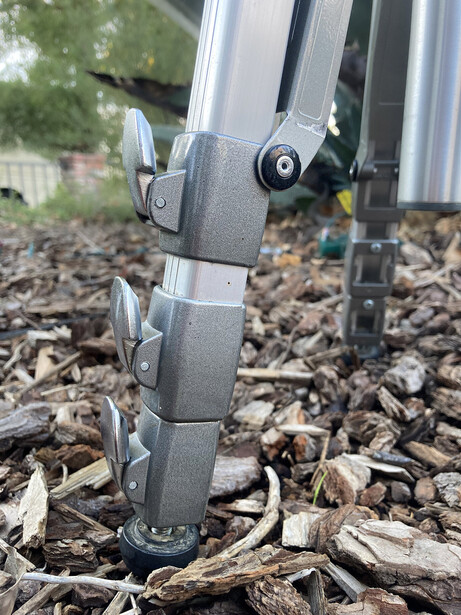
Of course, modern lever locks are much nicer than this. These lever locks are from an old 1970s Sears aluminum tripod I inherited. For many years, this has been my backup tripod, left in the car in case I forgot my carbon fiber tripod. I still use it occasionally, typically for holding lights or other items in my house.
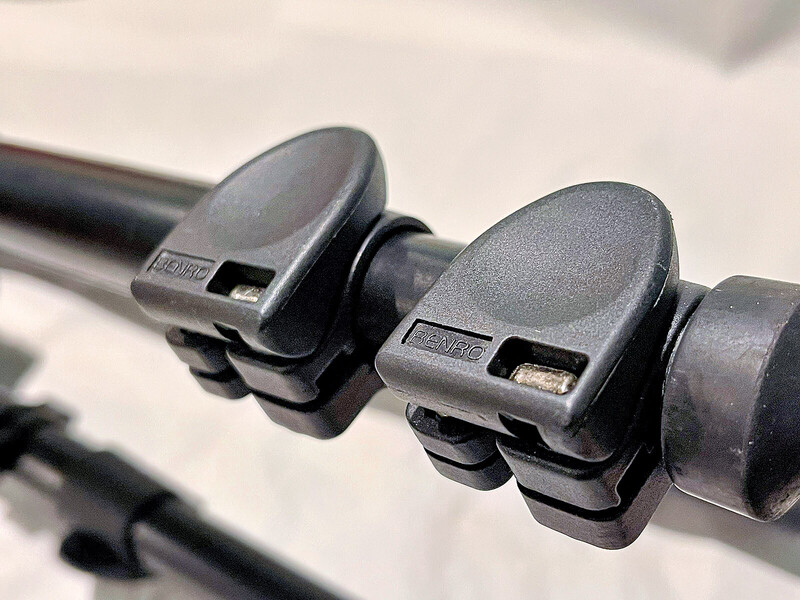
The advantage of lever locks, or flip or clamp locks, is that you know when they are locked down. I mean, you're 100% sure. You can visually see it. And when you are pressing the clamp down, you can feel it.
Using Lever Locks
With lever locks, you can accidentally pinch your finger. I've never had this happen with lever locks. The locks also sometimes snag on cactus and branches.
Miraculously, I still have managed to remain uninjured by lever locks. However, I did pinch my finger last year while closing up the legs of one of my twist-lock tripods. I don't remember how I did it, but it left a black blister for quite some time. If there is a way to injure myself using equipment while doing night photography, rest assured, I will find a way.
Some people say that locking them down hurts their hands. Some with arthritis have mentioned that it's too hard on their hands. I've never had this issue, thankfully, but I thought I might pass this along.
The people who love lever locks really love them and will avoid twist locks at all costs. I get it. There's a simplicity in locking your legs down and knowing that they're locked.
Maintenance of Lever Locks
From my limited experience with lever locks, they seem to loosen up over time. I've also seen more people with broken lever locks than twist locks. This is despite the fact that most of the night photographers I know use twist locks. This makes me believe that if you are going to get a tripod with a lever lock, don't get cheap ones. The lever mechanism itself—the hinge and the cam that creates the clamping pressure—is under more mechanical stress than a twist lock collar, which may explain why cheaper lever locks fail sooner. If you go the lever lock route, consider more robust brands that tend to hold up well over time rather than the cheapest brands.
My Opinion So Far
In theory, I prefer lever locks. In theory.
In practice, however, lever locks catch on things either in my car, in storage, or even in the field. My twist locks don't pull my underwear out of my backpack. They don't snag on creosote or tree branches. They don't hitch onto my baggy pants or shorts. I unfortunately speak from experience.
Consequently, I use twist locks most of the time.
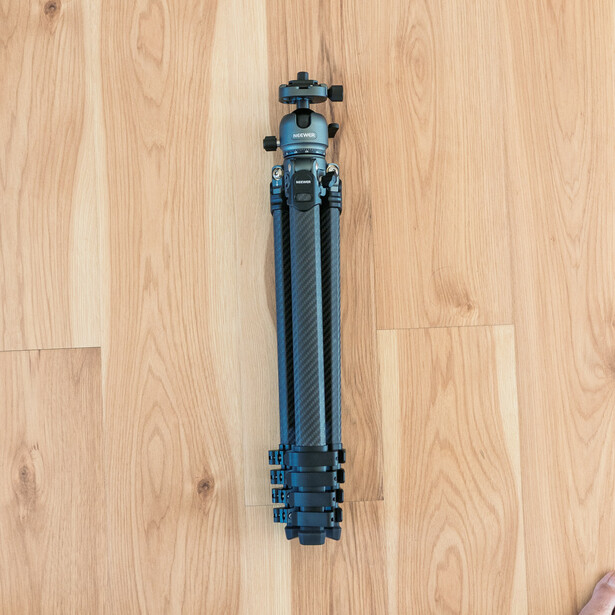
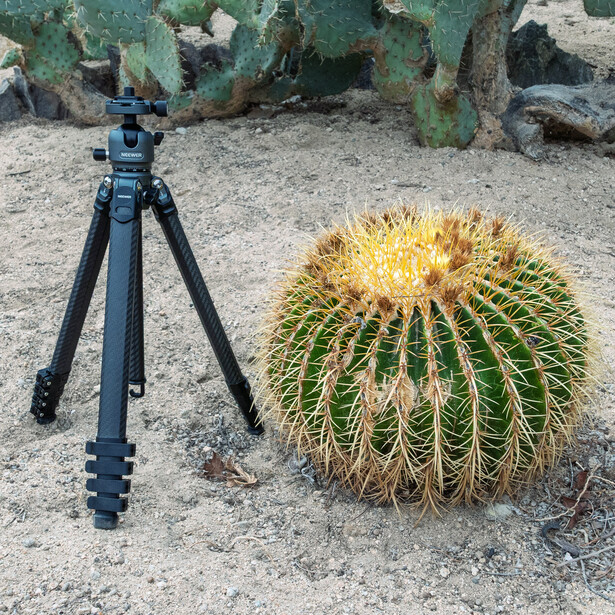
That said, I have been using the NEEWER LT38 Carbon Fiber Travel Tripod for two years now. This is a carbon fiber travel tripod, a lightweight travel tripod that has a small diameter when folded up. I've used this in the desert and on coasts repeatedly, taken it on international trips, and more, and it's held up so far. And as a bonus, I haven't caught the lever locks on my baggy pants or shorts. Whether these are designed differently and don't catch on clothes or items in my car trunk, I'm not sure. But I haven't done it once with this tripod.
If you are less clumsy than me, or if you are not photographing in environments that have lots of things to snag on, I would give lever locks some serious consideration.
Bonus Tip: My Twist Lock Routine
While using twist locks, I have gotten in the habit of checking everything before trusting that my tripod is rock solid and ready to go. This is my routine:
- I twist the locks twice.
- I push my tripod into the ground once or twice to make sure that it sinks down and doesn't have any issues. Because I mostly photograph in the desert or on the coast, I was already in the habit of pushing my tripod down to create additional stability. This second tip I teach at all my night photography workshops. If pushing the tripod down firmly helps even a few people get nice, steady shots or prevent their tripods from falling, it's worth it!
Because of this lengthier process of checking the twist locks twice, I believe that using a tripod with lever locks is quicker and more convenient. It might be quicker anyway. And again, there's that knowledge of knowing that a lever lock is, well, locked.
If you are going to use a tripod with twist locks, try this routine. It works really well for me and has become a habit.





Join the Fstoppers community for free
-
Post comments and join in the discussions
-
Browse the site ad-free
-
Share your work and get featured in the community
-
Compete in the photo contests for fun and prizes
1 Comment
It’s good to see this topic being highlighted for a change. For me, the following criteria are crucial:
– high-quality construction, ensuring a reliable and secure lock even after a thousand operations without any wear and tear
– functionality from Arctic cold to desert heat
– easy to dismantle for maintenance and easy to clean
– spare parts available in the long term
Justus