
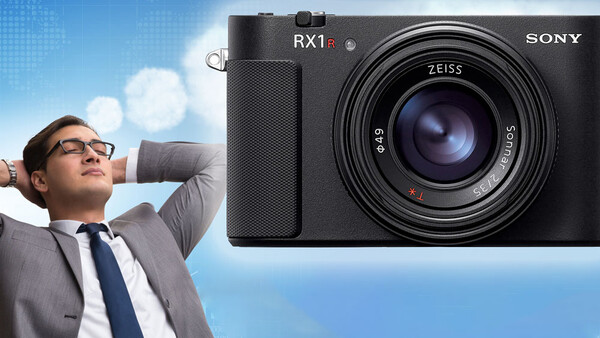
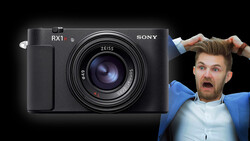
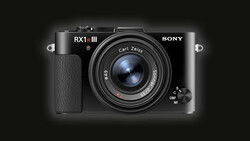
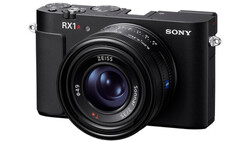
In among all of the brouhaha surrounding the launch of the new Sony RX1R III—the insanely expensive accessories, the recycled parts, and, of course, the $5,100 pricetag—there’s not been much talk about what features fans wanted to see that are markedly absent.
Sony enthusiasts waited with bated breath for a sequel to the "flagship full frame premium compact camera with a fixed lens," and while thousands of them will be placing their preorders without too much of a second thought, it’s worth pondering what Sony decided to leave out, despite having a decade to put it together.
A New Lens
The Zeiss 35mm f/2 with leaf shutter in the RX1R III seems to be exactly the same lens as that seen in the RX1R II, prompting more than a few grumbles. This is old technology, and while it might be a fantastic lens, it remains to be seen whether it’s capable of resolving fine detail across all 61 megapixels effectively. The leaf shutter has a maximum shutter speed of just 1/2,000 of a second, meaning that shooting with a shallow depth of field in broad daylight will entail switching to the electronic shutter. This is complicated by the fact that the sensor readout is very slow, and capturing movement without creating some odd results might raise some issues.
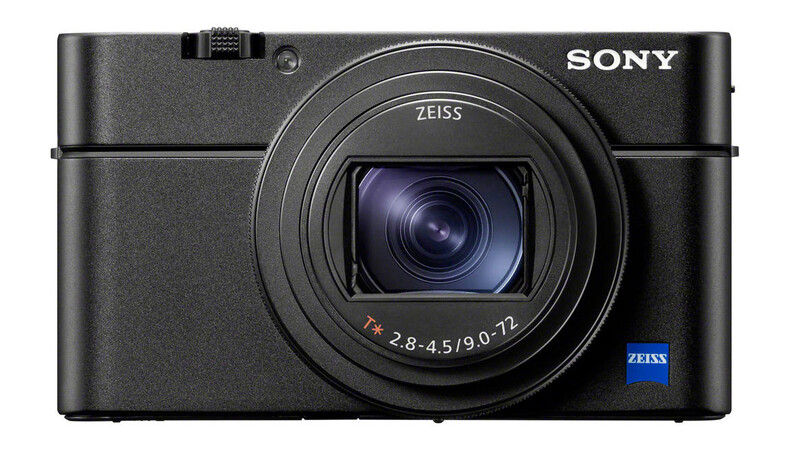
Zeiss used to be a close partner with Sony, building many of its lenses when the Japanese manufacturer first started putting out camera bodies with the intention of taking on Canon and Nikon. Clearly, the contract to use Zeiss tech hasn’t expired, but it’s also evident that Sony is not going to throw any money at the German manufacturer to create something new. It’s notable that the only other Sony product with a leaf shutter is the RX100 VII, and guess who made that lens?
Back in 2020, and in something of a surprise, Sony registered a patent for a leaf shutter for interchangeable lenses. As far as I can tell, this is about as far as Sony has gone in terms of its own technology, and the global shutter on the a9 III might be an indication of why it hasn’t pursued it further.
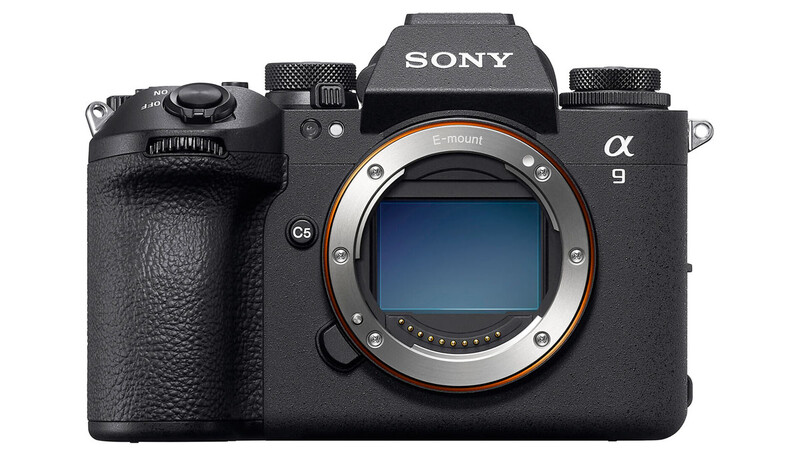
Sony has recycled this Zeiss lens for a couple of reasons: first, it’s clear that the R&D on bringing this camera to market has been minimal. It’s an old sensor with an old lens boosted by some impressive processing power that’s already available in other models. Spending money on creating a new fixed lens with a leaf shutter was too big an investment for too small a market, and this won’t change until we see a global shutter that does away with the need for a leaf shutter entirely, bringing me to my next point.
The Sensor
This is the sensor that we expected, but it’s what might be in the next model that’s more interesting. The global shutter in the a9 III is only 24 megapixels, but given that we’re on a 10-year product cycle, Sony has plenty of time to figure out how to more than double the resolution for the RX1R IV. Once it’s in place, I suspect we’ll see a Sony lens—possibly even faster than f/2—that meets expectations.
The Other Stuff
We can bang on about IBIS, the lack of ND filter, the fixed screen, but as detailed in this article, Sony decided not to spend money on this product, and perhaps simply wanted to at least give its fans a stopgap until the Mark IV is ready. Plus, photographers regularly complain that they’re pushed toward paying for video-centric features that they don’t need, so this in part might explain why Sony was happy to take a gamble, keep it as compact as possible, and avoid inflating the price beyond what is already a ludicrous amount of money.
Just Wait Another Ten Years
In a decade, we might see something exceptional—and yes, I write that with the full knowledge of how ridiculous that sounds. But what do you think? Let me know your thoughts in the comments below.

Join the Fstoppers community for free
-
Post comments and join in the discussions
-
Browse the site ad-free
-
Share your work and get featured in the community
-
Compete in the photo contests for fun and prizes
6 Comments
This camera is about small size - it does nothing else better than its competitors. I'll be interested to see if there's a lens Sony could choose for the next version that's *usefully* faster while preserving the form factor of this camera. There are certainly antibodies in the photography community about f/2 lenses, and perhaps for marketing it's worth an f/1.8 lens just to get past that mental block. For me, I don't want a larger or heavier lens to gain a third or half stop. The difference in depth of field for a 35mm lens between f/2 and f/1.4 is not especially meaningful, but the difference in size and weight are substantial. On even today's sensors there's just so very little lost in selecting a slightly higher ISO - I'd be happy with an f/2 lens.
Oh my, another 10 years? I’m kind of torn about this camera. If that lens indeed holds after so many years, then perhaps the 5K cost of the camera, as painful as it is, could be rationalized by the sensor/focusing technology inside the box. But like you well point out, it is disconcerting that this older lens could end up being 20-year old technology by the time it gets refreshed, if that ever happens. 20 years! That is certainly an ugly thought.
As as a stop gap camera with an old lens, old sensor, Only 1/2000th max shutter speed, No ND Filter, No IBIS, No articulating screen, Slow sensor read out, they should have priced it MUCH lower.
like $2000 MAX. It's like Sony doesn't actually want to sell any of these.
You could buy almost 2 Leica Q's or a medium format Fuji GFX 100RF for this kind of scratch. The price on this thing is mind boggling. I don't think it's an objectively bad camera but the value to cost ratio is in the ballpark of insanity.
Agreee with your points.
Its FF so would be a perfect steal competitors users so price it at $3000 and go after the Fuji X100 userbase and give them a chance to experience the Sony FF eco system.
At $5000 its nothing more than a trinket or toy for people with too much spare cash lying around.
Sony imaging management of the past 7y has failed to build off the successes of the previous 7y. The current management needs to be fired/reshuffled as it is a drag on an otherwise stellar engineering company. they already have the technology to make cameras that are class/market leading but keep falling on their own sword.
A7IV, FX2, A1II, the lack of follow up cameras for A7SIII and now this garbage all point to serious failures of management to study and understand the current market and the actual users. It has been only concerned with limiting its exposure to risk and in protecting stilted high margin professional products, instead of growing market share and creating new segments with new revolutionary products using the tech they already have.
They don’t even need to create any new technology, just to correctly package products using evidenced based UX research and design to correctly address real user issues in the market.
Instead of punting poorly thought out releases of poorly designed and developed products just to fulfill random corporate goals. The effect of the past 7years of waffling, stalling the gains Sony imaging made on canon and nikon with the A7III and A7SIII.
A7IV should have had lower resolution and faster readout sensor for example instead of this technology ending up in a Nikon in the Z6III.(which is what the A7IV should have been) the A1II should have continued to be a showcase of Sony’s most advanced tech instead of a refresh. FX2 should not exist instead sony should have focused on creating an A5 and A8 range of pro level crop sensor and cheaper full frame cameras. so many missed opportunities from a clear lack of direction and focus at the top of sony imaging
I'm trying to figure out how this is better than an X100VI? The X has a swivel screen, built-in ND, 1/4000, and a welded-on 35 (equivalent) as well. Bigger sensor? More megapixels? Meh.