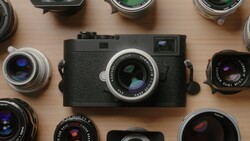
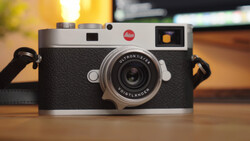
The Leica M11 carries a reputation that makes people stop and stare. It’s more than a camera: it’s a statement, both in form and price. But beyond its polished brass and minimalist design lies a question that matters deeply to anyone serious about image-making: does shooting with a rangefinder actually change how you see?
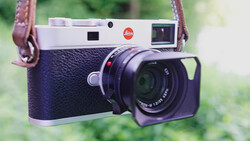
Coming to you from Gerard Needham, this thoughtful video examines what it really means to shoot with a Leica M body. Needham doesn’t hide behind nostalgia or luxury branding. Instead, he tests how the mechanics of a rangefinder alter the act of photography itself. Unlike modern cameras packed with automation, the M11 strips you back to manual focus, manual framing, and full attention. The process is slow and tactile. Needham argues that this deliberate method changes how you observe light, motion, and interaction in real time. You’re forced to participate rather than just react.
The Leica experience, as Needham describes, isn’t about sharpness or megapixels. It’s about a feeling that sits between craft and ritual. He traded his Hasselblad X2D for the M11 and quickly realized the difference wasn’t in the files but in the engagement. Every rotation of the focus ring feels like communication with the camera. Each click of the shutter confirms you’re part of the mechanism, not just operating it. That connection is rare in today’s tech-driven world, where cameras promise perfection but often deliver distance.
Still, the video doesn’t romanticize everything. Needham admits the Leica experience comes with frustrations. For one, the M11 lacks video entirely, which is a deal-breaker for creators who also film their work. He also notes the challenge of parallax error when shooting portraits up close, where the rangefinder’s framing drifts from what the lens captures. Even small fixes like diopters come at a steep price, and sometimes the simplicity Leica is known for turns into inconvenience.
The biggest drawback, though, isn’t technical. It’s psychological. Carrying a camera worth nearly $8,000 in public draws attention—the wrong kind. Needham describes walking city streets with a sense of anxiety, aware of how visible and valuable his gear looks. Instead of inviting freedom, the Leica’s prestige sometimes acts as a weight. In crowded places, he found himself keeping it hidden rather than ready to shoot. That tension between elegance and exposur —shapes much of his reflection on whether the Leica M11 is really a tool or a trophy.
Needham eventually admits he reached for his Fujifilm X-E5 more often, especially while traveling. It’s smaller, quieter, and less nerve-wracking to carry. But even as he questions whether the M11 suits his lifestyle, there’s clear respect for what it represents: a commitment to intentional photography. The Leica forces you to slow down, miss shots, and yet somehow find joy in the misses. Check out the video above for the full rundown from Needham.

Join the Fstoppers community for free
-
Post comments and join in the discussions
-
Browse the site ad-free
-
Share your work and get featured in the community
-
Compete in the photo contests for fun and prizes
5 Comments
yep. lovely camera, however if you but into owning something you live because you love the process of mastering it's operation. the fact that it's manual is ... whatever. you can make other cameras manual as well. but the lenses are magic. the minimal processing is magic. like my old OM1. or fA magical. it's up to the photographer to pay attention to detail. I don't need an 8000 tool, not can I afford one ... doesn't mean I would turn one down though. lol
Just a note. Only the Silver versions and special edition versions of the M11 are made from brass. The black ones are made from aluminum.
It forces you to slow down and miss shots? Uh....OK. Pass.
I shoot with a Nikon ZF and voightlander lens. Much cheaper than Leica. I use full manual mode. Is there something im missing?
Just some pixels and a bit of extra space in your bag. I shoot the same as you, but I recently picked up an M10m to see what all the fuss is about. I like using it and files are excellent, but I’m not sure I can justify keeping it. For me, 24MP is plenty for street/travel and the Zf is certainly a technically advanced camera (MF assist subject detection, IBIS, etc…). The big advantage of the M is the overall size/weight of the system, but I was surprised to discover that the Zf + Nikon Z 40/2 is actually lighter than the M10m + 35 Summicron which negates some of that advantage. Still undecided, I may pickup a film M instead to get the full Leica M experience.