Micro four thirds always seems to spark an argument about “good enough” image quality, especially if you are used to a big full frame body and heavy glass. When a camera like the OM SYSTEM OM-3 promises serious performance in a small body, the real question is: how far you can push it before you start to miss those larger sensors?
Coming to you from Omar Gonzalez Photography, this honest video walks through what happens when a long-time full frame shooter hands everyday work to a 20-megapixel micro four thirds body. Gonzalez starts by admitting his first shot out of the box looked flat and a little dead, which is probably what you fear when you think about a smaller sensor. Once he dials in the camera’s “vivid” color profile and tweaks the color wheel, the reds and autumn tones jump in a way that looks surprisingly natural instead of cartoonish. He compares straight-out-of-camera JPEGs to raw files in Lightroom and finds that color and contrast stay consistent, so you are not fighting a huge gap between what you saw on the rear screen and what shows up on your monitor. If you want a camera like this as a fun carry, those small edits to already strong JPEGs land very differently than doing full raw workflows for every casual walk.
Gonzalez builds his impressions around a simple three-lens kit: the compact M.Zuiko Digital 17mm f/1.8, the OM SYSTEM M.Zuiko Digital ED 12-45mm f/4 PRO, and the OM SYSTEM M.Zuiko Digital ED 40-150mm f/4 PRO. You see him gravitate toward the 17mm because it keeps the camera small and gives a classic 35mm-ish view that works for family, street, and travel scenes. The 12-45mm f/4 ends up feeling a bit tame for his taste, since on micro four thirds, that aperture behaves more like f/8 in terms of depth of field, which makes it harder to isolate subjects. The 40-150mm f/4 comes alive in close shots of berries, leaves, and people, where the background falloff looks smoother than you might expect from a slower zoom on a smaller sensor. Watching how each lens changes the look makes it clear that the system’s character comes as much from glass choice as from the sensor itself.
A big part of the video is simply watching Gonzalez forget about specs and enjoy shooting with the camera in real places. He brings the OM-3 to Puerto Rico, points the 17mm at his parents at the table, and uses the 40-150mm in the garden on small flowers that fill the frame with crisp detail. He tries the subject tracking on a dove, on a dog, and on himself with a mirror trick, and while the video is not about autofocus benchmarks, you see enough to know the camera is competent when things move. In a fish market sequence, he flips from video back to stills, and the in-body stabilization keeps both modes steady while he works handheld around vendors and hanging fish. That mix of real family moments, low-key travel scenes, and simple tests makes it easier to picture how this body would fit into daily use instead of just living as a spec sheet comparison.
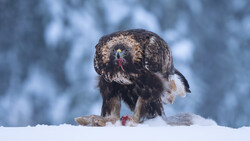
Later in the video, Gonzalez talks about something you probably think about more than you admit: zooming to 100% just to see what the file can do. He compares the 20-megapixel OM-3 experience to shooting wildlife with a high-resolution Nikon Z8, where a bird shot can reveal tiny bumps around the eye and every little feather once you start pixel-peeping. With the OM-3, he finds that when he fills the frame with a subject, the detail feels satisfying and prints would not be a problem, but looser compositions of surfers leave less room to crop before things turn to mush. That leads to a practical tradeoff question that hangs over the video: do you want a high-megapixel full frame camera with moderate lenses, or a 20-megapixel micro four thirds body paired with longer glass that keeps your kit smaller but demands better framing in the moment? Check out the video above for the full rundown from Gonzalez.

Join the Fstoppers community for free
-
Post comments and join in the discussions
-
Browse the site ad-free
-
Share your work and get featured in the community
-
Compete in the photo contests for fun and prizes
3 Comments
Honestly a 20mp micro 4/3 sensor camera would be more than enough for the average person. Especially if they don't intend to shoot in low light, make large prints, or want the best bokeh. This only becomes more true as most people are satisfied with phone images and usually only post on social media, where the requirements are minimal and the opinions are moot. Personally, I prefer a larger sensor, as it suites my shooting style better. Plus it gives me more leeway for editing and better quality. Until I moved up to a larger sensor with far more megapixels, I didn't understand what I was missing. Now I can never go back. The whole topic is a slippery slope full of opinions, compromises and expenses!
I'm quite content with my Oly/OM m43s gear, most of the talking points relevant in say, 2008 have either been addressed to my satisfaction or was something I never cared about anyway. IT needs to be said though, it makes a difference when you know your gear and what it can do.
Noise? The newer sensors in particular, are more than adequate for my needs, and on those rare occasions when I need to go to REALLY high ISO, new 3rd party software gives me something usable. And even with my ancient 8mp E500, I eventually learned how to minimize noise to where it didn't interfere with the viewing experience.
Cropping? I really like a 1:1 aspect ratio so that is the most common crop I do. I tend to frame for that A.R. just in case. But I have no problem cropping to whatever I need. Is there some image degradation in a really tight crop? Well of course! but again 3rd party apps to the rescue.
Shallow DOF? Not something I ever really cared about. When I need less DOF, I just use a slightly longer focal length. Modern Zoom lenses aren't as junky as they used to be. The 'sweet spot' in terms of acuity on a zoom lens is wider than it was back in "the day", a slight bump in the FL is unlikely to cause significant degradation, if any. I sometimes need a longer lens, but again, I know my gear.
FStop...um... "Equivalence"? Again, I don't care, as long as I can get the photo, I'll deal with the results later.
Printing Large? I can print even my 8mp 4/3s (well developed) images to between 12x12 to 16x16 inches. (depends on the photo) I don't know what my newer 20 mp cameras are capable of, I've never printed larger than 18x24, I've not had problems and would go larger if I felt I needed to do so.
It really makes a difference when you learn your gear and how to make it do what you need it to do.
And, once again, we are faced with the default 35mm sensor bias, right out of the gate. In the opening line, Cooke makes a comment about ‘good enough’’, rather that starting from reality—that 20 MP is better than good enough for the vast majority of people who ever pick up a mirrorless camera. There is never an article about how people waste pixels by purchasing a camera that produces photos that will only ever be seen on a screen of one kind or another. That would be too insulting of the ‘rational economic’ camera buying public. It’s all about ego and status, just like it is with homes and cars and watches and phones.
Maybe for once a blogger could actually be unbiased in their assessment.