Most photographers have strong opinions about sensor size. The difference between full frame, APS-C, and smaller formats shapes how you shoot, what gear you carry, and how flexible you can be. A smaller sensor setup changes more than image quality; it changes your habits.
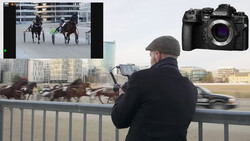
Coming to you from Omar Gonzalez Photography, this entertaining video explores whether Micro Four Thirds cameras still deserve attention in 2025. Gonzalez, who admits to being a "large sensor snob," sets aside his full frame comfort zone to spend a month with the OM System OM-3. He pairs it with the M.Zuiko 12–45mm f/4 PRO, the M.Zuiko 17mm f/1.8, and the M.Zuiko 40–150mm f/4 PRO. His plan is to test whether the smaller sensor can hold its own against his usual Nikon Zf and Fujifilm X-Pro2. What follows is a first impression that mixes curiosity, skepticism, and a surprising amount of appreciation for compact design.
Gonzalez’s first reaction is about size. The OM-3 feels light, even with the zoom lens attached, but the grip is minimal, so it’s not ideal for one-handed shooting. He notes that OM System cameras have strong weather-sealing and a pleasing tactile feel. The buttons and dials give solid feedback, though he misses a joystick for focus control. The body layout reminds him of the Nikon Zf but smaller and simpler. He also calls out the unique shutter placement on the front dial, something he hadn’t seen before but immediately liked.
The lenses impress him for their proportions. The 12–45mm f/4 offers a 24–90mm equivalent range and feels much smaller than the full frame version of the same coverage. The 17mm f/1.8 is compact enough for street shooting, and the 40–150mm f/4 is shockingly short for a lens that reaches the equivalent of 300mm. Gonzalez points out that this one uses internal zoom, keeping the barrel length constant, an unexpected touch on such a small lens. He compares it to his full frame Nikon 24–70mm f/2.8, and the difference in size is almost comical.
The experiment is more than just testing gear. Gonzalez is confronting his own bias toward large sensors. He jokes about how Micro Four Thirds users often try to "convert" others, and he’s now open to seeing why. The appeal of smaller, lighter systems fits his preference for portability when not working on professional assignments. What he’s unsure about is whether the smaller sensor will deliver the depth and dynamic range he’s used to from full frame. That tension is what makes this test interesting. Check out the video above for the full rundown from Gonzalez.




Join the Fstoppers community for free
-
Post comments and join in the discussions
-
Browse the site ad-free
-
Share your work and get featured in the community
-
Compete in the photo contests for fun and prizes
7 Comments
Asked and answered ten thousand times.
It is the only mirrorless system that lives up to the promise of smaller and lighter.
Some of the lenses out there are ridiculous in price and weight, ie the Fuji 80mm and the Z nifty fifty.
If you like that gear I am happy for you but no flaming-they are just heavy and expensive lenses for there categories.
Amazing! Incredible! He just DISCOVERED this magical format 17 years after it came to market. Cutting edge.
Absolutely it can. I changed from Canon back around 2019 and have never regretted it.
I’m sure this is a beautiful shot of an impressive bird, but the compression in the comments section butchered it, now it looks out of focus and blodgy. Is there an other location we can see these photos.
Of course it can. There is no fundamental reason why a sensor has to be 36x24mm. It was just a historical coincidence that movie film was made 35mm wide, and some camera maker adopted the film.
Too bad he used an OM-3 and not an OM-1 to get the full deal of a small, lightweight camera with a decent grip. His 35mm sensor bias comes through loud and clear when he snobbishly suggests M43 won’t cut it with pro photography and tries to defend his point with the same old 35mm sensor rubbish. There are some pro areas inwhich M43s might not cut it, but then there are other pro situations where M43 shines. These blanket pronouncements by M43 newbies are so totally biased as to be worthless.