
The Pentax K-3 Mark III was officially discontinued in Japan in January 2025. The Monochrome variant has been more complicated: B&H's original black Monochrome listing is now marked "No Longer Available," though it points buyers to a current matte-black Monochrome listing still shown as in stock. After roughly four years of production, the K-3 Mark III is being phased out in stages rather than discontinued cleanly, and the last major APS-C DSLR from a major manufacturer is winding down. By the standard industry narrative, this should be the end of the story. DSLRs are dead. Mirrorless has won. Move on. Except the story is more complicated than that.
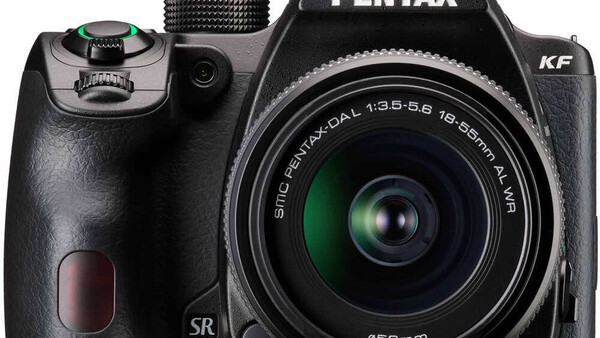
Pentax still sells the K-1 Mark II, a full frame DSLR released in 2018 that remains in the company's current lineup. Pentax still sells the KF, an APS-C DSLR released in 2022. Ricoh, Pentax's parent company, has publicly stated it is committed to the SLR format and has talked openly about future DSLR development, though it has been characteristically vague about timelines and specifications. The K-3 Mark III is being retired, but the format Pentax built it around is not.
That distinction matters, because the rest of the industry has spent the past decade telling itself a story about DSLRs that does not quite match what is actually happening. The K-3 Mark III's discontinuation is the right moment to look at what Pentax has actually been doing, what optical viewfinders still offer, and why the "DSLRs are dead" narrative was always more marketing than market analysis.
The Camera That Held the Line
When the K-3 Mark III launched in April 2021 at $2,000, it was received as a defiant statement for a format the industry had largely abandoned. The launch marketing leaned directly into that defiance: "Pentax believes in the future of SLR photography." The camera was a genuine technical achievement, with a 26-megapixel BSI-CMOS sensor, a significantly improved optical viewfinder (the largest ever fitted to an APS-C DSLR), the SAFOX 13 autofocus system with 101 points, and a build quality designed for decades rather than product cycles.
The reviews were respectful. The buyer base was enthusiastic. The sales were never large enough to threaten the mirrorless market, but they were steady, and Pentax kept the camera in production for just under four years. The Monochrome variant in 2023 was a niche-within-a-niche play, a direct shot at Leica's monochrome rangefinders offering the same no-color-filter-array sensor concept at less than a third of Leica's price.
Now both variants are being discontinued. Pentax has not detailed the reasons publicly, and the company has been reluctant to commit to specifics about what comes next. What is clear is that the K-3 Mark III has reached the end of its product cycle in an industry where most other DSLR product cycles ended years ago.
What Pentax Still Sells, and What That Says
The most concrete evidence that DSLRs have not actually died is Pentax's current product page. The K-1 Mark II remains available as a full frame option for photographers who want maximum sensor area in a DSLR body. The KF remains available as an entry-level APS-C option. Both are aging designs by mainstream standards, but both remain on Pentax's current lineup, are still being sold, and continue to receive support.
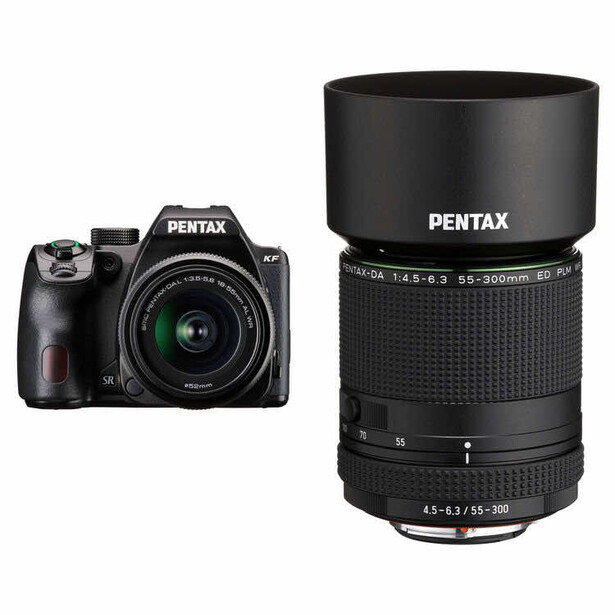
That is unusual in 2026. Canon has stopped releasing new DSLRs and has fully transitioned its development resources to the RF mount. Nikon has done the same with the Z mount. Sony exited the DSLR business years ago in favor of mirrorless. Pentax is the only major manufacturer with multiple DSLRs actively in its current lineup, and the company has been publicly clear that this is a deliberate strategic choice rather than an accident of slow product cycles.
Ricoh's leadership has talked about wanting to reach younger photographers with future DSLR development, and there are persistent rumors about a successor to the K-1 Mark II. Whether and when those rumors translate into actual products is genuinely uncertain, and the photography community has sometimes been guilty of treating Pentax leaks with more confidence than the company's actual public statements support. What is not uncertain is that Pentax has chosen, in 2026, to remain a DSLR manufacturer when every other option was open to it, and that choice deserves more attention than the industry has given it.
What the Optical Viewfinder Still Does Better
The case for DSLRs in 2026 is not nostalgia. It is functional. Optical viewfinders have specific advantages that even the best EVFs available today cannot fully replicate. There is no display lag, because there is no display. There is no battery drain from the viewfinder itself, because the viewfinder is literally just a mirror and a prism. In cold weather, the optical viewfinder does not dim or fail the way an EVF can. In bright sunlight, it does not wash out. Looking through an optical viewfinder is looking at the world, not at a small screen showing a representation of the world.
DSLRs do experience viewfinder blackout during the actual moment of exposure, when the mirror flips up and the optical path is briefly interrupted. Modern stacked-sensor mirrorless bodies have, in some cases, actually eliminated viewfinder blackout entirely, which is a genuine advantage of the mirrorless format that DSLR shooters have to acknowledge. But between exposures, the optical viewfinder returns to a true real-time view of the scene without any digital processing delay, and that combination of zero lag and physical accuracy remains something even the best EVFs approximate rather than match.
For a portion of the working photography market, these are not preferences. They are functional advantages. Field photographers who spend days in remote conditions value the battery life that comes from not powering a viewfinder and a rear screen continuously. Beginners learning to read light often find the direct, unmediated view of an optical finder easier to learn from than a digital simulation of the same scene.
These markets are smaller than the mirrorless mass market, but they are not negligible, and the standard industry narrative has been treating them as if they were. Pentax has not. For working photographers thinking about which system to commit to over the long term, Photography 101 covers the camera fundamentals that translate across DSLR and mirrorless platforms, which matters more than ever when the major manufacturers are making increasingly divergent bets about what photographers actually need.
Why Pentax Can Sustain This and the Majors Cannot
The reason Canon and Nikon abandoned the DSLR market is not that DSLRs became impossible to build. It is that DSLRs became insufficiently profitable at the scale Canon and Nikon needed to operate. Both companies have massive manufacturing infrastructure, large engineering workforces, and shareholder expectations built around moving millions of units per year. A niche product line that sells in the tens of thousands is not enough to justify the ongoing investment in mount development, lens lineup expansion, and continuous firmware support.
Pentax operates under completely different economics. The brand is a small division of Ricoh, a company whose primary business is office equipment rather than consumer cameras. Pentax's volumes are measured in small batches, its margins are structured around premium pricing rather than mass-market accessibility, and its buyer base is the kind of cult following that will pay for a camera that serves their specific needs rather than chasing incremental spec improvements. Pentax can profitably sustain a market segment that Canon and Nikon cannot, because Pentax is not trying to operate at Canon and Nikon's scale.
This is the structural reason a Pentax-sized DSLR business in 2026 is not an act of defiance against the industry. It is a rational business decision by a company whose cost structure and buyer base actually support the format. The majors did not abandon DSLRs because DSLRs stopped making sense. They abandoned them because the numbers stopped working at the majors' operational scale. At Pentax's scale, the numbers still work, at least so far.
What This Bet Looks Like in 2026
Pentax's continued commitment to DSLRs comes with real questions. The K-mount lens lineup has grown slowly compared to the L-mount, E-mount, and RF-mount ecosystems, which have all expanded dramatically over the past five years. The K-1 Mark II is now eight years old, and even loyal Pentax shooters acknowledge it is overdue for a refresh. The buyer base, while devoted, is aging, and Ricoh's stated goal of attracting younger photographers to the DSLR format is genuinely difficult given that most photographers under 30 have never used an optical viewfinder seriously.
Whether Pentax succeeds at its bet depends on questions that 2026 and 2027 will start to answer. Can the company actually deliver a successor to the K-1 Mark II that competes with the current expectations photographers have for high-end bodies? Can the K-mount lens lineup grow enough to remain competitive? Can Pentax convert younger photographers to a format they have no muscle memory for? None of these questions has an obvious answer right now.
What the K-3 Mark III's discontinuation does demonstrate, regardless of what Pentax does next, is that the "DSLRs are dead" narrative has always been overstated. DSLRs are not dead. They are unprofitable at the scale the major manufacturers need to operate, which is a different problem with different implications. The format still has functional advantages, a dedicated buyer base, and at least one manufacturer willing to keep building for it. That is not the same as a thriving market segment, but it is also not the obituary the industry has been writing.
The K-3 Mark III is ending, and it deserves a better send-off than the "last of its kind" framing it has mostly received. It was not the last of its kind. The K-1 Mark II is still on Pentax's current product list. The KF is still available. Pentax is still publicly committed to DSLR development, even if the timeline for that development is genuinely unclear.
The honest version of the story is that DSLRs have shrunk from a mass-market category to a niche category, that one manufacturer is still serving that niche, and that the niche has enough functional value to sustain at least one company's continued investment. Whether that lasts another five years or another fifteen is unknowable from where we sit in 2026. What is knowable is that the K-3 Mark III's retirement is not the end of an era, but a transition within one. Pentax built a camera that held the line for a format the rest of the industry walked away from. Whether Pentax can keep holding that line is the real question, and the answer will come from the cameras Pentax actually ships, not the ones the rumor mill is excited about.





5 Comments
I love my Pentax K5ii, it is only 16mp but it produces amazing photos and it is such a joy to use
Thank you, Alex, for the unusual level of understanding when writing about Pentax DSLRs and their niche in photography and the industry. I've used Pentax DSLRs and their native glass since 2009, and they've helped me a lot to find my photographic mojo again. The K-3 Mark III remains the best and most enjoyable camera I've had the privilege of shooting by a considerable margin.
Years ago, I made the switch from Canon to Pentax with the K-5 II, and since then I've used several different Pentax models. Now I have the KP and K-3 III, and at my age, I doubt I'll upgrade any further. Still, I hope Pentax continues to thrive with new products. Great article.
LOL, still shooting events with a K-1 and K-1ii.
OVF far superior to EVF.