If you've ever packed a camera for a bike ride, you know the body is rarely the heavy part, since a couple of lenses with any reach can fill a bag faster than the camera itself. The OM System OM-3 and the Micro Four Thirds format offer one answer to that weight problem, and a long ride along the Northumberland coast puts that answer to a practical test.
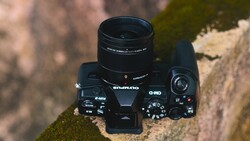
Small full frame bodies exist, and so do compact APS-C ones, yet the lenses that give them decent reach grow quickly. Jason Friend ran into exactly that about 18 months earlier with a Sony a7C II and a single lens, and he came away convinced that Micro Four Thirds is the format best suited to exploring by bike or on foot. His first mirrorless camera was Micro Four Thirds, so this is a return more than an experiment. For this outing, he takes a train to Ashington and rides home to Whitley Bay with an OM System OM-3 and the M.Zuiko Digital ED 12-45mm f/4 PRO attached to the front of the bike. He'd pre-ordered the new OM System PEN, then found a kit deal that cost about £150 more than buying the PEN and the 12-45mm separately. He isn't sure he needs everything the extra money buys, but he picked the OM-3 as the safer, more future-proof choice.
The first stop that looks promising is a beach at Cambois, a spot he usually reaches by car from the other side of the River Blyth. He sets Live ND to six stops, adds a physical ND filter, and works fast because plenty of road is still ahead. The OM-3 looks retro, but it's a dense little computer, and Friend is still learning its menus. Live ND only works in shutter priority, which frustrates him, since he'd prefer aperture priority. The preview also shows the blurred result while he composes, and he finds it distracting. His workaround is to switch to aperture priority to frame the shot, then flip back to shutter priority to dial in the exposure, a habit you can borrow if you pick up one of these bodies.
A Micro Four Thirds sensor has a 2x crop factor, so the 12-45mm frames like a 24-90mm lens on full frame while staying small enough to ride on a bike mount. That math scales with focal length. The longer the reach you want, the more the smaller format saves in size and weight, which is why Micro Four Thirds has kept a loyal following among hikers and wildlife shooters even as full frame bodies keep shrinking. OM System has pushed further by building tools into the camera that once required extra gear. Live ND covers some of the work of glass filters, Live Composite handles star trails and light painting in-camera, and stabilization strong enough to handhold slow shutter speeds can leave the tripod at home. When every item on a trip has to be pedaled or carried, count your lenses and accessories first, because the body is often the lightest thing in the bag.
Stabilization was one of Friend's main reasons for coming back to the system, since he wants to ditch the tripod whenever he can. He also worried the OM-3's lack of a grip would bother him, though it hasn't caused much trouble. Farther along the route, he frames an industrial scene of electricity pylons, buildings, the river, and the big skies Northumberland is known for, shooting with a polarizer at 1/500 s and f/5.6 while waiting for a shaft of light to land on the headland. The last stop is Charlie's Garden, a sea stack close to home, where high tide boxes him in and crashing waves give him something to work with. The light hasn't cooperated all day, and he plans a black and white conversion. With a screw-on ND64 filter in place, he presses the shutter button by hand to time the waves and notes that a cable release would make that job easier.
Friend's finished frames from the ride and more are in the video above.


Join the Fstoppers community for free
-
Post comments and join in the discussions
-
Browse the site ad-free
-
Share your work and get featured in the community
-
Compete in the photo contests for fun and prizes
No comments yet