Finding a fast prime with an apochromatic design under $400 is almost unheard of, and that's exactly what the Viltrox 35mm f/1.8 Evo claims to be. Apochromatic lenses correct chromatic aberration by aligning all three color wavelengths to the same focal plane, a feature you typically only find in lenses costing several times more.
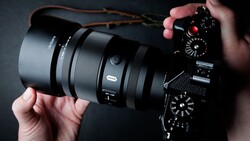
Coming to you from Luca Petralia Photography, this detailed hands-on video puts the Viltrox 35mm f/1.8 Evo through its paces on the Nikon Zf, covering everything from build quality to real-world professional shooting scenarios. Petralia notes the lens launches at $395 and sits in Viltrox's mid-tier Evo lineup, above the entry-level Air series but below the Pro and Lab lines. The build is solid, with a clickable aperture ring, a declick switch, a function button, an AF/MF toggle, a USB-C firmware update port, and a rear weather-sealing gasket. It weighs 375 g in the Nikon version and balances well even on the gripless Zf body.
Optically, Petralia found the lens sharp wide open, corner to corner, with no visible improvement when stopped down. That means you stop it down because you want a different look, not because you have to. Vignetting is visible at f/1.8 but largely gone by f/4, and the apochromatic design delivers on its promise: Petralia says he actively searched for chromatic aberration and couldn't find any. The bokeh is very good most of the time, though occasionally a little busy in high-contrast out-of-focus areas. Petralia also took the lens on a professional model shoot on location with flashes, pairing it with the Viltrox 85mm f/2 Evo, and came away impressed with the subject separation even at f/5.6 and f/11.
Autofocus uses a stepper motor rather than a linear motor, so it isn't quite as instantaneous as some competitors, but Petralia describes it as fast and accurate enough to trust in real shooting situations. A few missed shots during the model session were attributed to the Zf's autofocus system rather than the lens itself, and he notes that even native Nikon glass misses occasionally on that body. Video performance is where the lens steps back a bit. Focus breathing is noticeable, and subject tracking can wander in certain scenes. There's no optical stabilization, though that's common across most prime lenses. For video work, it's still capable, just not the first tool Petralia would reach for if video is your primary use case.
If you're shooting on a Nikon Z or Sony E mount and want a sharp, well-built 35mm prime with genuine apochromatic correction at a price that doesn't require a second thought, this lens deserves a serious look. Petralia also mentions the lens is expected to come to L-mount, which would be a meaningful addition for that system given its smaller lens ecosystem.
Check out the video above for the full rundown from Petralia, including sample images from the shoot and a deeper breakdown of how the apochromatic design holds up in practice.





Join the Fstoppers community for free
-
Post comments and join in the discussions
-
Browse the site ad-free
-
Share your work and get featured in the community
-
Compete in the photo contests for fun and prizes
No comments yet