Focal length is one of the most consequential decisions you make before pressing the shutter, and most people learn it the hard way, through years of trial and error. David Bergman's goal here is to compress that learning curve into a single, practical framework you can start using immediately.
Coming to you from Adorama, this detailed video from David Bergman starts with the fundamentals: what focal length actually is, how it's measured, and why the number on your lens doesn't tell the whole story. If you're shooting on a crop sensor body, that 50mm lens isn't giving you a 50mm field of view. Canon APS-C cameras apply a 1.6x crop factor, turning a 50mm lens into the equivalent of 80mm on full frame. Sony and Nikon APS-C bodies use a 1.5x crop, so that same lens behaves more like 75mm. Bergman shot the same scene outside Carnegie Hall using a Canon 11-24mm f/4, a 24-70mm f/2.8, and a 100-400mm f/4.5-5.6, all from the exact same position, with identical exposure settings, so the only variable is field of view. The difference between 11mm and 400mm from one spot is genuinely striking.
From there, Bergman works through focal length recommendations by shooting situation. For landscapes and architecture, he starts at 24mm as a practical entry point, wide enough to be useful without the extreme distortion you get pushing into the teens. For weddings and events, he makes the case for a 24-105mm zoom as a single-lens starting point, with a second body carrying a 70-200mm for the photographers ready to take that next step. Street photography gets a longer treatment, with Bergman laying out the cases for 35mm, 50mm, and short telephoto options in the 85-135mm range, each with a different tradeoff between environmental context and subject isolation. For portraits, he lands on the 85mm as his recommended starting point, explaining how longer focal lengths produce shallower depth of field at the same aperture compared to shorter ones.
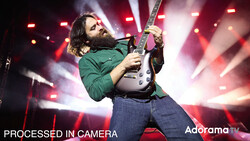
What makes this video worth your time beyond the genre-by-genre breakdown is the data Bergman pulls from his own work. He went back through 1,109 of his best images from seven years shooting with Luke Combs and broke down exactly which focal lengths produced his favorite shots. The results might surprise you, and they say something specific about how working professionals actually think about focal length versus how beginners assume they do. He also shares the two lenses he reaches for most on that job and explains exactly when and why he switches between them. That kind of real-world insight is harder to find than another chart of focal length recommendations.
Check out the video above for the full breakdown from Bergman, including his sports and wildlife lens picks and the one practice he recommends if you're still trying to find your own shooting style.


Join the Fstoppers community for free
-
Post comments and join in the discussions
-
Browse the site ad-free
-
Share your work and get featured in the community
-
Compete in the photo contests for fun and prizes
2 Comments
Very VERY Great INFO! My input is a lens I bought back in 2015 when I went Sony and stays my my camera (s) I have in my walkabout bag for anything I may see, it may be old but does great, Sony FE 24-240mm F3.5-6.3 OSS that in APS-C give an in camera crop of 36-360 so 24-360 at your finger tips, And f/# not really to look at for point a of focus give the background blur.
For the super ultra wide the 2013 Sony APS-C E 10-18mm (15-27mm in 35mm) f/4 OSS that can be used in full frame mode at 12mm to 18mm (18mm if you remove the light shield) with threads up front for filters also. Great for Astro Milky Way's with sharp pinpoint stars in corners and perfect horizon level and straightness. But if inside some where you have 15-27 in APS-C mode for rooms or even food shots.
one made in 2013 used from 2015 to 2017 before a 12mm existed and another 2015 that still holding value the 24-240 is like the DSLR 50-500mm or 60-600mm in Canon days advertised as the best travel lenses in all the mags. two lenses for anything BUT I do have a collection of prime and Telephotos (have OSS/IS) great for hand holding no tripod needed even in blue hour sunsets.
All should view and review this video.....