

You finally did it. After months of research, countless YouTube reviews, and one too many credit card statements you'd rather not discuss, you bought the camera. The flagship. The one with the sensor everyone raves about, the autofocus system that borders on witchcraft, and enough megapixels to count the individual hairs on a hummingbird from fifty feet away. You unboxed it with the reverence usually reserved for religious artifacts. You knew that after this moment, everything would change for the better.
Except it didn't.
Three months later, the photos aren't dramatically better. In fact, something feels off. The spark that made you fall in love with photography in the first place seems to have dimmed rather than brightened. If this sounds familiar, guess what: you're not the only one. Here's the uncomfortable truth: while top-tier equipment eliminates technical limitations, it introduces psychological and physical barriers that can do far more damage to your creative output. Constraints breed creativity. Abundance breeds paralysis. Let's talk about why the camera you saved all year to buy might be the very thing standing between you and your best work.
The Precious Object Problem
When you're holding six thousand dollars worth of body and glass, something changes in your brain. The camera stops being a tool and starts being a treasure. You become its caretaker rather than its commander. Think about the last time you took your flagship rig out in questionable weather. Did you hesitate? Did you check the forecast three times before leaving the house? Did you bring a plastic bag "just in case" and spend half your mental energy worrying about moisture instead of composition? Weather-sealing exists for a reason, but somehow, we convince ourselves that the sealing on our particular camera is merely decorative. We treat the IP rating like a suggestion rather than an engineering specification, and we shoot accordingly.
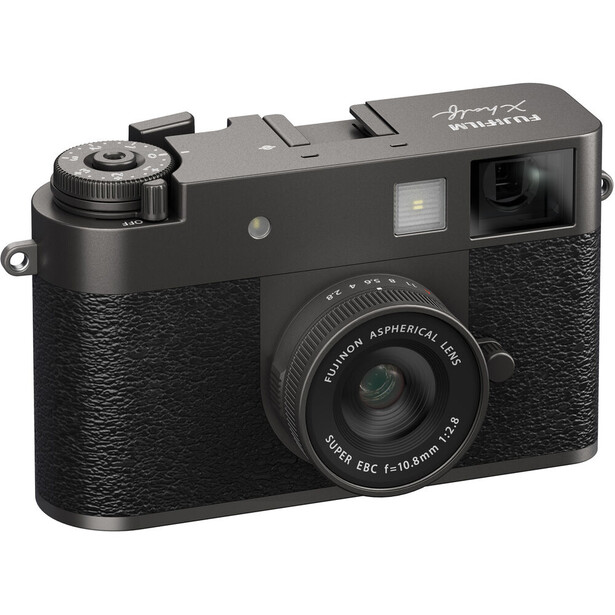
Here's a test: when you're composing a shot, does any part of your brain drift toward resale value? If the answer is yes, even occasionally, you've identified a problem that has nothing to do with image quality and everything to do with the weight of ownership.
Decision Fatigue
Modern flagship cameras are not cameras. They are computers that happen to have lens mounts. The menu systems alone can run forty pages deep, with customization options so granular you could spend a weekend just optimizing your autofocus settings for different scenarios. This sounds like a feature until you're standing in front of a fleeting moment and your brain starts running through a checklist. Is eye-detection on? Which eye-detection, human or animal? Should you switch to zone focus for this composition? Is continuous high the right drive mode, or should you drop to a slower burst to stretch your buffer longer? The moment happens. The moment ends. You were still in the menus.
Compare this to shooting with something simpler. Three dials: shutter, aperture, ISO. Maybe a focus mode switch. The camera becomes an extension of your hands rather than a puzzle to be solved. Muscle memory takes over. You stop thinking about the camera and start thinking about the photograph. More features means more decisions. More decisions means slower reactions. Slower reactions means missed images. The math isn't complicated, but we ignore it because having options feels like having power. Sometimes the most powerful thing you can do is remove options entirely.
But perhaps most importantly, more technical decisions mean less creative decisions.
When Technology Becomes a Substitute for Skill
Sixty megapixels is a safety net. You don't have to nail the composition in camera when you can crop your way to a usable frame in post. Thirty frames per second is an insurance policy. You don't have to anticipate the decisive moment when you can spray five hundred frames and let statistics do the work. Subject-tracking autofocus is a crutch. You don't have to understand where your subject will move when the camera can figure it out for you. None of this is inherently bad. Professional sports photographers and wildlife shooters depend on these capabilities to do their jobs. But for the rest of us, something insidious happens when we lean on technology to compensate for attention. We stop developing the instincts that separate good photographers from people who own good cameras. The feedback loop that once taught us timing, anticipation, and spatial awareness gets short-circuited by silicon that does the thinking for us.
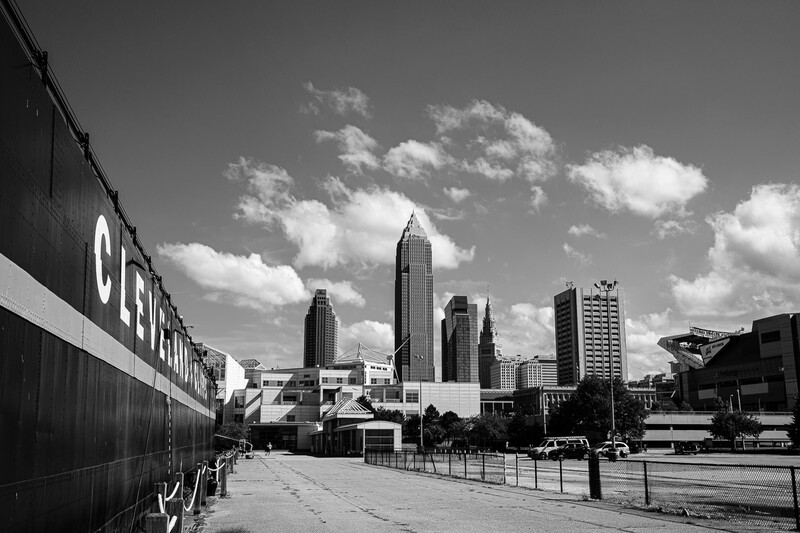
The percentage of technically acceptable images in your library increases while the percentage of images with genuine intention decreases. You become a curator sorting through thousands of nearly identical frames rather than a photographer who knows exactly when to press the shutter. The camera is doing more work. You are doing less. That's not growth. That's atrophy.
The Physics of Professional Glass
A full frame body with a professional zoom trinity weighs somewhere between "uncomfortable" and "legitimate workout." This changes everything about how and when you shoot. Photography stops being something you do and starts being something you plan. You don't grab the camera on your way out the door for a casual walk because casual walks don't warrant carrying five pounds of equipment in a dedicated bag. The gear only comes out for dedicated sessions, and dedicated sessions only happen when you've blocked time and committed mentally. The barrier to entry for each shooting opportunity rises, and with it, the number of opportunities you actually pursue declines. Meanwhile, the beautiful light hitting your kitchen table at 7 AM goes unrecorded. The weird shadow your kid casts on the living room wall becomes a memory rather than a photograph. The strange thing you noticed on your commute stays unexamined because the big rig is at home.
There's also the visibility factor. A massive lens draws attention, changes dynamics, and makes people self-conscious. Street photography becomes nearly impossible when your setup announces your presence from half a block away. Candid moments evaporate the instant someone notices the professional-looking apparatus pointed in their direction. Smaller cameras create smaller footprints, and smaller footprints create more opportunities. The irony is that the gear meant to capture life often prevents you from being present enough to witness it.
The Psychological Weight of Having No Excuses
When your gear was limited, you had a built-in excuse for imperfect results. The sensor couldn't handle low light. The autofocus wasn't fast enough. The lens wasn't sharp enough wide open. These limitations provided psychological cover. If a shot didn't work, the equipment shared the blame. Now you have the best. The camera is no longer a variable. Every mediocre image lands squarely on your shoulders, and this creates performance anxiety that can be genuinely paralyzing. The internal monologue shifts from "let's see what happens" to "this better be good." Experimentation feels riskier when failure reflects entirely on you rather than on your tools.
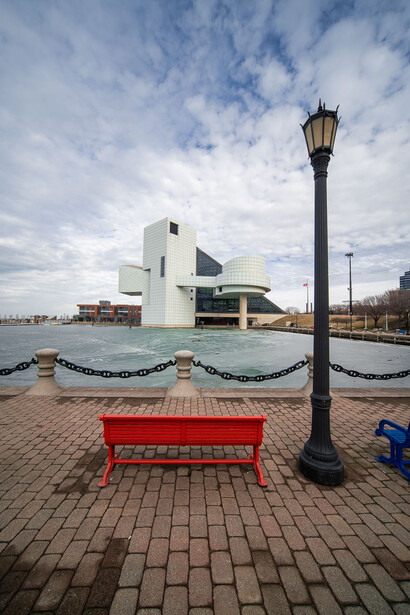
The Assignment
None of this means professional equipment is bad or that you made a mistake buying what you bought. High-end gear absolutely matters for specific applications where technical perfection is non-negotiable. But for personal work, for growth, for rediscovering why you picked up a camera in the first place, that flagship body might be working against you.
So here's the challenge. For your next personal shoot, leave the expensive rig at home. Grab the oldest, simplest camera you own. If you don't have one, buy a used body for $100 and a 50mm lens for $50 more. Go out with one lens, no backup, and no safety net.
Shoot like the gear doesn't matter because it doesn't. Shoot like you're not worried about the weather because you're not. Get the shot, break something if necessary, and remember that the camera is just a box that records light. The photographer is the part that matters.
Your gear doesn't always need an upgrade. Sometimes, your relationship with photography does. Go find the cheapest camera in your closet and remind yourself why you started doing this in the first place.




Join the Fstoppers community for free
-
Post comments and join in the discussions
-
Browse the site ad-free
-
Share your work and get featured in the community
-
Compete in the photo contests for fun and prizes
7 Comments
"Perfection becomes the minimum acceptable standard." Isn't this true of classical music?
Miles Davis:"The mistakes are part of the music."
Did Miles Davis know about the Köln Concert? Is that why it is so iconic?
Not me. I've taken photos for 40+ years. I've used all sorts of cruddy small film and digital cameras, phones, 35mm and medium format film cameras. I finally spent a lot of money (for me) for a good camera. I'm so glad I did!
Even with the now lower price of the Fuji X Half, for what it offers, it still feels too expensive. If it was a 24mp aps-c then maybe but a 17mp 1 inch sensor is hard to justify just for the supposed 'film like experience'.
For me, getting a Hasselblad X2D actually has made photography more challenging and fun. If the picture is off, no one to blame but the keeper of the camera. But it's a work camera. For personal use, an old Leica DLux 109 is my trusty companion.
Great article. I went to mirrorless several years ago and then got the Nikon z6iii. At 81 I struggle with all of the settings and I have lost interest in photography. Planning to sell and go back to a simpler camera with out the huge settings.
Okay, I never bought "The Perfect Camera" ... and I am also no known for wrapping my equipment in lots of cotton so it doesn't have to face the environment (hell, I don't even use the recommended UV filter to protect the front lens - that's what the lens cap is for when I am not shooting, and when I am shooting anything that gets in the way must get out of the way.)
But I have to admit that I have not made friends with any camera after my good old T90. Anything after that uses some menu system or other, and while that works well for me in my day job in IT, it just doesn't make these modern cameras intuitive any more. And I did not buy anything overly fancy ...