
The never-ending debate between the zoom and prime lens users only seems to get more heated with every argument for and against. As a user and enjoyer of both, I figured it would be only natural for me to weigh all the pros and cons of each in a somewhat unbiased article.
The ideal lens should cover every single focal length, have an aperture of f/1.2, and fit in your pocket, all while weighing less than a can of Coke. We will leave the price question for now, just because I have a great way of buying equipment for cheaper I will talk about later. There is no such thing as a perfect lens for every occasion. The flexibility of zooms is hard to beat with primes; however, the image quality, speed, and sharpness of primes are simply not possible with most zoom lenses. Weight-wise, zooms tend to be heavier than primes; however, there are many exceptions to this. My personal experience with lenses is primarily with Canon EF lenses, as well as Schneider Kreuznach lenses. I am certain that other manufacturers have equivalents to what I own for Canon and Phase One.
What Lenses Have I Owned?
I have gone through a few lenses in my career—everything from niche lenses for film cameras to classics such as the original 24-70mm f/2.8 for Canon. My first lens ever was a 28-70mm kit lens made for Canon cameras in the late ’90s and early 2000s. While a terrible lens, it was my first, so it deserves a mention. In terms of lenses that I used for serious work, those would be the Canon EF 24-70mm f/2.8, Canon EF 16-35mm f/2.8 II, Canon EF 70-200mmf/2.8 IS, and Canon 50mm f/1.4. The lens I used the most was by far the 24-70mm f/2.8—it is actually the only Canon lens that I have, as I sold the rest of my Canon kit. When it comes to Phase One, I really have used one lens only, the Schneider Kreuznach 80mm f/2.8. I have also used the 35mm f/2.8 lens for Phase One. In terms of lenses that I would potentially be interested in for the medium format system, it would be the 55mm and the 150mm. As for the Canon system, I would potentially want to get the 50mm f/1.8 because it is cheap and can be used for BTS footage. Other than that, I am happy with the equipment I have, and buying new equipment—the way I like to buy it—is a hassle.
Zooms Versus Primes: Pros and Cons
Zoom lenses are flexible when it comes to getting several compositions from the same point. They are preferred by photographers who travel, shoot events or weddings, or have to work in dynamic environments. The downsides are that they are typically heavier, slower in their aperture, and not as sharp. The last point is more relevant with older zoom lenses such as the Canon 70-200 f/2.8 IS. The original version of this lens was notoriously unsharp in the corners. It was also a very heavy lens that I did not enjoy bringing with me on long trips. It did allow me to capture images that would not be possible with any other lens, as it gave me a lot of reach. Back in my event days, I would primarily use this lens, as I was too shy to take a more hands-on, in-your-face approach.
Which One Did I Prefer—Was It Primes at the End of the Day?
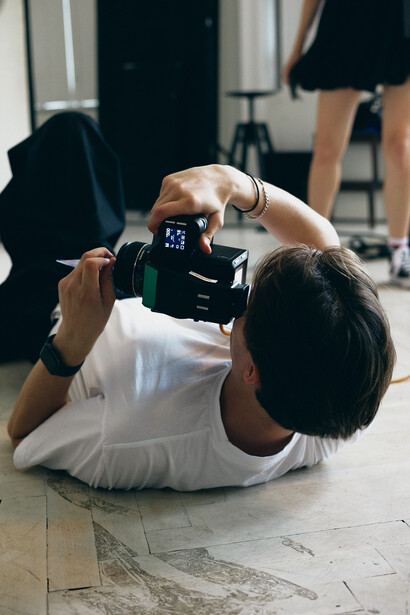
I generally preferred zoom lenses over primes when I shot events, as they gave me more flexibility in terms of composition, while the f/2.8 aperture was more than adequate for getting enough light in the lens. The same can be said about the 24-70mm f/2.8 and the 16-35mm f/2.8. These lenses were the backbone of my event photography, and I used them extensively to capture and tell stories about the events I was assigned to cover. Transitioning from event photography to fashion, I almost completely stopped using the wide angle and the telephoto lens, instead switching to the 24-70mm f/2.8. In itself, this lens was used predominantly around the 50mm setting, meaning that I was basically using it as a prime lens. To be honest, studio photography can be easily done with a single prime lens that suits your style the best. Since my style is very clean and clear, the 50mm is the perfect focal length. Some time ago, my friend gave me a 50mm f/1.4 to try and didn’t ask for it back for quite some time. I used that lens only if I was shooting full frame. The camera was lighter, although I did not make a lot of use of the f/1.4 aperture—neither in studio nor on location. You see, in studio I have 2,400 W of flash power and just about any modifier you could want available to me, so power is not a problem, while on location, I choose to shoot around f/4 maximum, often going down to f/7.1 or even f/8. If you look at my work, you will rarely see me use bokeh, as I find it too distracting and tend to prefer to use clean walls or textured elements in my background. All in all, I can say that now I would be using a prime lens on my full frame camera, as I rarely shoot at a focal length other than something between 40–60mm. It fits my style the best, and I connect with it the most. Why primes? Well, because they’re a lot lighter. I think that if I am shooting on a full frame camera, I should go with a prime lens to have a lightweight setup. The heavy lifting can be done with the medium format system that I also love and use.
A Word on Medium Format Lenses
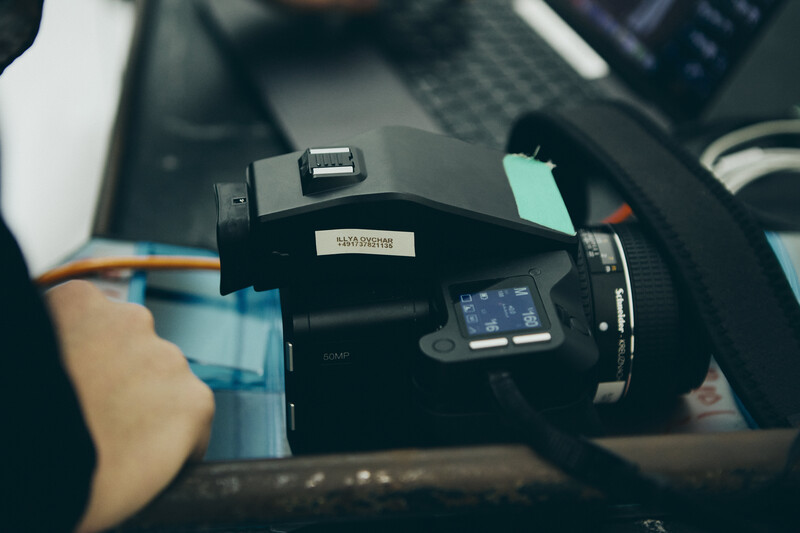
The medium format system I have is from Phase One. They offer both prime and zoom lenses for Phase One. Mind you, both of these lenses weigh a ton and a half. I prefer to have a semi-lightweight lens on the Phase One, so I went for the classic choice: the 80mm f/2.8. The zoom lenses for Phase One are only useful if you are doing landscape or car photography. Essentially, if tripods are an option, you might as well go with a zoom lens. Otherwise, I don’t recommend it, as the zoom lenses for medium format systems are notoriously heavy. A really good system that recently came out is the one from Hasselblad—their lenses and cameras are super lightweight and super sharp. I cannot recommend the new Hasselblad stuff enough for everyone who wants to explore medium format but is not going to be using it in a work setting, as Hasselblad cannot be tethered into Capture One, rendering it somewhat ineffective when it comes to working with digi techs and the lot. What you have to know about the medium format system is that both zoom and prime lenses are heavy, as medium format itself is a bulky and heavy system.
How Does One Afford These Lenses?
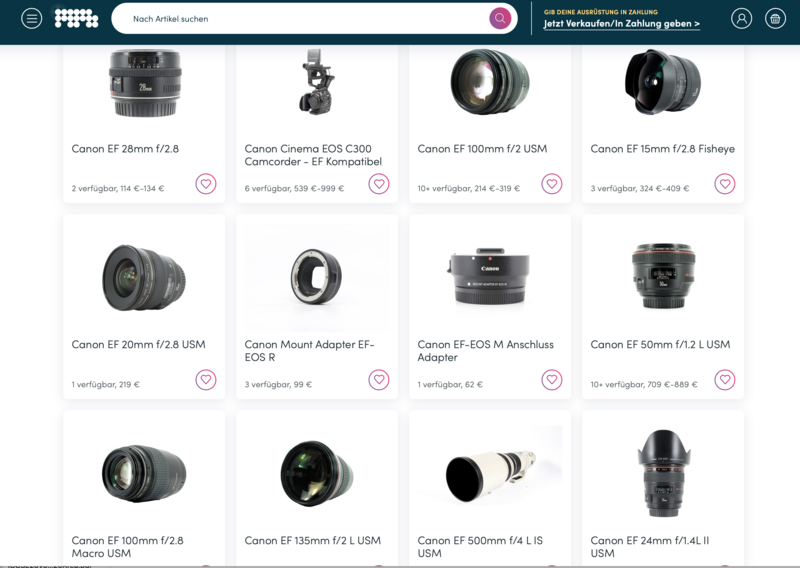
You’d be surprised to know, I rarely—if ever—buy new equipment. Sometimes I might do it just because my accountant is saying I need to spend some cash, and I might buy a lot of storage, gaffer’s tape, and other expendables. Other times, I have to be smart with my spending, meaning I buy everything used—from cameras to light stands to paper backgrounds even. If the deal is good, I will hunt for that deal. Hunting for deals on websites like eBay can take months. For example, I am chasing a guy who is selling a flash for a ridiculous price. The best way to save big money and still get the equipment you need is to buy it from MPB. MPB is a website that purchases used equipment, checks it, photographs it, and sells it to you. Sometimes, the deal on MPB is much better than the deal you might find on eBay, as their pricing is quite competitive. Considering you are getting a piece of equipment for much cheaper than new—without the risk of buying from a stranger on the internet, the wait, or the hassle—paying even a slightly higher price is only fair. What’s even better, replacing your equipment has never been easier. Say one day I get tired of my EF 24-70mm f/2.8 lens. I can simply sell the lens and buy another from MPB in a few clicks. It’s a super convenient service with great customer support and quick turnaround times. It’s something I personally endorse and can’t recommend enough to photographers and creatives. They have a large stock, meaning that getting the piece of equipment you need has never been easier.
Closing Thoughts
Be it primes, be it zooms, lenses are tools after all, and there isn’t a perfect one-fits-all answer to this debate. It’s a personal preference of every artist. This is why I recommend trying out different lenses, renting them, and then saving some money when buying it with MPB. As a champion of used equipment, I know I will be buying my next lens from them.

Join the Fstoppers community for free
-
Post comments and join in the discussions
-
Browse the site ad-free
-
Share your work and get featured in the community
-
Compete in the photo contests for fun and prizes
22 Comments
I’m not entirely sure what debate there is to solve, not that the conclusion solves anything anyway just giving the inevitable ‘there is no one answer’. It’s impossible for an individual to come up with a one size fits all answer when people all have different preferences/needs anyway.
I still have my first Minolta A-mount FF lens from 1993, that I bought for my Minolta 7000i. It was a 35-70mm f/3.5-5.8, I think. I use it on my a7III. I kept it around and use it for sentimental reasons. My Minolta 7000i and the rest of its lenses were lost in a Philippines typhoon, in 2006.
I also have a handful of A-mount APS-C lenses. They get used mostly with my old mirrorless cropped Sony. I replaced my 7000i with a pre-Sony a7D with a full 6.4 MP. I still have and use it and the few lenses i purchased for it. The a7D was a disappointment compared to film.
History lesson over.
Back in 1993 when I purchased my first camera with its f/1.8 nifty fifty kit lens and then bought a zoom, the superiority of prime lenses has declined and the quality of zooms is light years ahead of what it once was.
Companies are grinding far superior glass to what they once were. Sony's new f/2.0 50-150mm zoom, for example. It doesn't have the DOF of an f/1.2 prime, but it's getting closer. You could practically shoot a whole wedding with that 50-150mm. I wouldn't, but a person could.
Between my primes, zooms and adapters, I have every mm from 12 to 1200 covered. I mostly use my zooms, but my primes have a purpose, too.
I'm going to mention, but not expound on the quality and capabilities of what new sensors are doing to help close the gap in picture quality between lenses.
I seriously doubt that any manufacturers are using inferior glass on their primes as compared to their zooms. At most, they may use different glasses trying to compensate for aberrations inherent in a design that varies its focal length, something unnecessary in primes where aberrations are much more easily designed out.
Full disclosure. I was in a game of truck v motorcycle, 3 yrs ago. I lost. Recently, my hands became strong enough to hold my camera, again. I've had my camera for awhile, but, yesterday, my nurse wheeled in all of my camera bags. In one bag, I found a surprise. There was a lens in my line up that I didn't know I had. I found a brand new Sony GM 35mm. It was out of it's box, but I never remembered having it. It took awhile to remember, but I'd bought it the evening before my accident.
So, I have nothing really to add to this debate, but that 35mm was almost a lens to die for.
Fixed-focal-length lenses are smaller, lighter, cheaper, sharper, brighter, have simpler construction with no moving internal elements (hence are more reliable), have reduced optical aberrations, offer the option of shallow depth of field, and generally offer nicer out-of-focus rendering.
Zoom lenses have the convenience of a range of focal lengths.
Those are the trade-offs. That's about it.
MPB is great. Got my Schneider Kreuznach 35mm F2.8 blue ring there. - shutter literally had 250 exposures on it and there was year warranty left, and i only paid 3k - it was a steal. I get stuff from there all the time too. I use primes even when i was shooting runway, and in studio i can't see a reason to go to zoom lens (quite honesty for location shoots neither).
This debate again?? [Facepalm]. Each has its use and place. I also refuse to get involved in the 'If you could only choose one' scenario, because in reality, that scenario is never real for me.
Nicely thought out and written. My favorite for walk around: Sony a7CR w/ Sony 2.5/40 G. Camera weighs 525g, lens 173g, resolution and lack of CA are phenomenal. Crop potential is huge. Ergonomics and haptics suit me.
For the record, my gear of reference, against which I measure what I now own, is the Leica III-f w/ collapsible 50mm f2 Summicron my father taught me on in the early 1950s and which later became mine when he moved up to a pair of M3s.
I’ve used both since 1968. Zooms were always nice to have. There might be a difference but I’ve never need primes for decades. A zoom, multi focal length lens, is really quite nice. I’ve always assumed primes are better but I’ve never really been concerned about it.
For purposes of optical quality in the field, the prime/zoom lens debate came to an end about 2018. The zoom lenses that came along with the adoption of mirrorless, changed that. The camera manufacturers really upped their game and introduced zoom lens with near prime optical quality. For example, Nikon introduced its 4th generation, Z-mount, 24-120 which smokes the previous 3 generations for the F-mount. It's not even close. There are also lots of other recently introduced zooms for which you could say the same. This is a great, but expensive time, to enjoy photography.
Just silly! Woodworkers have their never ending dovetail debate, pins or tails first. Use what you like, how you like it’s more enjoyable.
Not sure how I still get suckered into reading these sorts of articles. "Longstanding debate and problem solved...Click here, learn nothing new but don't miss the ads!"
And the inevitable....It depends. YMMV.
I own both. I use both. I love both.
But I like to challenge myself. So I frequently attach a lens and use nothing but that lens for a period of time. No matter what. (A month, two months, more?) It has made me a better photographer, and honestly, most of the time now, I don't care what's attached to my camera body. I will find a way to make the image that I want. It's also helped me respect my phone camera more.)
A nice side benefit? I have images that I love from every camera and every lens I have ever owned. (In fact one of my favorite images I ever made was from an iPhone 10.) OTOH, if I look at a photograph I have made and hate it, I have NEVER thought to blame the lens. In fact, I rarely bother to even look at the gear used. I don't care. It was me.
Gear will never make a poorly composed photograph good, nor a mediocre photographer great.
This is a dreamed up debate. Only photography nerds are obsessed with their equipment. Whatever camera brand you use the job that you intend doing determines what particular camera and lenses you wish to use, be they zooms or fixed focal length lenses. There is no perfect lens. Anyway that old saying rings true here - if you produce bad images it's your fault not the camera's or lens's. Stop with this obsession with equipment. You're making millions for the manufacturers.
I've been a commercial photographer for over 30 years. Only a couple of times has someone asked me about which camera or lens I was using. Clients never ask. When I told them that I mainly use a Cambo 4x5 the discussion ended. Clients don't ask.
Two different options for different scenarios. I use both. And I use FF options on crop as well (Another “debate”)! I’ve taken family portraits with the 135F2 (on crop yet!), and ended up with photos that most don’t even think to try. But when I travel, I mostly carry zooms for the quick convenience of composition, and usually stop down anyway. I don’t think there’s really a debate. Get both primes and zooms.
As a Hasselblad user, I'm surprised by your somewhat dismissive comment. Software from Hasselblad can so easily be used to not only tether to a Mac desktop, but wirelessly to an iPhone one iPad. That makes it an extremely useful professional tool. As for the prime or zoom debate; these days zoom lenses are just so good. For example the Nikon Z24-70mm F2.8 S Mk2 is seriously sharp at every focal length ... I've never seen such remarkably good reviews. Als, the latest Hasselblad XCD 35-100mm E is incredibly sharp - even in the corners of the images. One lens to rule them all !
Having used both, Phase one and Hasselblad, I can say that the hassys Phocus software really stinks compared to capture One, that's why so many photographers I know would use the 4x system with Phase one digital back (up to IQ3 since phase one no longer makes backs for Hasselblad) - not trying to knock it down, but Capture one is really light years better. I enjoy shooting hassy (I think ergonomics and especially focusing is so much better, but software is a huge drawback)
This post is a perfect example of "There's no there there". He never used f/1.4 because he never shot in low light situations, like social dancing, or astro landscapes.
There is no single lens that it ideal for every situation because physics. Decide what you need for a particular photograph, and pick the lens that will best do that job.
I have a lens (Pentax FA 77/1.8 ltd) that I use not (only) because of it's speed or weight but because the character of the images that it produces is unique, and amazing. I will often keep my 18-250 on my APS body because no matter what I come across, then without changing lenses, I can grab my camera and it will have a focal length that has a good chance of being able to catch the shot. The lens isn't the sharpest or the fastest, but it's usually sharp enough and fast enough.
I *LOVE* getting new gear, and if that's your jam, enjoy. But, the best advice I can give is to shoot with what you've got, and wait until you keep running into the same situation where you are missing photos because of your gear, then do some research into what you need to get the photos that you are missing. There's also a good chance that the problem can be solved by upgrading what is behind the sensor, rather than what is in front of it.
This is a very old argument. I recall starting photography in 1981 and hearing from all sides that zooms were unable to produce professional-quality images. I bucked the general consensus and bought the first serious pro zoom Nikon made, which was the 80-200mm f/2.8. I was primarily shooting for outdoor magazines at the time. As a young, many thought uneducated kid, I was confident that being able to change compositions quickly would be more financially productive than the minor sharpness advantage of a fixed focal lens. And I was right. I never once had any photo editor ask me if there was a sharper version of the image I was showing them. Never once! Most of my work at the time was produced with the 80-200mm Nikkor, which allowed me to quickly change compositions and create more compositional options for my clients without having to run backward or forward. I was positive that even if my images were "slightly" less sharp than the fixed lens, I would have so many more compositional choices that I would more than make up for the lack of any perceived sharpness with many more sales due to better compositional variety. These numerous covers prove it, as 80% of them were shot with the Nikkor 80-200mm F/2.8 ZOOM.
80-200 was exceptional, not as sharp as 70-200L, but it had that really nice, creamy feel (i loved it - i had it on my f4 and then d100). Some magazines will not complain about sharpness, some will (try shooting a beauty campaign, lol). In reality i have many times added noise to a magazine edits - commercial prints are different (pisters advertisements and commercial spreads in magazines - great work btw)
Whatever is appropriate for the shoot! Primes for astrophotography and landscape. Zooms for wildlife and action.
I meet a photographer on a driftwood beach back in 2014 who was using a Phase One camera and I the new Sony A7SM1 at the time both of us used the Capture One SW but after he saw my use and results went to a camera store and bought the A7RM1. Set that a side over the many years and still having all my lenses of overtime and using many SW programs I have found that it is the SW that makes the image, yes a good camera with a good lens but also a photographers good eye for a good story.
Today with the A7RM5 and every camera before it and able to collect most all Sony Lenses prime and telephoto my main carry in my walk around bag is the Sony FE 24-240mm F3.5-6.3 OSS Full-frame Telephoto Zoom Lens with Optical SteadyShot that in APS-C mode get a 36-360mm (in camera crop) makes me ready for most anything on top of that in 2015 I got the Sony E 10-18mm (15-27mm in 35mm) f/4 OSS that can be used in full frame mode at 12-18mm - that is a 12mm lens two years before any real 12mm and when Sony came out with the very big and heavy 12-24mm f/4 then a few years later the f/2.8. both lenses never leave by walk around bag for that unplanned capture.
When you look at all the SW over the past years since 2010 when one with a Canon T2i where one had to use Canons SW to edit and not till Adobe put PS and LR together first Lr was the only SW with lens corrections that no other had and soon Lr came with dust removal (WOW then). Today we have noise reduction in most all SW as well as upsizing.
And over the years the race for who as the most pixels for what is called the most detailed of cameras when even the images from the 5MP point and shoot cameras had enough detail and even less noise that many of the newest cameras, Most images today are on websites where those high MP images are reduced to most nothing of the MP's first used.
I well sate forever the one thing that makes the image most is the SW not the prime or telephoto. In my beginnings with my Sony cameras there were adapters for the old film lenses and those lenses are just as sharp and most today and need no LC's also well the A7 Mod 1's and 2's had/have a on camera app for lens correction but mainly for the Digital Canon lenses.
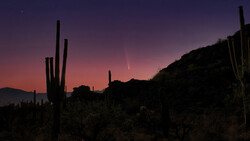
#1 E 10-18mm in FF at 12mm in 2015
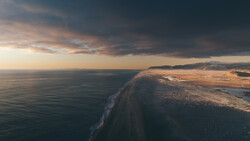
#2 FE 24-240mm F3.5-6.3 OSS Full-frame Telephoto Zoom Lens with Optical SteadyShot in APS-C mode for a 360mm cropped in camera.
#3 a 50mm f/1.8
#4 A7SM1 with Voigtlander HELIAR-HYPER WIDE 10mm F5.6 2016 hand held