
The history of photography is littered with brilliant ideas that arrived too early. These were cameras that promised to revolutionize the industry but were met with skepticism, confusion, or outright rejection. These weren't failures of engineering. They were failures of timing.
Some cameras are remembered as disasters. But the truth is more interesting: many of photography's biggest "flops" were actually prophetic. They predicted trends that would become standard practice years or even decades later. The photographers who dismissed them at launch now use cameras built on the same principles.
Here are five cameras that had the right vision but the wrong release date. These machines were so far ahead of the curve that the industry needed years to catch up.
1. Sony Mavica Prototype (1981): The Still Video Camera That Imagined Digital
The 1981 Sony Mavica prototype was a still video camera that recorded analog video frames to 2-inch "Mavipak" floppy disks in NTSC format at up to 50 frames per disk. This wasn't actually a digital camera, but it was one of the first serious attempts at filmless photography.
While everyone else was perfecting film, Sony said "what if we just didn't use film at all?" The Mavica (Magnetic Video Camera) used analog video capture to record still images, proving that filmless photography was possible. You could review images immediately on a TV and reuse the storage medium by overwriting it. The camera itself never went into production, though. The first commercial Mavica (MVC-C1) didn't arrive until 1987, and even that model remained analog still video. True digital Mavica cameras wouldn't arrive until the 1990s.
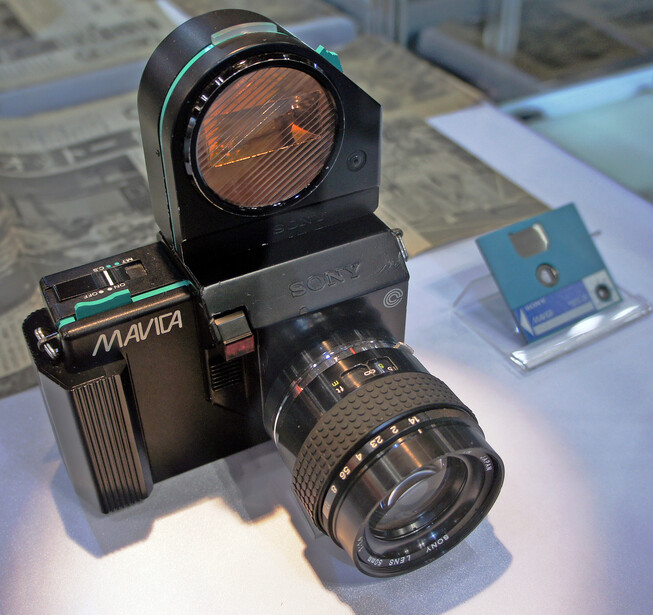
The Mavica predicted the entire concept of filmless photography. Instant review. Electronic storage. The fundamental idea is that you don't need film to capture images. While technically analog, the Mavica predicted how photographers would actually work in the digital era.
Sony understood where photography was headed before the technology existed to get there. When the first consumer digital cameras arrived in 1990 (like the Dycam Model 1) and Kodak released the first commercial DSLR (the DCS 100) in 1991, they built on concepts the Mavica prototypes had demonstrated a decade earlier. The path from analog still video to digital photography was shorter than anyone expected.
2. Canon EOS-1N RS (1995): Pellicle Mirrors Meet Modern Autofocus
The Canon EOS-1N RS was a professional 35mm film SLR with a fixed pellicle (semi-transparent) mirror instead of a traditional flip-up reflex mirror. This allowed continuous viewing through the viewfinder at 10 frames per second with no blackout, which was remarkable for 1995.
Canon had experimented with pellicle mirrors before (the Pellix in 1965, the F-1 High Speed in 1972), but those were manual focus cameras. The EOS-1N RS combined pellicle mirror technology with modern autofocus and motor drives, creating a professional tool that eliminated viewfinder blackout entirely. Traditional SLR mirrors black out during exposure, but the pellicle mirror stayed fixed, allowing uninterrupted viewing and insanely fast shooting for sports and action photography.
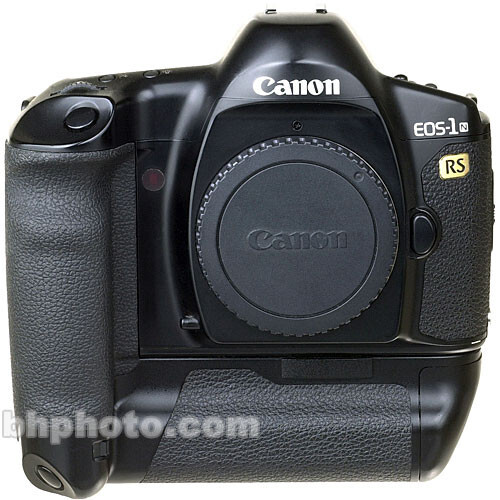
The EOS-1N RS anticipated key aspects of what would become the mirrorless revolution. Modern mirrorless cameras deliver what this camera promised: continuous viewing with no blackout, fast shooting, and simplified internal mechanisms. They just achieved it with electronic viewfinders instead of pellicle mirrors, avoiding the light loss problem entirely.
Canon was thinking about eliminating the mirror blackout problem 25 years before mirrorless cameras became dominant. The solution was imperfect, but the problem they identified, that mirror blackout disrupts the shooting experience, turned out to be exactly right. Sony's Alpha series and Canon's own mirrorless R system were built on lessons learned from decades of pellicle mirror experiments.
3. Nikon Coolpix 995 (2001): The Enthusiast Compact Before Its Time
The Coolpix 995 was a swiveling-lens 3.3-megapixel compact camera with full manual controls, JPEG/TIFF shooting, and serious build quality. It looked like something from a sci-fi movie. Nikon had pioneered this rotating body design with the Coolpix 900 in 1998, refining it through the 950 and 990, but the 995 became the most well-known example.
This wasn't a point-and-shoot pretending to be serious. It was a genuinely capable camera in a body smaller than any DSLR. The rotating lens design meant you could shoot from any angle without contorting your body. It had manual focus, aperture priority, shutter priority, full manual mode, and even accepted lens adapters through a converter. For a compact camera in 2001, this level of control was almost unheard of.
The camera cost around $900 in 2001—serious money when prosumer DSLRs like the Canon D30 were $3,000 and true entry-level DSLRs didn't even exist yet (the Canon Digital Rebel wouldn't arrive until 2003). The rotating lens mechanism was fragile. And most importantly, serious photographers weren't ready to trust a compact camera for professional work. Even at a fraction of a DSLR's price, the Coolpix 995 lived in an awkward middle ground: too expensive for casual shooters, too unconventional for professionals who wanted the "real thing."
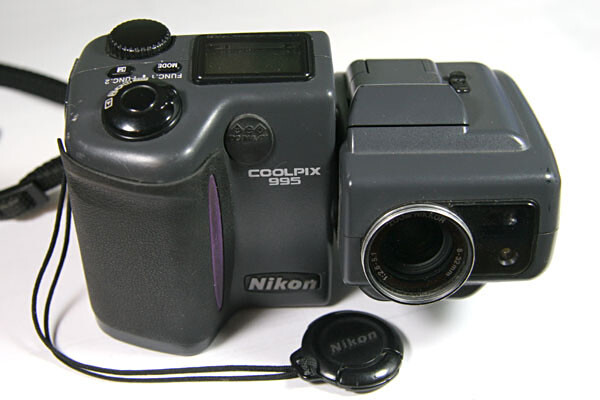
Nikon was asking the right question in 2001: "What if enthusiast photographers want something pocketable?" The market wasn't ready for a $900 compact camera. But by 2012, the Sony RX100 proved that customers would pay premium prices for legitimately good compact cameras. The Coolpix 995 was right—just 10 years too early.
4. Panasonic Lumix GH1 (2009): The Camera That Made Video a Priority
The Panasonic GH1 was a Micro Four Thirds camera that could shoot 1080p video at 24 fps with full manual control and continuous autofocus. While the Canon 5D Mark II (2008) proved that DSLR video could look cinematic, the GH1 proved that video could be a core design priority, not an afterthought.
Canon's 5D Mark II revolutionized video with full-frame cinematic footage, but it was designed as a stills camera with impressive video capabilities. The GH1 was different. Panasonic built it from the ground up as a hybrid tool. It had continuous autofocus that actually worked in video, reduced (though not eliminated) overheating and recording limit issues, and a fully articulating screen. It cost $1,500 with a lens, a fraction of professional video cameras. The GH1 said "photographers will become videographers" when that was still a controversial idea.
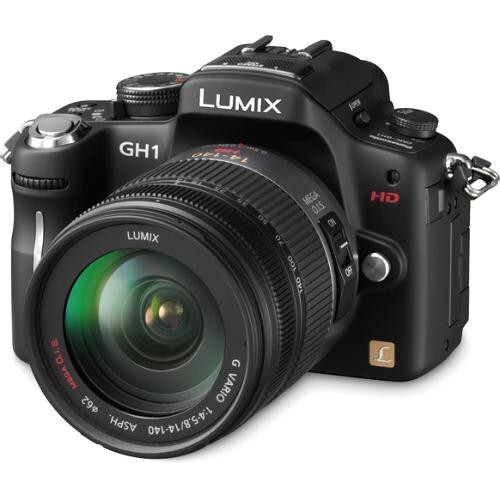
The GH1 predicted the hybrid shooting revolution and the specific needs of video-focused photographers. While the 5D Mark II proved quality video was possible, the GH1 predicted that video would become just as important as stills, requiring dedicated features rather than just good image quality.
Within five years, every camera manufacturer was cramming professional video features into stills cameras, learning lessons from the GH1's design. The GH series became the go-to for independent filmmakers, YouTubers, and hybrid shooters. The concept of the "hybrid shooter," someone who does both photo and video professionally, barely existed before the GH1 and 5D Mark II proved it was possible. By 2015, being hybrid-capable was mandatory. The GH5 and GH6 became industry standards because the GH1 showed that video deserved equal consideration with stills.
5. Contax N Digital (2002): Full Frame Before the Technology Was Ready
Announced in 2000 but delayed until 2002, the Contax N Digital was the first full-frame digital SLR to be announced to consumers. It featured a 6-megapixel full-frame sensor in a Contax N-mount body for $5,999. When it finally shipped, Kodak was preparing its own full frame competitor, the DCS 14n, which would arrive in early 2003 with a 13.5-megapixel sensor.
In the early 2000s, everyone was shooting crop sensor DSLRs. Canon's flagship 1D was APS-H (read more about that here). Nikon's D1 series was DX. The Contax N Digital said "full frame or bust" before the technology could really deliver it. It aimed to give photographers the same field of view and depth of field characteristics they were used to from film.
Six megapixels on a full-frame sensor meant large pixels that theoretically should have delivered excellent low-light performance. But sensor technology was so immature that noise and dynamic range were poor despite the pixel size advantage. Canon announced the 1Ds later in 2002 with 11 megapixels and better overall performance, making the N Digital look outdated almost immediately. The N Digital was slow, the autofocus was terrible, battery life was abysmal, and Contax's lens selection was limited. The delays meant it arrived already facing superior competition. It was the right idea executed with technology that wasn't ready.
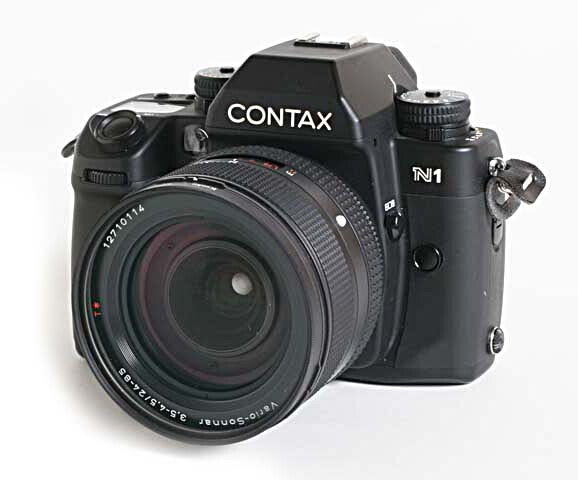
When Canon released the 5D in 2005 at $3,299, it proved that affordable full-frame digital was viable. That camera changed professional photography forever. But the Contax N Digital and Kodak DCS 14n had the vision first. They just couldn't deliver the execution. Within a decade, full-frame became the standard for professional and enthusiast photographers, exactly as these early pioneers predicted.
The Pattern: When Vision Meets Wrong Timing
Some faced market readiness issues: technological or economic barriers. The Contax N Digital knew full frame was the future but couldn't deliver the sensor quality to prove it. The Mavica prototype couldn't overcome the lack of digital infrastructure. The EOS-1N RS's light loss was unacceptable in the film era.
Others faced cultural readiness issues: photographer psychology wasn't ready for the concept. The GH1 bet on hybrid shooters before photographers admitted they needed video. The Coolpix 995 asked professionals to trust a compact camera when that seemed absurd.
The lesson isn't that these cameras failed. It's that innovation needs three things to succeed: vision, execution, and timing. These cameras had vision and often decent execution, but they arrived before either the market or the culture was ready.
Being right too early is almost the same as being wrong. But these cameras weren't wrong; they were just early. And in photography's history, being early often means you get to define what comes next, even if you don't get to profit from it.



.jpg)

Join the Fstoppers community for free
-
Post comments and join in the discussions
-
Browse the site ad-free
-
Share your work and get featured in the community
-
Compete in the photo contests for fun and prizes
4 Comments
Myself and other colleagues used an early Sony Mavica in Beijing June 1989 Tiananmen Sq. Sony had a device that could take the stills from the camera and essentially "fax" them across analogue phone lines to a receiver. That device could also take a frame grab from NTSC video and fax that. This was how we got a lot of pictures out for news coverage whilst our video was sent out on commercial flights.
Very thought provoking article! I nearly bought one of those swiveling Nikons when my kids were little, but went with a more "conventional" Olympus C-5050.
One minor correction/addition, the EOS 1N RS wasn't Canon's first AF camera with a pellicle mirror, or even the first EOS to feature it. That honor goes to the EOS RT, which was an adaptation of the consumer EOS 630 in the late 1980's.
Excellent article...I remember vividly, a little bit over 20 years ago I was drooling over the Contax FF, a superb DSLR with all that excellent glass, yet I just could not afford it just starting out in photography, so
I opted for the Nikon Coolpix E990, and it still works fine to this day...
Not sure how this list can overlook the 5D ii