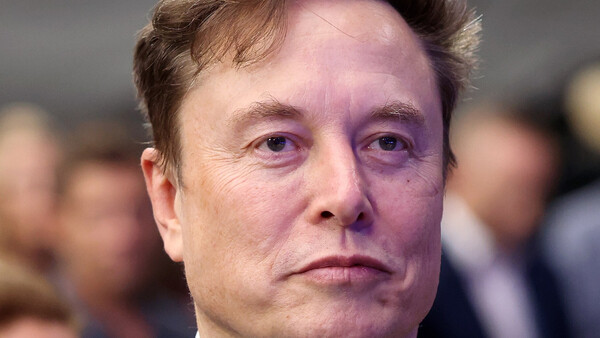
Elon Musk's AI company is asking a federal court to block a state law that bans tools for turning ordinary photos into fake nude images. The law is the first of its kind in the country, and it takes effect August 1.
According to The Guardian, xAI sued Minnesota Attorney General Keith Ellison this week over a statute known as HF 1606. The measure makes it illegal for anyone who owns or controls a website, app, or program to let users "nudify" images of real, identifiable people, and it also bans advertising those tools. Instead of going after the individuals who make the images, the law targets the platform itself, a deliberate choice by legislators who decided that chasing individual bad actors after images have already spread is not enough to stop the harm at its source.
The stakes are large because of how the penalties work. The law exposes operators to civil penalties of at least $500,000 per unlawful access, download, or use, and both private victims and the state attorney general can sue. In its complaint, xAI's attorneys argue the statute "imposes an overbroad, content-based ban on free speech and the tools of visual expression." They assert that a platform whose users produced 100,000 prohibited images could face liability of roughly $50 billion. xAI, which the company says now operates as a SpaceX subsidiary after a February merger, is asking the court to declare the law unconstitutional and to block Minnesota from enforcing it.
xAI says it already forbids this kind of misuse. The company argues it "strictly prohibits its users from generating nude or sexualized images of people without their consent," and it says it has previously filed suit against users who evade its blockers to make such images. State officials are not backing down. Ellison said his office was waiting to be served before responding in court, but added that "using AI to generate nude images of people against their will is appalling," and Governor Tim Walz wrote on social media, "See you in court, creep." The law's authors framed the fight as one about profit versus protection, with state Sen. Erin Maye Quade saying it is "sad that the creators of nudification technology would rather protect their ill-gotten profits than protect us from image-based sexual abuse."
It helps to understand where this law came from. HF 1606 traces its origins to what happened to Molly Kelley, a woman from Minnesota who discovered in 2024 that a friend of the family had relied on a nudification website to produce non-consensual deepfake pictures of her, along with about 80 additional women, using photos taken from their public social media accounts. The bill drew broad bipartisan support, passing the Minnesota House 132-1 and the Senate 65-0. It also lands in the middle of a much bigger reckoning over Musk's Grok tool. Earlier this year, the Center for Countering Digital Hate estimated Grok produced about 3 million sexualized images in an 11-day period, and the fallout drew regulatory scrutiny across multiple continents. In March, a class action was filed in California alleging Grok generated child sexual abuse material from real photos of minors.
Similar bills modeled on HF 1606 are under consideration in California, New York, and other states, so a ruling either way could shape how aggressively legislatures nationwide try to regulate AI image tools. Musk's companies have run this playbook before, challenging California laws on deepfakes and AI training data, with mixed results in court.
Lead image by Gage Skidmore, cropped, CC BY-SA 4.0, via Wikimedia Commons.

.jpg)
Join the Fstoppers community for free
-
Post comments and join in the discussions
-
Browse the site ad-free
-
Share your work and get featured in the community
-
Compete in the photo contests for fun and prizes
No comments yet