
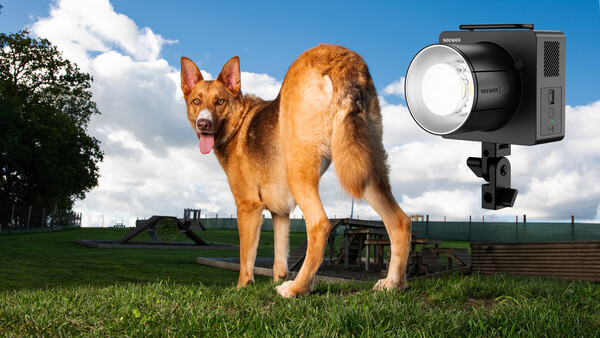
Looking for a powerful wireless studio strobe that can give studio-quality results on location? I have spent the last few months testing the Neewer Q6 Outdoor Studio Flash. This article discusses why I have rated this battery-powered 600 W light as a solid performer that handles a range of shooting conditions effectively—and not just for shooting outdoors.
We are increasingly able to live without being tethered to wall sockets, as rechargeable battery units get lighter and more powerful. I have been looking for a new wireless studio strobe, of which there are many on the market in a variety of price points and power outputs. The spec of the Neewer Q6 seemed to have what I needed, at a price more attractive than comparable units. With 600 W of power on full setting, and a handy 30 W LED modeling light, this light works well for photography and related behind-the-scenes content for social media. This is a balance that more and more photographers—and their clients—are in need of.
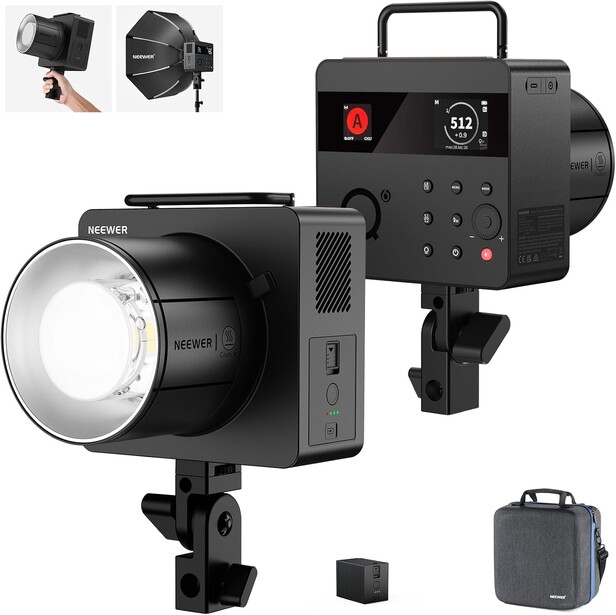
The Neewer Q6 was introduced in May 2025 as a battery-powered flash aimed at photographers needing power without being tethered to outlets. Neewer, a brand which I have come to know recently for their excellent balance of professional gear at practical pricing levels, designed the Q6 to compete in the mid-range market, offering features typically found in more expensive units. At the time of writing, it's currently priced at $599 on the official site and retailers like Amazon, making it an option for those seeking value without compromising on core functionality. The build quality stands out—solid construction without relying on cheap plastic components, which contributes to its durability under regular use.
Key Specifications
- Power: 600 Ws
- Color Temperature: 5,800 K (+/-150 K)
- Full Power Flash: 400 (with modeling light off)
- Flash Duration: 1/7,633 s max
- Recycling Time: Approx. 0.01-0.9 s
- Flash Mode: TTL/M/MULTI/BURST MODE
- Stroboscopic Flash: 1-100 Hz, 1-100 times
- Flash Exposure Compensation (FEC): -3 EV to 3 EV, 1/3 EV increments
- Sync Mode: High-speed sync, front/rear curtain sync
- Delay Flash: 0.01-30 s
- Wireless 2.4 G Q System: 32 channels, 5 groups (A, B, C, D, E)
- Power Supply: Lithium battery, AC dummy battery
- Lamp Weight (without handle): 6.6 lbs/3 kg
Off-Grid Shooting
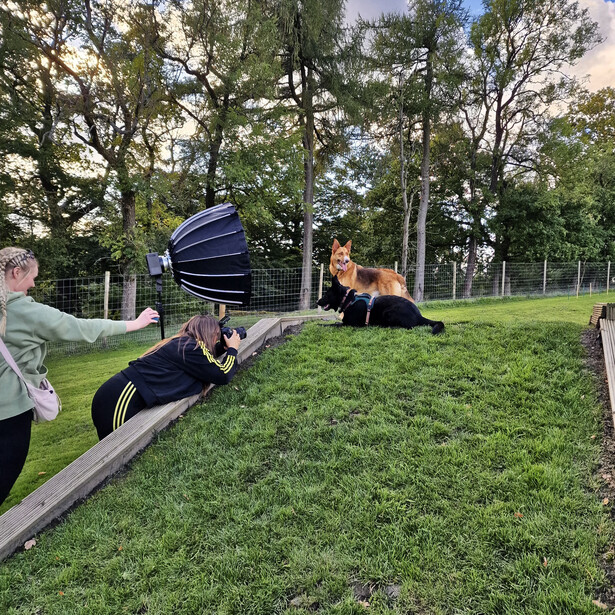
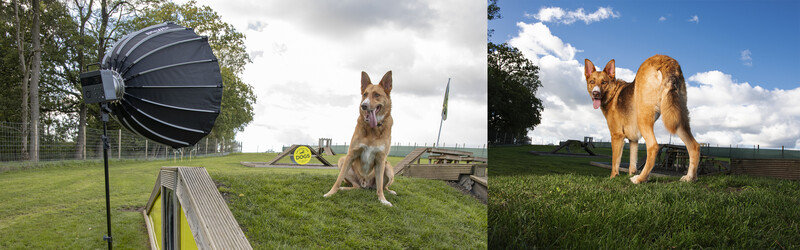
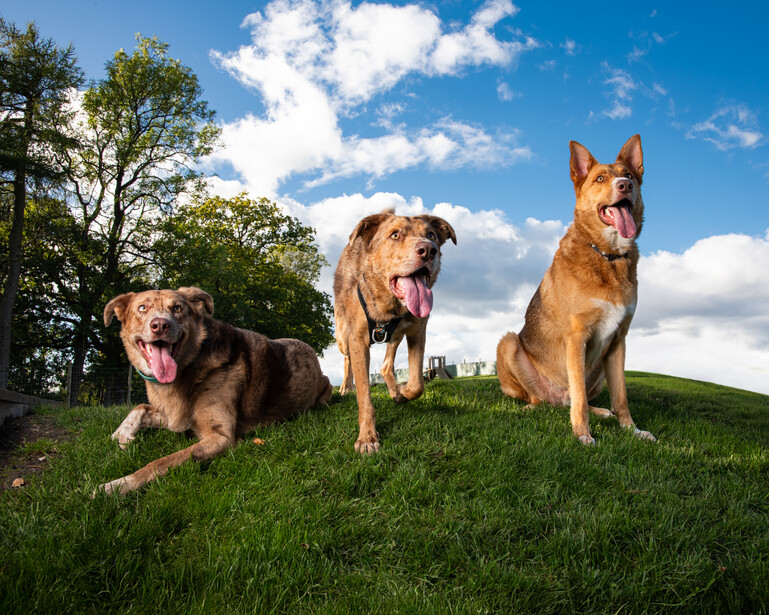
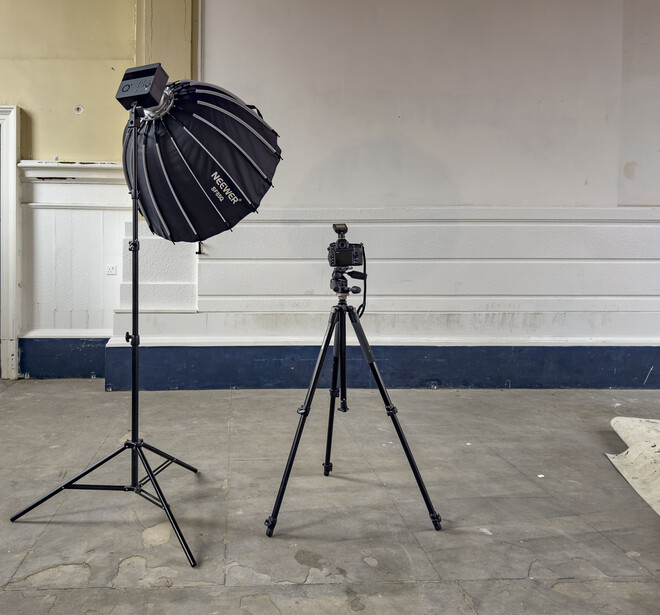
This light is perfect for on-location work, allowing photographers to create studio-quality portraits anywhere. Working wirelessly, I completed some pet portraits when my dogs' brothers came for their annual visit. They are no longer puppies, and I was not prepared in body, mind, or soul to wrangle three large dogs in my small indoor studio, so this light allowed for a scenario where they could burn off energy in between shots. Working in the middle of a field takes away powered options without the need for additional power backup, and the Neewer Q6 was the right tool for the job. I paired the light with a parabolic softbox, and used the Neewer QPRO trigger for wireless firing whilst balancing the exposure to match the bright conditions, with punchy lighting to create some fun portraits. The consistency of the light output was fantastic, and kept up with my fast-paced shooting of the dogs before they ran off to play with one another in between shots. As you can see from the behind-the-scenes shot below, using natural light would have given lackluster results.
Indoor Scenarios
When thinking of wireless studio strobes, many people will think immediately of the ability to shoot in the middle of nowhere. Yes, that is certainly where my mind went too, but you needn’t go far for wireless studio strobes to be useful. It's not always about remote locations; there are many indoor applications too.
Headshots
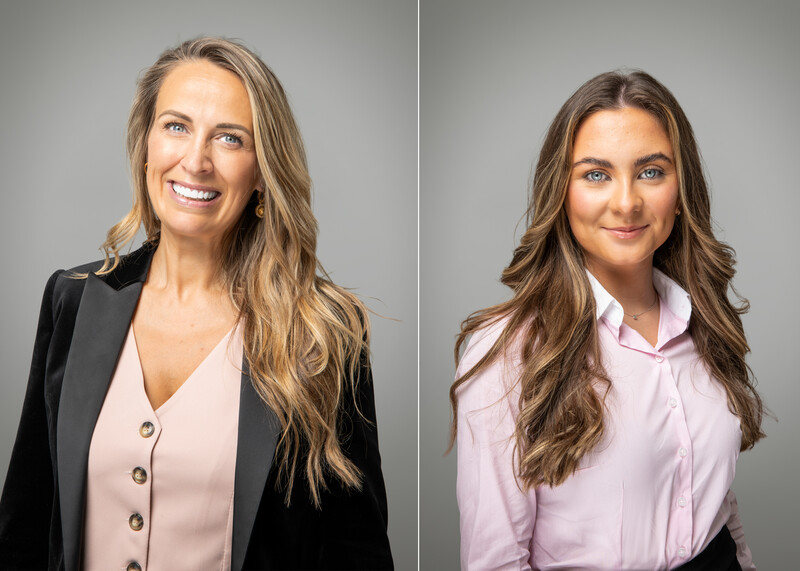
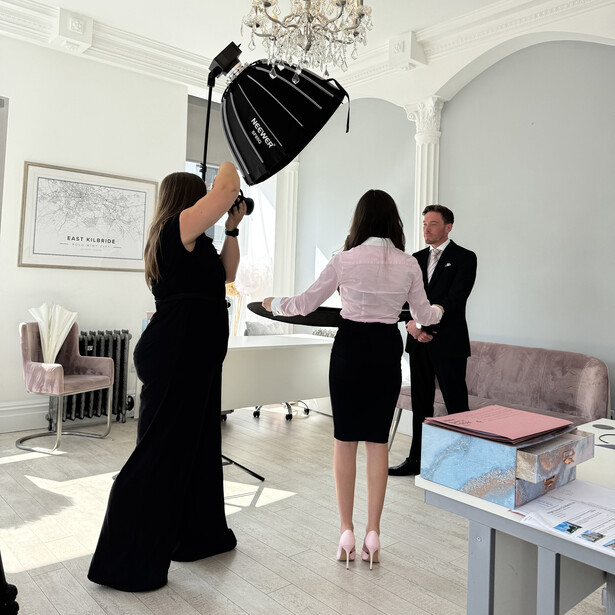
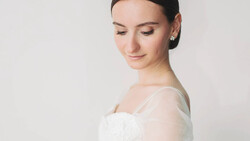
I recently completed some headshots for a small real estate company, spending time during a busy working day in a busy real estate office to catch them on the rare occasion that they are all in the office at the same time. The staff were busy working, and moved around between shots to answer calls, speak to clients, and fulfill other tasks between each headshot. In this scenario, wireless operation of lighting avoided trip hazards from cables. Controlling the Q6 with the Neewer QPRO trigger allowed me to make tweaks in exposure from a distance, minimizing disruptions to the subjects and negating the need to lower the light unit to reach power controls.
Family Portraits, Without the Wires
Photographers working with children and families will see the benefit of working wirelessly too. I’m sure every family photographer will have a handful of stories of unruly little darlings causing havoc in their studio, and having safety concerns surrounding trip hazards or falling lights. Removing wires and weighting light stands gives extra peace of mind in scenarios like these, when children need to run off steam while siblings are being photographed and parents are already multitasking as hard as they can.
Commercial Studio Photography
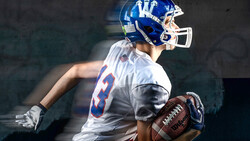
Wires cause more hazards than just trips. If you are a commercial photographer who works with freezing motion of models, food, or liquids on brand campaigns, you will be well versed in flash duration requirements, and specifically in splash management for working with liquids, but liquid has a terrible habit of finding its way into places that it shouldn’t. Sometimes that includes electrical equipment, causing risk of injury or worse. The Neewer Q6, with flash duration of 1/20,400 s, is much faster than required to freeze action for safely captured, pin-sharp shots. The stroboscopic mode is fantastic for creating in-camera motion sequences.
Lighting Abandoned Spaces
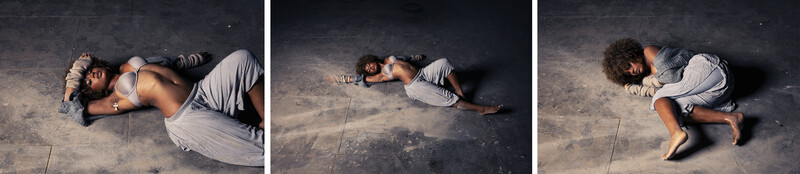
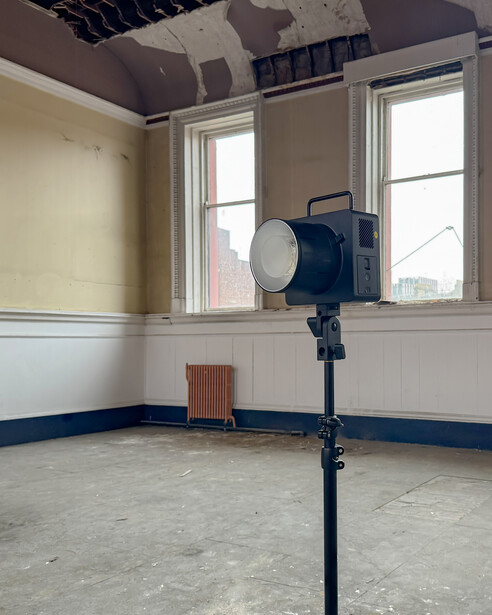
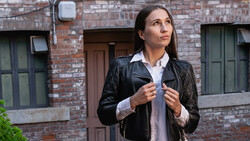
I arranged to shoot some gritty portraits in the lecture hall of an old police headquarters, which had no working electricity. Immediately, I knew what I was going to be working with as my key light source when I heard the location plans. I think this means that the Q6 has become my new location go-to. For this shoot, I paired the light with the Neewer Parabolic Softbox, with grid attached to really direct the light to my subject. Fast and unpredictable movement during contemporary dance was easily captured and frozen with the Q6, and these shots—yet to be posted—are incredible.
What I Liked
- The value for the price: Priced at $599, this wireless strobe delivers 600 Ws power, with features such as TTL, HSS support, and app integration comparable to higher-end models.
- The solid build: Sturdy materials give it a reliable feel—no flimsy plastic here—suitable for repeated location work.
- Off-grid performance: The battery supports extended shoots, up to 400 flashes on full power.
- The LED modeling light: Adjustable color and brightness make it useful for video and social content between shots.
What I Didn't Like
- Modeling light brightness: The 30W output is fine for closer use and previews but may need supplementation in larger or darker spaces.
- Battery ecosystem: Not compatible with other Neewer battery models, but this is a more powerful unit.
- These points are minor in the context of its overall performance.
Final Thoughts
I have put the Neewer Q6 Outdoor Studio Strobe through its paces and have found that the convenience of this light extends far beyond the original reason it appealed to me, for outdoor photoshoots. Of course, this fits well with remote location work, but as you've read in the article, I have found this of use in scenarios where solid power was needed, without the worry of wires, and so corporate photographers would benefit from this light in their kit bag. 600 W of wireless power performs consistently across a range of scenarios, and offers a balanced solution for portable lighting, from remote portraits to indoor environments, at a competitive price. It's a worthwhile addition for those needing dependable off-camera flash without excess complexity.
Join the Fstoppers community for free
-
Post comments and join in the discussions
-
Browse the site ad-free
-
Share your work and get featured in the community
-
Compete in the photo contests for fun and prizes
4 Comments
You took fantastic photos of a diverse woman, yet you decided to put a dog's butt as the title photo?
And then the flash next to the dog's butt, like you wanna say this flash is a**.
Thanks for sharing your thoughts. If you read the article you'll see that I am a fan of this light but I understand your reading of the header image. I chose to focus on the most challenging use/test of the light, which was a shoot with 3 high energy adolescent dogs. Thank you for the compliments on the portraits, can we also not use the phrase "diverse" woman when referring to one person.
I started out with Neewer lights back in 2018 but the trigger would always give me problems and I would misfire quite a bit. Otherwise, they are a great option for beginners or those on a budget, I'm sure they have gotten a lot better in the last several years.
I always kept to main brands in the past, but have been very impressed with the Neewer product that I've tested over the past 6 months or so. I use this light and the QPro trigger all the time and it never misses a beat.