
Developing your own style in photography is one of the biggest challenges for any photographer. We’re constantly told that we have to stand out from the crowd to succeed. But what does that actually mean in practice? How do you find a style that feels authentic? And do you even need a distinct signature look to make it in photography?
Finding a Unique Style
When I started out, everyone around me repeated the same advice: “If you want to be successful, you need your own style.”
I looked at the big names who inspired me: Joey Lawrence with his epic, cinematic portraits; Erik Almas with his surreal compositions; and Gregory Crewdson, staging entire movie sets for his large format photographs. Their work was instantly recognizable. It had that elusive quality I was trying to find for myself.
So I began to study them. I dissected their techniques, borrowed elements, and tried to integrate them into my own photography. I experimented with dramatic artificial light, elaborate staging, and compositing. But every picture felt like a replica. I wasn’t creating something personal, I was imitating. And the more I tried, the more frustrated I became. That constant feeling of being “off” made me doubt whether I would ever find my own way.
Chasing Gear and Technology
At the same time, I fell into another trap: trying to define my photographic identity through equipment. Everywhere I looked, people talked about the Leica look, Hasselblad color science, or Canon skin tones. It sounded like style was built into the camera.
So I invested: Profoto flashes, a high-end Canon system, endless hours comparing lenses and focal lengths. I built a setup that any professional would be proud of. For my architectural photography business, it was a sensible step. But for developing a personal voice, it was useless. No matter how advanced the gear became, the images still didn’t feel like mine. It took me a long time to realize style doesn’t come from equipment. The gear is only ever a tool to support the vision, never the source of it.
The Turning Point
Everything changed in December 2019. The pandemic shut down all assignments, and for the first time in years I was forced to stop. No clients, no deadlines, just time. And in that silence, I realized what I was missing most: being outdoors.
I wanted to combine my two passions, architecture and mountaineering, in a way I had never tried before. That’s when the idea struck: Modern Alpine Architecture. Seven days, seven buildings, scattered through the Alps. It was ambitious, but exactly the kind of challenge I needed.
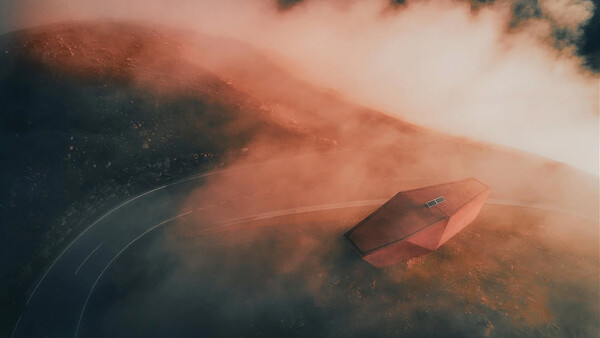
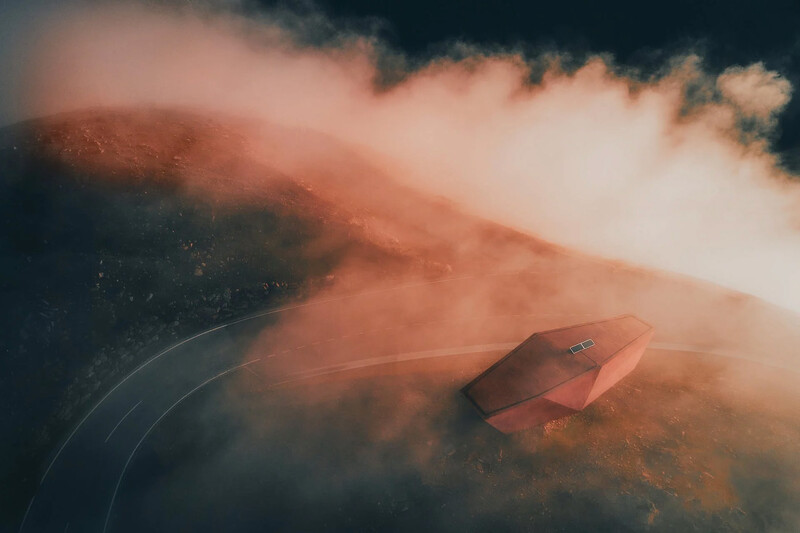
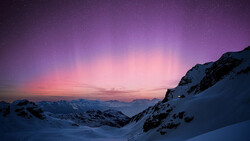
By the summer of 2020, when restrictions eased, my climbing partner Marcus and I set out. The car was packed with camera gear and just enough space to sleep. On the very first day, we were hit by pouring rain. But the next morning, at the Timmelsjoch Pass Museum, the clouds broke open. The valley transformed into a fiery sea of red clouds, the wind ripping through at breathtaking speed. It felt like standing in a movie scene.
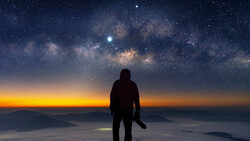
I shot for 18 hours straight, completely absorbed, not once thinking about style, social media, or gear. It was pure focus on the subject in front of me. Over the days that followed, I experimented restlessly: classic architectural frames, drone shots, time-lapse sequences, and even light painting with a drone, a technique I had admired in the work of Reuben Wu. Standing in the cold for hours with winds reaching 70 km/h, I kept pushing until, finally, the perfect alignment of stars, clouds, and architecture came together. I knew in that moment this project had the potential to become something special.
When the trip was over, I had more than 9,000 images. During the second lockdown, I turned my dressing room into a makeshift darkroom and spent hours every day editing. And yet, doubt crept in again. Were the images good enough? Was my editing right? Could I have done better?
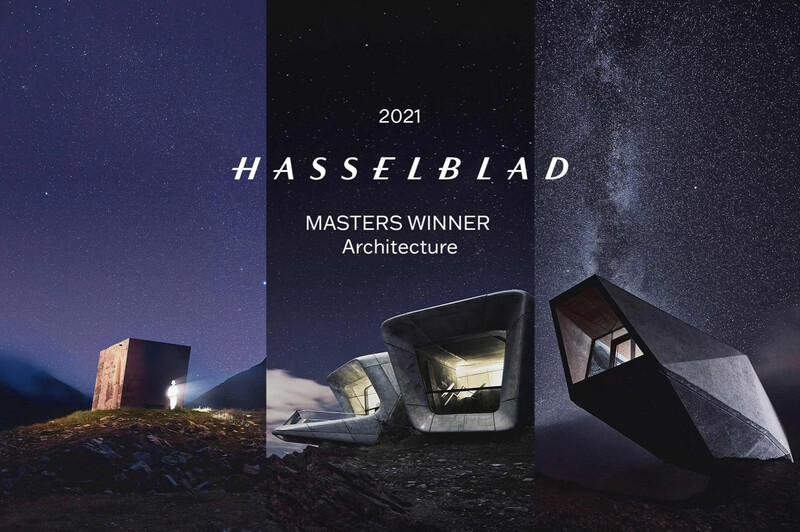
Despite my hesitation, I sent the series to several competitions. Months later, buried in my spam folder, I found an email I almost ignored. It said I had won the Hasselblad Masters in the architecture category. At first I thought it was a mistake. But after confirming with Hasselblad, it was real: out of 70,000 photographers worldwide, my work had been chosen.
It wasn’t the prestige that mattered most, or even the recognition. It was the realization that the style I had been chasing for so long had always been there. My fascination with modern architecture set against raw nature, my love for night photography, my interest in sculpting landscapes with light—these elements had been present in my work for years. I just hadn’t recognized them as a style.
Your Style Is Already Inside You
So, what’s the real reason you can’t find your photographic style? It’s because you already have it but you’re too busy looking elsewhere to see it.
You won’t find it in camera reviews, YouTube tutorials, or by copying other photographers. You’ll only recognize it by following your instincts, doing projects that matter to you, and looking back at your body of work with honesty. Over time, patterns emerge: certain subjects, moods, or editing choices that you return to again and again. That’s your style.
For me, the breakthrough came in the Alps. For you, it might come from a completely different project. But the key is to keep creating, keep exploring, and trust that your style is not something to hunt down—it’s something that grows with you.

Join the Fstoppers community for free
-
Post comments and join in the discussions
-
Browse the site ad-free
-
Share your work and get featured in the community
-
Compete in the photo contests for fun and prizes
3 Comments
Style flows naturally out of the work that you enjoy doing most... as opposed to the work we might be getting paid to do according to the guidelines of the client. Style comes from the heart, and a bit of DNA perhaps. Style is composed of the keywords that define our images we like most. Architecture photographed at night is not a style, it's a subject. Dark, moody, and contrasty is the style and will creep into your work, whether it's a mountain cabin at night or a soccer game. It's the character of an image and post-processing which define style.
And it's so hard to work differently from established patterns ingrained in our brains, even when tasked to do so. Ansel Adams was recognized for deep blacks and loads of contrast covering the full tonal range, and chose his printing papers accordingly. My commercial art buyers ask for "light, open, airy, and minimalist" images for healthcare projects. However, my style is more dark and complex. I prefer warm colors. After 20 years, I'm beginning to simplify images into something not quite so busy. But style is not easy to up and change at a moments notice. Interesting topic.
Hi Ed, thank you for your reply. I think it takes a lot of time and exposition to different artistic mediums to eventually form a style for your work. Currently I love experimenting with different aesthetics for different projects. The deliberate engagement with this topic is very exciting and helps me expand my craft.
I didn't have anyone to look up too I just focused on composition. My photography being to look different and wasn't the gear. I never had a pacific style or study any. I bought lenses to give a different perspective. Nothing fancy other the 50mm and the 24mm.