
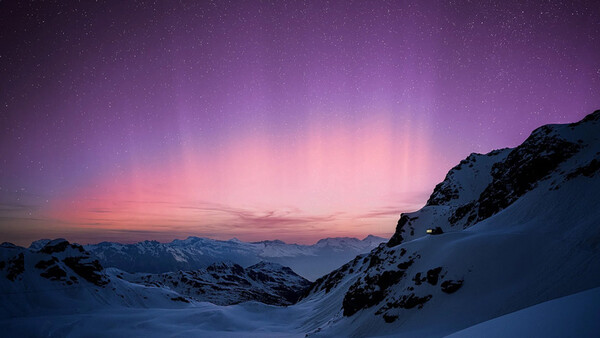
Hasselblad’s XCD 25V promises a unique balance of speed, sharpness, and portability. After testing it in the field, including under extreme alpine conditions, I can confidently say it delivers more than expected.
Where the Hasselblad XCD 25V Fits in the Lineup
Hasselblad has steadily built out its wide angle options for the X System, giving photographers several strong choices depending on their shooting style. Here’s how the XCD 25V sits among the rest:
- XCD 21mm f/4: An ultra-wide option (17mm full frame equivalent), great for interiors, expansive landscapes, or dramatic perspectives.
- XCD 25mm f/2.5 (25V): Roughly a 20mm equivalent, combining a fast aperture with edge-to-edge detail.
- XCD 28mm f/4 (28P): Compact and lightweight, ideal for travel, street, or documentary work.
- XCD 20–35mm Zoom: A flexible solution for those who need versatility without swapping primes.
The XCD 25V offers a natural look compared to the 21mm while still being wide enough for architecture and landscapes. The f/2.5 aperture also opens creative possibilities in low light, especially for astrophotography.
Build, Handling, and Features
The lens immediately stands out for its V-series design. Subtle engravings, clean lettering, and minimalist styling make it visually distinct, while the handling feels precise and solid.
A practical advantage is the standardized filter thread across V-series lenses (38V, 55V, 90V, and 25V). This makes swapping filters seamless—a big plus for photographers who frequently combine lenses in the field.
Another highlight is the Focus Clutch system, which makes switching to manual focus both quick and reliable. Unlike many lenses, the XCD 25V holds its focus point even after the camera sleeps or powers down, an invaluable feature for time-lapse or composite work.
Astrophotography Performance
Pairing the fast f/2.5 aperture with Hasselblad’s advanced lens coatings makes the XCD 25V a powerful tool for night skies. The lens consistently delivers pinpoint stars without distortion or ghosting, and when combined with the Hasselblad X2D 100C, the results are stunning.
Long exposures reveal remarkable detail and low noise, allowing even faint stars to be captured cleanly. From focusing in near-total darkness to rendering stars and landscapes with clarity, this lens earns its reputation as a night-sky specialist.
Field Test: Shooting the Cabane Tortin
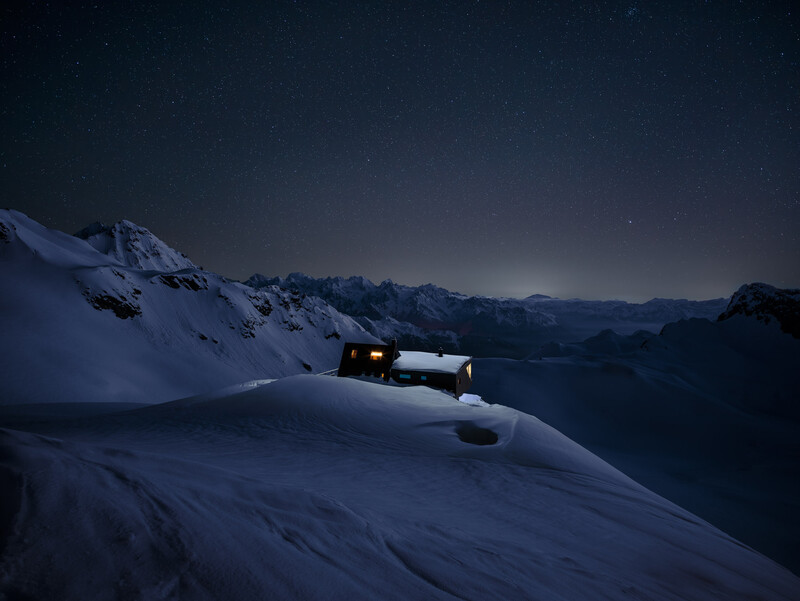
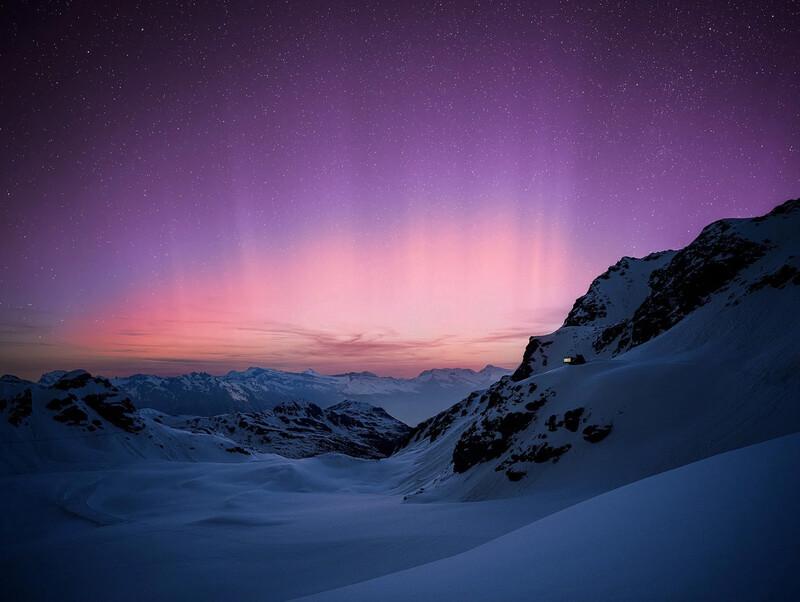
One of the lens’s biggest tests came during a shoot in the Swiss Alps, photographing the Cabane Tortin under the Milky Way. At 3 a.m., under frigid mountain conditions, the XCD 25V’s speed made focusing simple, while its coating kept the stars crisp.
That night brought an unexpected surprise: an aurora borealis, visible in Switzerland for the first time in 25 years. While nearly invisible to the naked eye, the camera captured vibrant magenta and orange hues stretching across the horizon. The XCD 25V preserved every detail without flare or softness, working flawlessly alongside the X2D 100C.
Later, a night hike across the Tortin Glacier allowed for a wider perspective of the hut against the mountains. The lens once again proved indispensable, capturing both stars and subtle atmospheric details with remarkable accuracy.
Conclusion: Who Should Consider the XCD 25V?
The Hasselblad XCD 25V is an excellent choice for photographers who need a wide angle lens that balances speed, sharpness, and versatility. It’s particularly well-suited for:
- Architectural photographers needing natural rendering and high fidelity
- Landscape shooters working in challenging light
- Travel photographers who want a compact but capable wide angle option
Alternatives might serve other needs: the XCD 21mm for extreme perspectives, the XCD 20–35mm for maximum flexibility, or the lighter XCD 28P for travel.
In my fieldwork, however, the XCD 25V proved to be one of the most well-rounded and reliable lenses in Hasselblad’s system—a standout for demanding professionals.





Join the Fstoppers community for free
-
Post comments and join in the discussions
-
Browse the site ad-free
-
Share your work and get featured in the community
-
Compete in the photo contests for fun and prizes
1 Comment
Would love to see a full res shot of the lens’ night time performance! Doubly so wide open. F8 isn’t really useful for actual night-time astro, you’d have to track a shot for ages to get a useable sky exposure.