
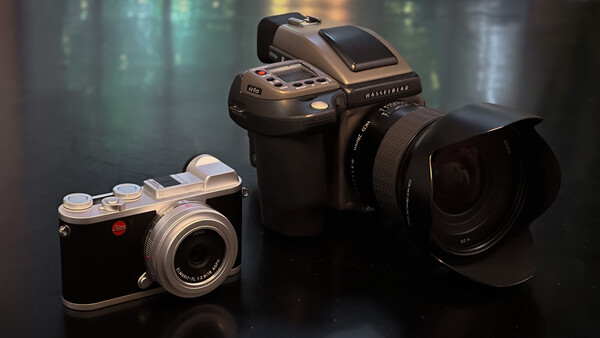
Lately, I’ve been evaluating my past projects and reconsidering my camera setup, questioning whether it truly serves my creative needs. The deeper I dig, the more I realize that camera setups tend to fall into two distinct categories: rigid and fluid. While rigid setups are usually technically correct and offer precise execution, fluid setups are the polar opposite, which tend to be a much better tool for creative intent and flexible execution.
The challenge is figuring out which works best for the situation at hand and providing a wide enough shooting envelope that covers most of my requirements for being a technically correct camera while still remaining fun to shoot with. As of now, my current setup leans more toward the rigid category, and while it delivers technically excellent results, I’ve started questioning whether it’s the right fit for my creative process at this stage.
Rigid Setup: Technically Correct but Creatively Restrictive
A rigid camera setup is all about technical precision. High-megapixel full frame and medium format DSLRs are prime examples of this. This is because they demand careful handling due to their slower autofocus, lack of in-body stabilization, and limited shooting speed. While these cameras are going to excel in controlled environments where every detail needs to be fine-tuned, such as commercial or studio work, they leave a lot to be desired when the situation is less than ideal for extracting the best out of them.
To get the most out of a rigid setup, you often need additional gear like a lens that has high resolving power, a solid tripod and head, a lighting system, external monitors, and a tethered shooting system to check everything on site. While this setup often guarantees sharp, consistent results with large file latitude that enables creative leeway in post-processing when shot the right way, it can also slow you down and make the process feel cumbersome—especially when you need to get every element right to extract the best out of the system. In projects that require working in a fast-paced environment, such as documentary-style shooting, this level of rigidity can become a hindrance rather than an advantage.
This results in a narrow shooting envelope, limiting your ability to maximize the setup’s potential in varied conditions. Because they are more cumbersome to deploy, you must work within their limitations rather than adapting seamlessly to changing conditions.
Personal Criteria of a Rigid Setup:
-
Higher megapixels and large sensors: Extracting all the details requires high-quality lenses, higher shooting discipline, and precise techniques.
-
Needs more stability: Requires tripods or steady hands due to lack of in-body stabilization.
-
Requires ample lighting: Higher-megapixel sensors demand good lighting conditions for optimal image quality.
-
Slower shooting workflow: Autofocus may be slower, and handling must be more deliberate.
-
Files with higher bitrate & latitude: Produces more detailed files that allow for extensive post-processing but take up more storage.
Fluid Setup: A Gateway to Creative Expression
On the other end of the spectrum, a fluid setup is often designed for adaptability and spontaneity. It allows photographers to move freely, respond to changing light, and capture moments without being bogged down by technical constraints. A good example of this is the latest mirrorless camera systems, which offer a more lightweight and responsive experience.
Mirrorless cameras these days have a wider shooting envelope thanks to their advanced autofocus systems, in-body stabilization, better sensor performance, and improved manual focusing aids. This means they can handle a broader range of situations, from handheld low-light shooting to capturing fast-moving subjects.
However, a fluid setup comes with trade-offs. While these cameras offer greater creative freedom, they may not capture the same level of detail as rigid setups—not due to a lack of capability, but because their design encourages a faster-paced workflow that can sometimes compromise precision.
A key reason is the illusion of efficiency. These cameras encourage a faster workflow, which can sometimes lead to sloppy shooting habits. The unnecessary pace may also cause you to be less precise in your shooting discipline, especially when you are not well-versed, hence producing subpar results. Besides, there are elements of unpredictability in the focusing that may cause near-misses in critical moments or files with reduced bitrates that cause the final image to lack the extreme resolving power and transparency of larger sensors when shot with care. These make them less ideal for high-detail commercial work but perfect for real-world shooting where speed and adaptability matter more.
Personal Criteria of a Fluid Setup:
-
Lower megapixels and smaller size: Easier to carry and shoot with minimal effort.
-
In-body stabilization: Allows for more flexibility in handheld shooting.
-
More forgiving in low light: Can shoot at slower shutter speeds without the need for tripods.
-
Faster autofocus and shooting speed: Ideal for capturing spontaneous moments.
-
Lighter files with less post-processing overhead: Makes workflow easier and more efficient.
Assessing My Current Setup and Finding the Right Balance
My current gear is a mix of rigid and fluid setups, though it leans more toward rigidity—each with its strengths and weaknesses. On the rigid side, I have the Canon 5DSR, a high-megapixel DSLR and a set of technical tilt-shift lenses that demand precise handling. With its limited ISO capabilities, lack of in-body stabilization, and need for careful technique to extract the full detail from its sensor, it represents the textbook example of a rigid setup. Shooting with it requires deliberate composition, ample lighting, and stable shooting conditions to get the best results. Anything that falls short will just result in a large file of subpar quality.
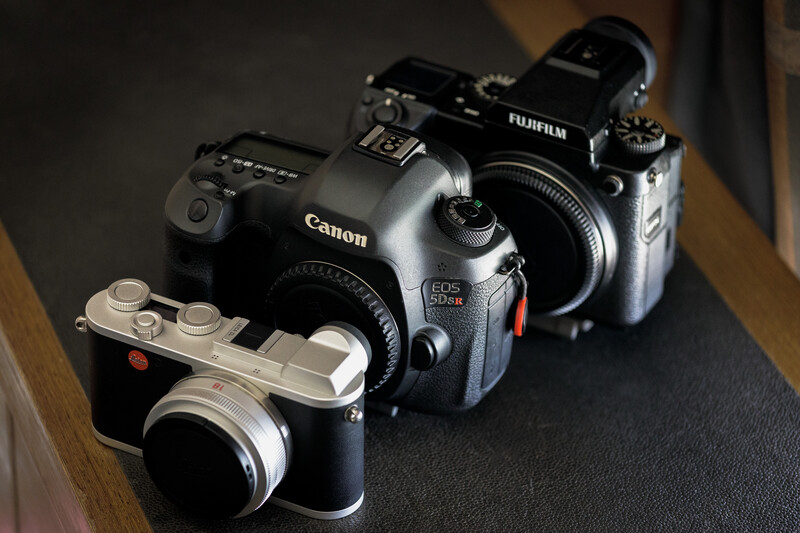
On the fluid side—or should I say the fun side—I have the Leica CL and the Fujifilm GFX system. Although both of them are far from my ideal fluid setup, they did expand the shooting envelope of my rigid setup. The Leica CL, while not the most technically advanced camera, is compact, responsive, and intuitive to shoot with, making it an excellent tool for creative, instinctive shooting. Meanwhile, the Fujifilm GFX, despite being a medium format system, strikes a balance between fluidity and precision. The gain of a modern medium format sensor and mirrorless technology outweighs the slower operation, at least for my more deliberate shooting style.
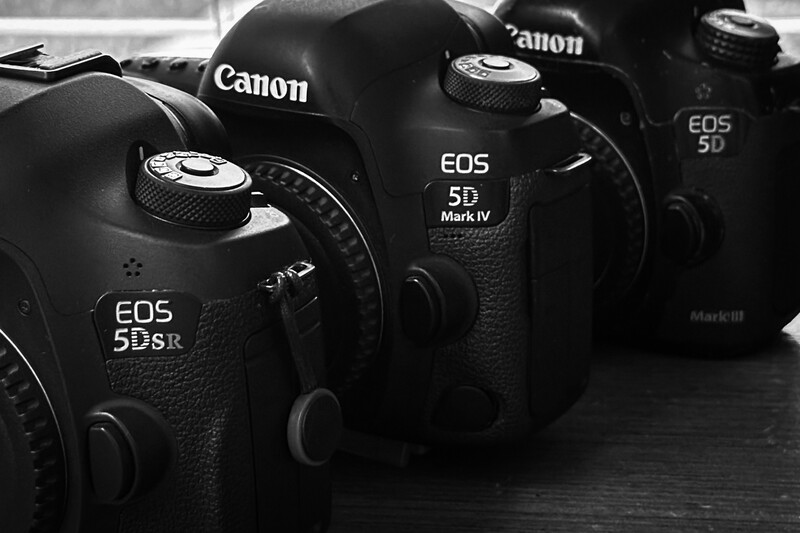
That being said, being a commercial hospitality and industrial photographer who loves documenting my hometown, it is important for me to use a tool that balances both rigidity and fluidity nicely so I can use it both for work and for fun. My current choice of a well-rounded hybrid rigid and fluid setup for work is the Canon 5D Mark IV, a somewhat higher-than-average-megapixel DSLR that has a pretty wide shooting envelope. It strikes a balance between mirrorless and DSLR systems, offering responsive operation through both shooting with the LCD and OVF—my preferred way of shooting and composing.
I am aware that the current mirrorless offerings are pretty attractive and balance both sides pretty well, but they are still quite expensive and don’t make good business sense—especially when I would have to switch my entire working gear setup—and I also do not need most of the nice-to-have advanced features. Though some may disagree, the Canon 5D Mark IV remains my ideal hybrid setup as it offers a wide shooting envelope and makes the most financial sense for my work, while I continue to look for a better deal on the latest offerings.
At the end of the day, photography is about making choices. Do you prioritize technical perfection at the cost of spontaneity, or do you embrace the slight imperfections that come with a more fluid setup? There’s no right or wrong answer in my opinion—only what works best for your creative vision. The real magic happens when you find the balance between control and freedom, allowing your gear to work for you rather than against you.



Join the Fstoppers community for free
-
Post comments and join in the discussions
-
Browse the site ad-free
-
Share your work and get featured in the community
-
Compete in the photo contests for fun and prizes
11 Comments
As I understood it, the article presents a kind of opposition:
rigid setups = technically precise but creatively limiting
fluid setups = spontaneous and creatively free.
But to me, that feels like a false binary. I’ll try to explain my point of view:
Creativity isn’t necessarily tied to spontaneity.
It can be slow, deliberate, and highly structured. Some of the most meaningful creative choices happen not in the moment, but through a process of reflection, construction, and control — the very qualities often associated with rigid setups.
Conversely, spontaneity — which is encouraged by fluid setups — can sometimes lead to unexamined habits or predictable images. An impulsive shot isn’t automatically a creative one.
I think true creative freedom doesn’t depend on whether the setup is rigid or fluid. It depends on the photographer’s clarity of intent — and that can exist equally on a tripod or in motion.
Just offering a different angle — and always curious how others experience this balance in their own work. Thanks for the thoughtful read.
I totally get what you meant there. My point of view might be self-centered in the way my brain works. When I am using a "rigid" setup, I tend to care more about the technicalities (is the image sharp, is the depth of field enough, is the exposure right, is the colour right, what are the fall-offs, etc etc). Whereas when I am using a "fluid" setup, it allows me to just shoot what I see. The translation process from my brain to actual image isn't that rigid which encourage experimentation. That leads to more possibility and work better as a creative output tool
Ah, yes, that makes perfect sense. I was just looking at it from a different angle. Now I see what you meant. The more rigid the setup, the more predictable the result — and vice versa. The more fluid the setup, the broader the range of outcomes, which means more curating within your own work.
Yes! And it is often harder to yield the best results out from a rigid setup as you are going to need a lot of things to be technically correct. On the other hand, fluid setup allows the results to grow itself. I am still finding the right setup as my creative vision grows and changes every now and then
Totally agree!
.
I agree with you. I think of creativity as something that is intentional and has a method involving several, or many, steps. When one is truly being creative, they are not just "getting in a groove and shooting things as they happen." That is not creativity, that is spontaneity. Are the two mutually exclusive? Not entirely. But they are not anywhere near synonymous, either.
True creativity happens when one has a multi-stage process that one employs, in which ideas and actions are prescribed, rather than "flowing".
Some of the world's most wonderful photos are stunning, compelling, and iconic, but not necessarily creative. Most of them are reactive, which is kinda the opposite of creative.
Inasmuch as rigid camera systems vs. fluid camera systems, I think fluid wins out because one can use a fluid system either in a rigid, controlled way or in a fluid, reactive way. Whereas the rigid system can only be used in the rigid, controlled way. All the shots you can get with the rigid system can be gotten with the fluid system, but most of the shots you can get with the fluid system can not be gotten with the rigid system.
.
I do get where you are from Tom and do agree with you except for the last part. This is where rigid systems are pushing the end of the envelope—the last 10% of image quality. You cannot substitute the result from a true medium format (what I would label as rigid) if you truly extract its full benefits under technically perfect environment with one that is created with a small sensor. Yes you can get almost the same result given the same lighting, same focal length, but if we are talking about the last 10%. There is no way they will match. Unless of course the condition is horrible for the rigid system. Eg: low light where boosting ISO in them will destroy the image quality and the IBIS on the smaller system will assist you in getting the image.
There are a lot of assumptions made in the article, such as: "These cameras (mirrorless) encourage a faster workflow, which can sometimes lead to sloppy shooting habits." Some of these connections between camera gear and working style might be worth a second thought.
One of the perks of being a professional photographer is that it's so easy to justify buying more gear. After all, the future success of the business depends on having exactly the right equipment for the job... or so we think. I've bought more than one lens on that reasoning. And since photography is so much fun, it's fun spending money on gear. How much fun do we have upgrading accounting software or new table lamps for the office?
But therein lies sort of a trap. It's easy to spend our way into bankruptcy. Maybe one camera body and a backup can do it all. Maybe the money we save from cutting back on camera gear expenses can be put in an emergency-fund, making slow times less stressful. Or pay off the mortgage early so when AI puts us all out of a job, it won't matter so much. I'm not trying to tell you how to run your business... I am suggesting another point of view, less dependent on minor differences in camera specifications.
Totally get your point and I do agree but like every opinion piece that I put out, it has to contain some form of assumptions and personal bias to form that opinion. Most of the time is an observation I see from what's going on around currently which again subject to personal bias as people see what they want to see. If anything I actually fully agree on your point, which I never encourage the habit of chasing for gear upgrades because what we have currently works unless we are limited by it or trying to push boundaries. In that case, its up to affordability and personal judgement.
It’s refreshing to see an article on fstoppers that’s not centred around a piece of gear gifted to the author by some company looking for free advertising.
While the binary outlined in the article is perhaps more personal to you (as noted by other commenters) I still appreciate a peek behind the curtain into the decision making process of another photographer.
Thanks for taking your time to read Jacques.
Some of the reviews I did are from the gears I purchase by myself, however these are very limited to the gears that I need it as it does not make any sense to purchase a gear solely for review purposes.
While we do accept gears from manufacturers for review, they do not have any control over what we wrote and we as writers always strive to keep the article a balance read while covering practical side of things.