
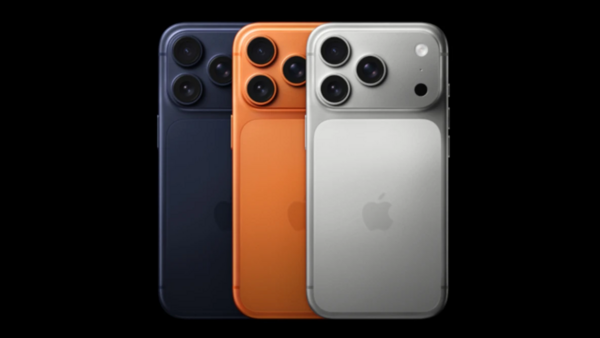
For years the honest answer to "is the phone camera good enough?" came with an asterisk. Good enough in nice light. Good enough if you did not zoom. Good enough until the sun went down. I have carried an iPhone 17 Pro Max since launch weekend, and after nine months of pointing it at nearly every situation I run into, the asterisk is mostly gone. This is the first iPhone where the answer to "can it handle that?" was just yes, across reach, dark, wide, close, and the kind of dramatic sky I cannot stop photographing.
This is not a launch-week review. I have shot the 512 GB model from September 2025 to the present, which means this thing has been my everyday camera across a full turn of the seasons: an Ohio autumn, a snowy Cleveland winter, a cross-country drive through the desert Southwest, a California spring, and an early-summer trip to the coast. It has photographed my dogs more than anything else, because it is the camera that is always in my pocket when they do something, and it has caught more storms, sunsets, and lenticular clouds than I care to admit.
I have always liked iPhone cameras, so I did not come to this one looking for reasons to be disappointed. What surprised me was how rarely I reached for anything else. No phone is perfect, and I will name the few things I would still change. But the headline is simple: the iPhone 17 Pro Max is the first phone I have used that stopped feeling like a phone camera with limits and started feeling like a small camera that happens to fit in a pocket.
Specifications and Configuration
- Chip: Apple A19 Pro (3 nm), 12 GB RAM
- Display: 6.9 in LTPO Super Retina XDR OLED, 1320 x 2868, 1 to 120 Hz ProMotion, up to 3,000 nits peak
- Main camera: 48 MP, f/1.8, 24 mm equivalent, 1/1.28 in sensor, dual-pixel PDAF, sensor-shift OIS
- Ultrawide camera: 48 MP, f/2.2, 13 mm equivalent, 120 degree field of view, PDAF, macro
- Telephoto camera: 48 MP, f/2.8, 100 mm equivalent (4x optical), periscope, 3D sensor-shift OIS, plus an 8x (200 mm) "optical-quality" crop from the 48 MP sensor
- Depth: LiDAR scanner
- Front camera: 18 MP, f/1.9, Center Stage
- Raw and video: 48 MP Apple ProRAW; video to 4K 120 fps, ProRes, ProRes RAW, Apple Log 2, Dolby Vision
- Build: aluminum unibody frame and back, Ceramic Shield 2 front, IP68 (up to 6 m for 30 min)
- Battery and charging: 4,823 mAh (nano-SIM) / 5,088 mAh (eSIM), rated up to 39 hours video playback; wired 50% in about 20 min; 25 W MagSafe
- Dimensions and weight: 163.4 x 78 x 8.8 mm, 233 g
- Storage: 256 GB / 512 GB / 1 TB / 2 TB
Reach: The Telephoto Earns Its Keep
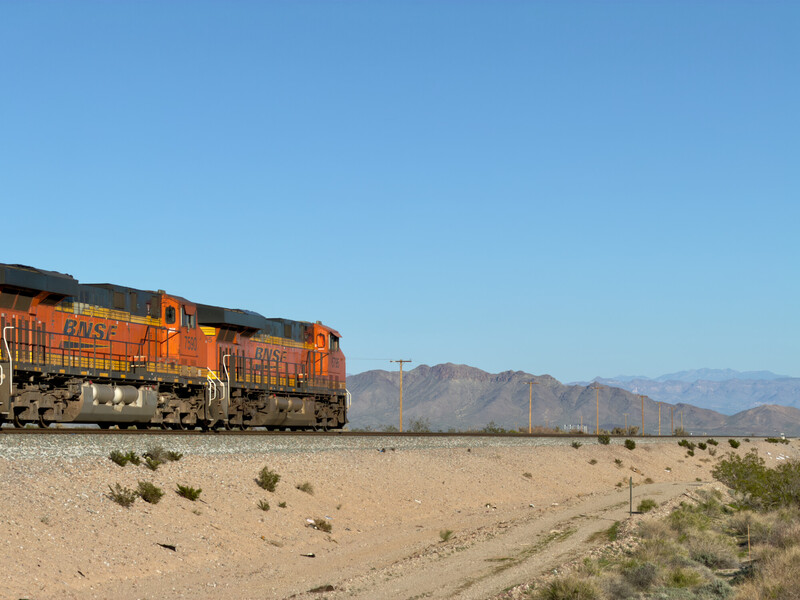
The single biggest change to how many use a phone is the telephoto. For years the tele on a phone was the lens you avoided, a soft, noisy digital-looking crop you only reached for in desperation. On the iPhone 17 Pro Max it became a lens I go looking for. Standing beside a desert siding in the Mojave, I framed a lone BNSF freight against a black volcanic butte and pulled the whole scene together with compression I simply could not get from the main camera. That is a real-camera move, and the phone made it without complaint.

The hardware behind that is the part that matters. The tele is now a 48 MP sensor behind a 100 mm f/2.8 periscope with its own 3D sensor-shift stabilization, and the sensor resolution lets Apple crop to a genuinely usable 8x, or 200 mm, that it markets as "optical quality." In practice, the 4x is excellent, noticeably sharper than any phone tele I have used, and the 8x is good enough that I stopped thinking of it as a gimmick. The layered ranges behind a desert train at 100 mm held detail I would have bet against a year ago.
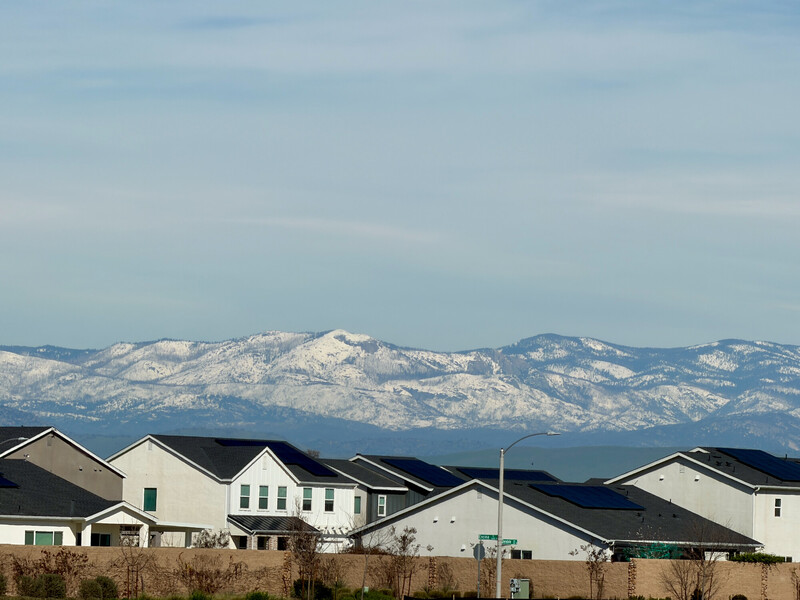
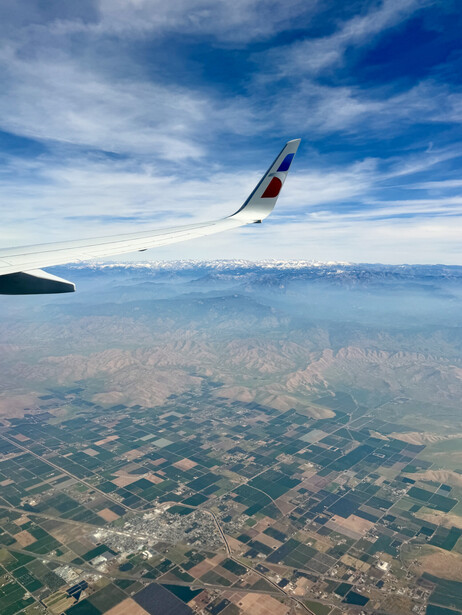
The reach opens up compositions I would never have tried on a phone. Compressing the snow-capped Sierra behind a row of Visalia rooftops at 8x, the tele stacks the whole scene the way a long lens should, houses and peaks piled together into a single plane. On a hazy day you are simply looking through more air, which is true of any telephoto anywhere, but the frames this lens pulls in at distance are ones I used to need a dedicated camera to get.
Everyday: The Main Camera and the Dogs
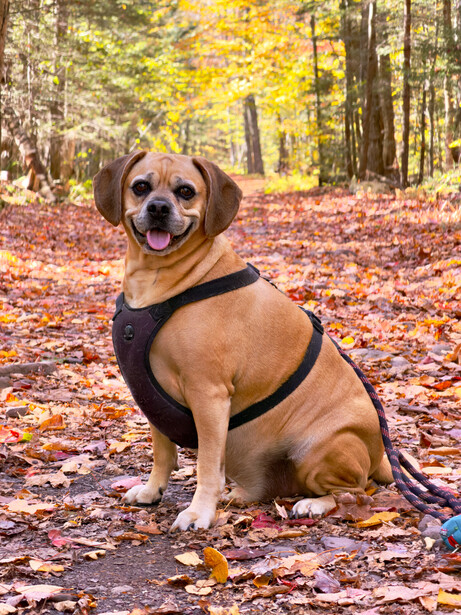
Most of my nine months lived on the 24 mm main camera, and most of those frames are my dogs. The main sensor is a big 1/1.28 in, 48 MP unit at f/1.8, and it does the thing you want an everyday camera to do: it disappears. On an autumn trail in the Catskills, the puggle sat in a drift of leaves with tongue out and the background melted into gold, and the phone nailed the exposure and the focus before the moment passed. That is the whole argument for a phone camera, and this one delivers it with real image quality behind it.
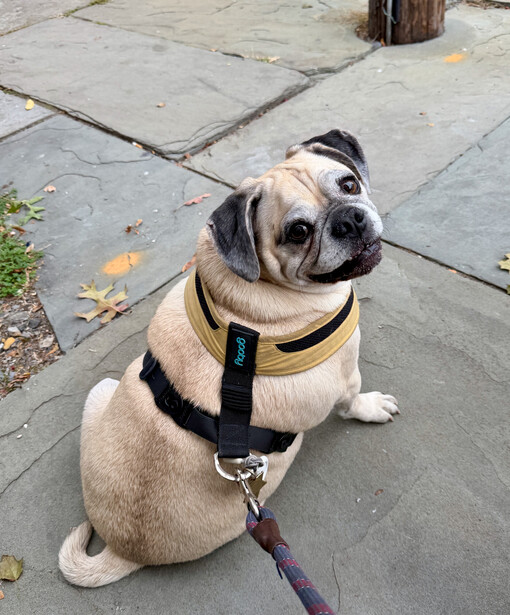
Day to day I found myself flipping between the 24 mm main and the tele constantly, treating the phone like a two-lens kit. A head-tilt portrait on a slate sidewalk, the dog cocking an ear at a sound, all of it handled without thought. The processing is also the most natural I have seen from an iPhone, a real step up from previous generations, with far less of the over-cooked, over-sharpened look older phones baked into everything. And when I did want to work a file harder, shooting ProRAW gave me genuine latitude, more highlight recovery and shadow headroom than I expect from a phone, so the demanding frames still had room to move in the edit.
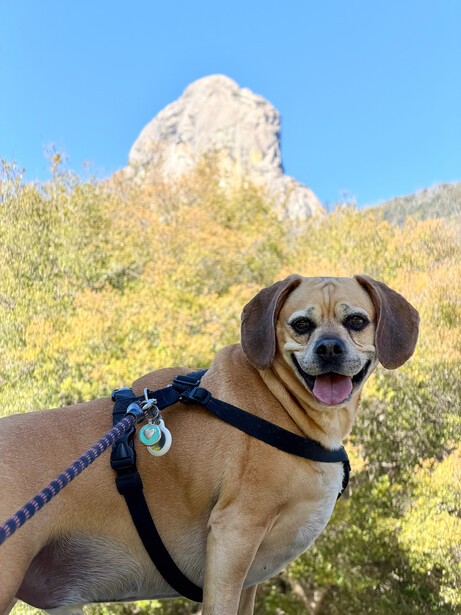
The best proof that the everyday camera is good is that it kept up on the trips, not just the walks. Below Moro Rock in Sequoia, I got a clean, happy portrait of the dog with the granite dome rising behind, a two-subject shot at range that a phone should struggle with and did not.
Wide: When You Need to Get It All In
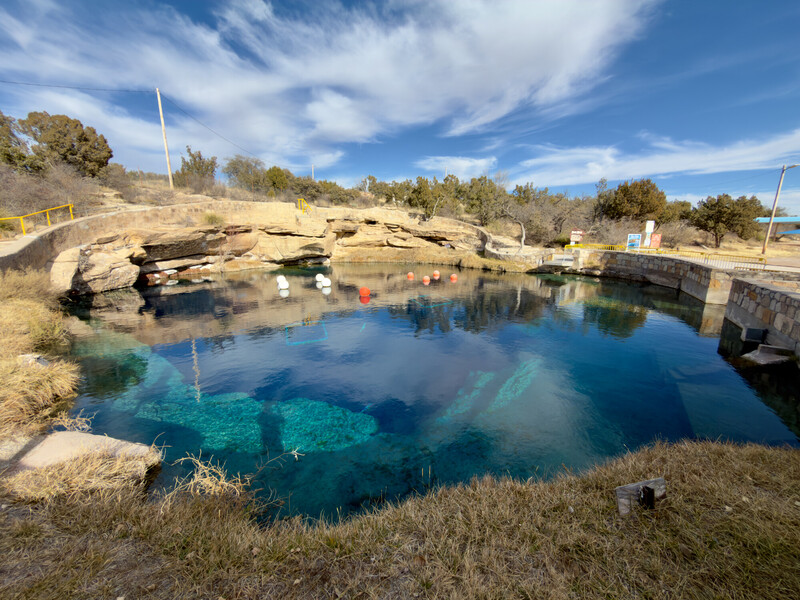
The 13 mm ultrawide is now a 48 MP camera too, and the jump in sharpness is the obvious story: where older ultrawides went soft and mushy toward the edges, this one holds real detail across the frame. Standing on the grassy rim of New Mexico's Blue Hole, the turquoise spring dropping away below, it took in the whole bowl and kept it crisp corner to corner. There is still the natural stretch toward the extreme corners that comes with any wide lens, but the resolution gives you room to crop back if you want, and for landscapes and tight spaces it is exactly the tool you want.
After Dark: The Part That Used to Be an Excuse
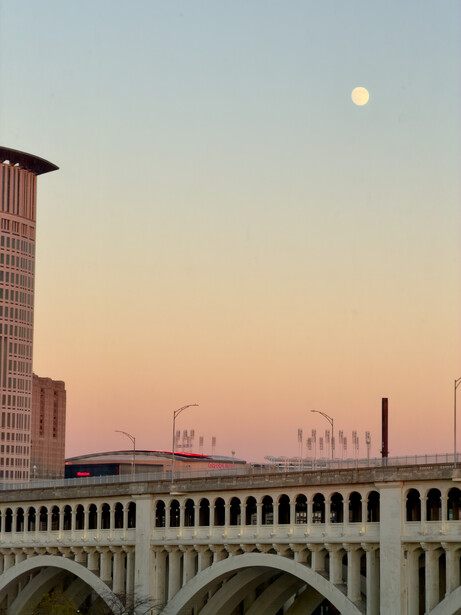
Low light is where phones used to fold, and it is the situation that most convinced me this one is different. At dusk in Cleveland I framed the arched Detroit-Superior bridge with a full moon hanging over the arena, a scene with a bright moon, dim architecture, and a color-shifting sky all in one frame, and the phone held all of it together. That is a hard exposure, and it came back looking like a photograph, not a phone screenshot.
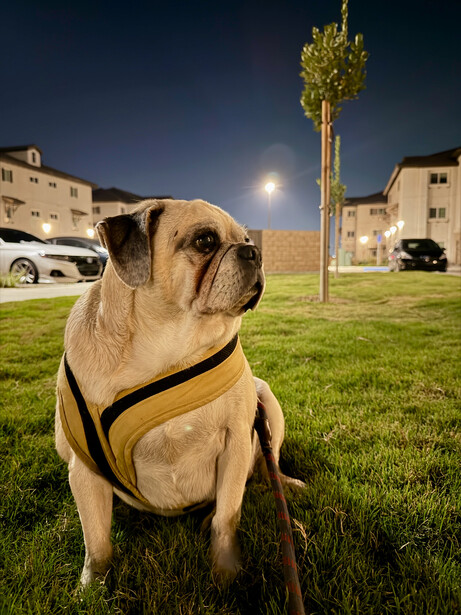
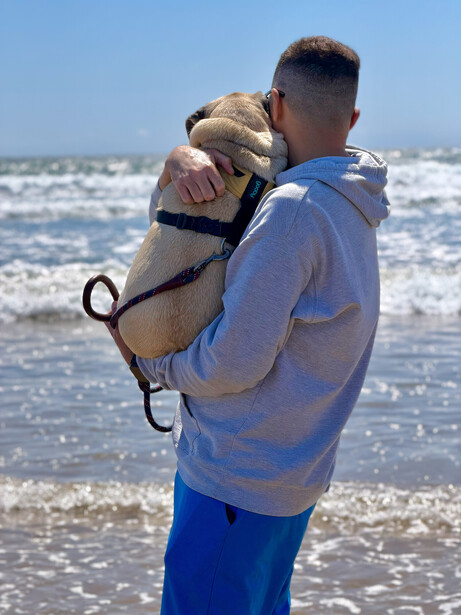
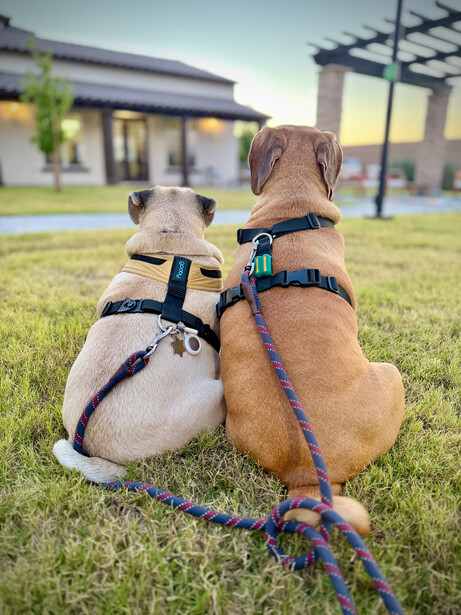
Actual night mode earns its keep on the thing I photograph most. A handheld night portrait of the dog on a lawn between lit apartment blocks, shot at ISO 1250 and a 1/9 s exposure, came out sharp where it counts, the fur holding detail and the streetlights controlled instead of blooming across the frame. A handheld, moving-subject night portrait that actually looks good is something I never trusted a phone to pull off, and this one nails it.
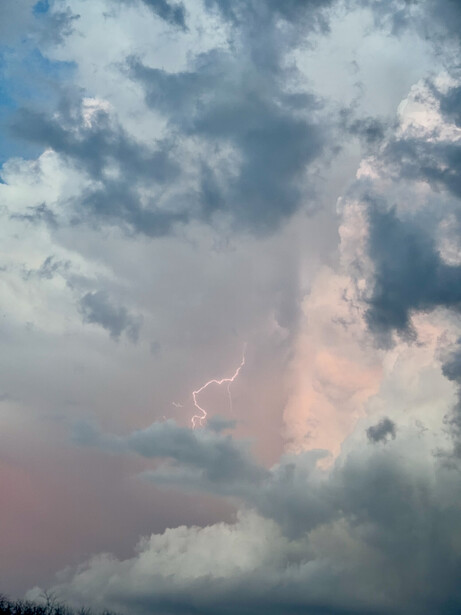
Twilight and storm light are where the raw files paid off. I shot several of these as ProRAW so I had latitude to pull the sky back, and a thin lightning bolt inside pastel dusk clouds over Kansas City survived the edit with its subtle tones intact. The dim cloud midtones show some noise if you push hard, but the headroom is there in a way it never was on older phones.
Up Close and Playful
Here is the part no spec sheet captures. The ultrawide focuses close, and if you shove it an inch from your dog's nose, you get a gloriously distorted, big-nose, googly-eyed portrait, and the lens is sharp enough now that even the goofy shots come out crisp. I have taken this one more times than I will admit, indoors and out, because it is pure fun, and the versatility to grab it instantly, no lens swap, no second camera, is exactly what I love about this thing. The camera that handles every situation includes the silly, joyful ones.
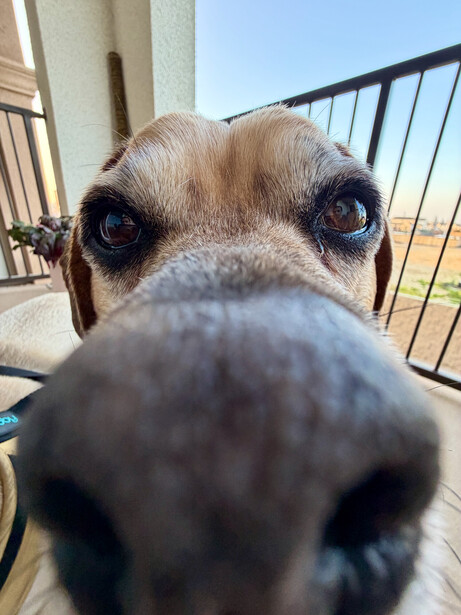
It is silly, it makes me laugh every time, and it is the kind of shot you only get because the camera was already in your hand. That is the whole point.
The Sky Show: Weather From the Ground and the Air
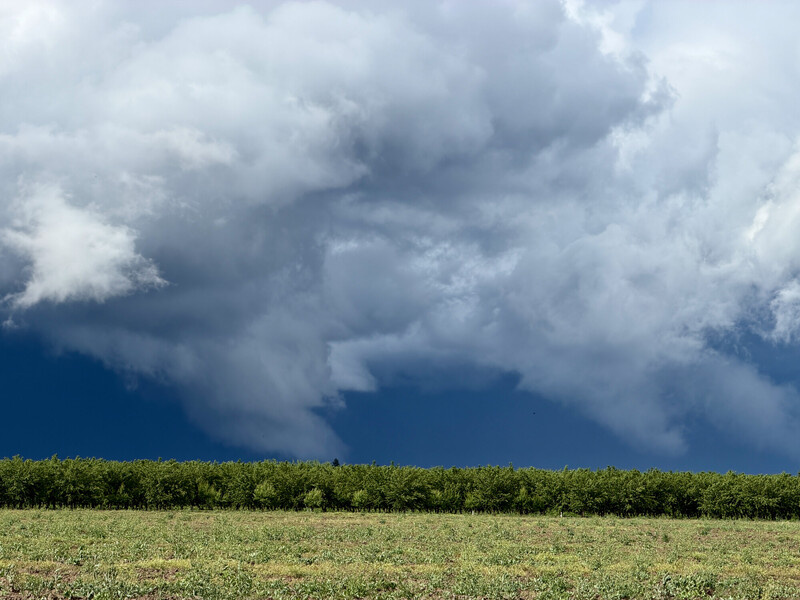
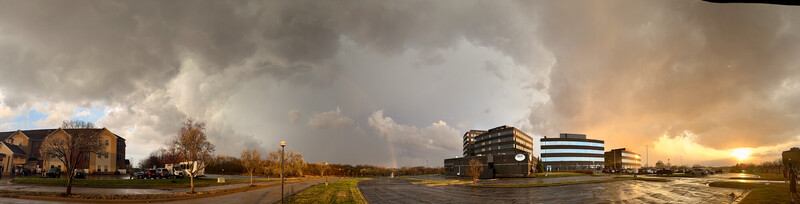
I cannot help photographing the sky, and this phone made me worse about it. A cloud rolling over a Central Valley vineyard, wet highway in the foreground, came back with the drama intact and the tonal transitions clean. The tele is a secret weapon here, letting me isolate a distant storm structure without a bag of lenses.
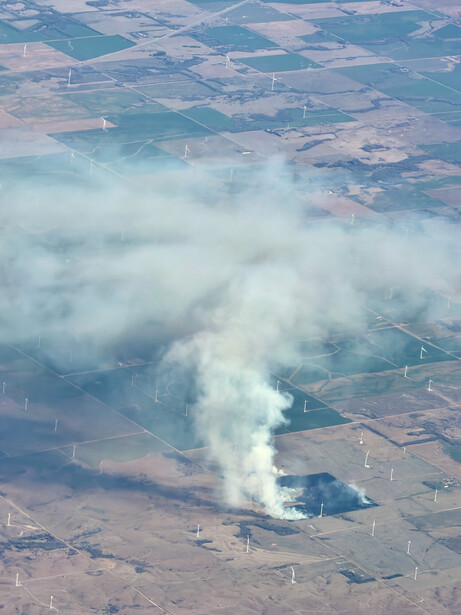
A lot of my travel photography happens through an airplane window, and the phone is shockingly good at it. At 8x I pulled a grass fire's smoke plume drifting over Kansas wind farms into a clean, readable frame from cruising altitude, straight through the glass. Between the reach, the stabilization, and the processing, shots I would once have written off as impossible from a plane now come back looking great.
The Road-Trip Test: Nine Months, Every Season
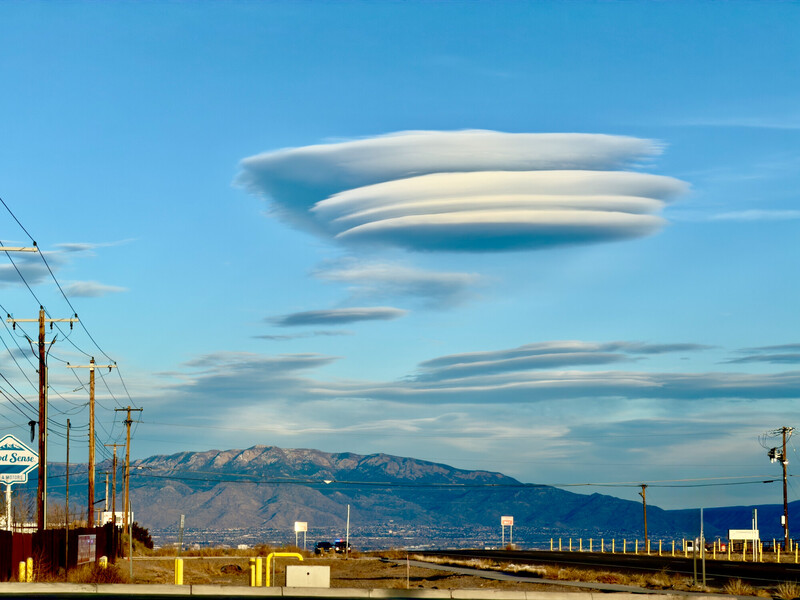
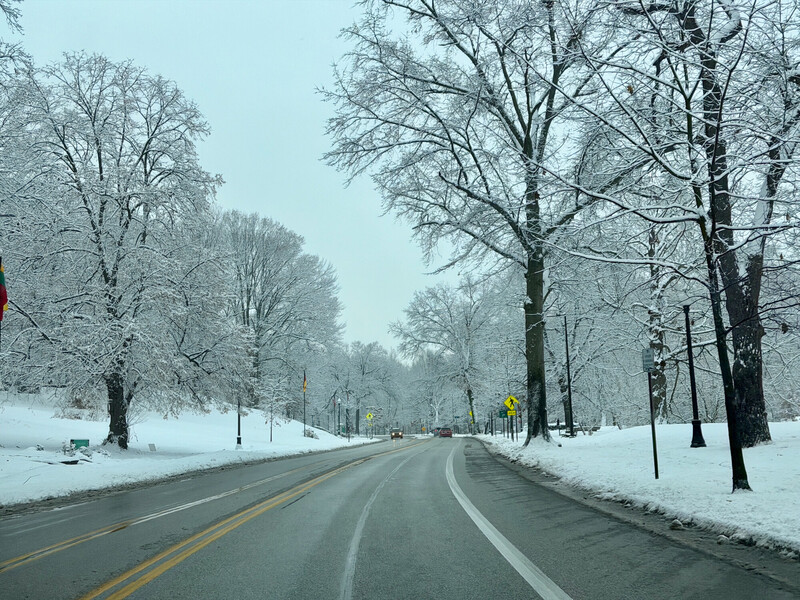
What sold me was not any single frame but the range. The same iPhone 17 Pro Max that shot a snow-flocked Cleveland road after a winter storm shot a lenticular stack over New Mexico, a desert train in February, and a beach in May, and it never once made me wish I had brought something else for the job. It is not that the phone wins any one category against a dedicated camera, it is that it is competent in all of them, at once, in your pocket.
The other half of a long-term test is stamina, and the 512 GB storage and the big battery carried full days of shooting, including video and raw, without me thinking about either. The battery is genuinely all-day, and fast charging closes the gap when it is not.
Video
I am primarily a stills shooter, so I will keep this honest and short: I shot standard 4K 30 clips and they are excellent, stable, and clean, and that is as far as I pushed it. The capability underneath goes much further than I used it, with 4K up to 120 fps, ProRes, ProRes RAW, and Apple Log 2 on tap for people building a real video workflow. If video is your main use, this is a serious tool. I can only vouch for the point-and-shoot end of it, and at that end it is effortless.
Summary
What I Liked
- The telephoto is finally a lens you go looking for, not one you avoid: excellent at 4x (100 mm) and genuinely usable at 8x (200 mm)
- Both the ultrawide and telephoto are noticeably sharper than previous generations
- The 24 mm main camera disappears in daily use and delivers real image quality behind it
- Low light went from an excuse to a strength: clean dusk exposures and handheld night portraits that actually work
- 48 MP ProRAW gives real editing latitude, especially for skies and high-contrast scenes
- The ultrawide's close focus is pure creative fun, from landscapes to the big-nose dog gag
- One camera that stayed competent across every situation and season I threw at it, from snow to desert to coast
- All-day battery and 512 GB that never made me ration shooting, even with raw and video
- Deep video capability on tap (4K120, ProRes, ProRes RAW, Log) for anyone who needs it
- Superb, bright 6.9 in 120 Hz display that makes composing and reviewing a pleasure outdoors
The Nitpicks
- ProRAW and 4K video eat storage and battery quickly, so the larger storage tiers are the ones to buy
Conclusion
After nine months of asking it to shoot reach, dark, wide, close, weather, travel, and a great many dogs, it simply kept saying yes. This is a fantastic camera, full stop.
Who is it for? If you want the most complete single camera you can put in a pocket, and you value never missing the shot over squeezing the last bit of quality from a dedicated body, the iPhone 17 Pro Max is the one to get.


Join the Fstoppers community for free
-
Post comments and join in the discussions
-
Browse the site ad-free
-
Share your work and get featured in the community
-
Compete in the photo contests for fun and prizes
11 Comments
The iPhone 17 Pro Max is undoubtedly a highly capable device, packing a lot of tech into a slim frame. For most people, its convenience makes it the ultimate point-and-shoot.
Yet, despite its high-end specs, I would still rather carry a small EDC compact camera. My passion is photography, not just snapping pics.While a phone can flawlessly document a moment, it is not a device I consider or enjoy using for creative work. Holding a flat piece of glass and letting a software algorithm clean up the image kills the tactile joy of the process. A smartphone removes the friction of photography, but it also removes the romance. An EDC compact forces you to be intentional. Feeling the mechanical shutter click and using physical dials turns image-making into an immersive, deliberate experience rather than a passive distraction. A phone takes good pictures, but a real camera makes you enjoy taking photos.
Amen, brother! I found this out with my iPhone 15 Pro Max -- Like your 17, my 15 handles everything I can throw at it.
I will never use a smartphone camera for anything meaningful since they started using subject recognition to alter the sharpening profiles. Adding wrinkles to my kids' faces is criminal. They're only young once, stop adding crows' feet to sub-10-year-olds... The sharpening is the biggest issue I have with smartphones. The N8-00 gave you 12 decent megapixels. Nowadays it's all so sharpened to hell I doubt there's enough to call it 8mp of real data (and yes I realise 12mp=/=12mp, I'm speaking comparatively, I'd take the 10mp of a D80 over the 12mp of any modern smartphone).
I would like to test out the 24mp in-between mode to see if it makes this less of an issue for me but I'm not putting down over a grand for the privilege.
If they start letting us have some creative control back instead of handing it to algorithms I'll take an interest again. Smartphones got me into photography, loving photography is why I now can't stand smartphones.
Oh yes ... everything is sharpened and softened at same time .. making it odd ... like painting but not painting like quality.
The multi-frame stuff also frequently hallucinates a halo around anything bright which I hate. Took me years to work out what was going on, and many, many smartphones tested... It was only when I went back to really old devices that the issue went away. I assume a Halide Process Zero or No Fusion would also solve it, but you shouldn't have to resort to those to get a half decent shot. You should have the option in the main camera app.
It's not an issue if you never look at a photo on anything bigger than the phone but its immediately obvious on an iPad or laptop let alone print or a bigger monitor.
Fun for snapshots…. But I would never ever use it for anything else. These dog photos look highly processed, please also take real photos of them. I tried making an iPhone 16 pro work for me, but I just don’t like the snaps even for casual walks. No Fusion is a great app, helps with capturing less processed files. But I now always just have the Fuji x100vi or a7v with a single lens with me.
The bokeh is pretty transparently fake, too; makes my eyes hurt looking at it, especially on the "dog and granite" photo - you can actually see lines through it where the phone tried and failed to compensate for wind movement.
On a separate note, I've moved back to an old iPhone 8 Plus (felt like attempting the battery replacement for some reason) and the photos are massively better than the 13 Pro Max I tried last year, and the keyboard is also perfect, while the 13 Pro Max was bloody awful...
On a positive note for Apple though, at least they aren't using the Snapdragon "I recognise grass, grass should look this way" texture paint ins that Snapdragon has used since the 8 Gen 2 (if what I've read is correct). The only decent cameras in smartphones I've had recent experience with are Sony's, but I'm not paying their prices...
What software did you use to edit these? I use Lightroom and I usually struggle with Adobe's ProRaw rendering, whether using the ProRaw profile or not.
All edited in the iOS photos app.
If you can't see the difference then maybe you need to look at something else, they just don't cut it for me.