
Why fix what isn't broken? Well, Viltrox seems to have a good subtle reason as to why it did with the 35mm f/1.2 LAB (N) that photographers might appreciate.
Last year, Viltrox launched one of its most unique lenses, and it was received with a lot of positive reactions. The Viltrox 35mm f/1.2 LAB is a straightforward large-aperture prime that came in a large and relatively bulky form. However, with that came the optics that became the standard of the Viltrox LAB series that could perform even in significantly low-light situations.
The Redesigned Viltrox 35mm f/1.2 LAB (N)
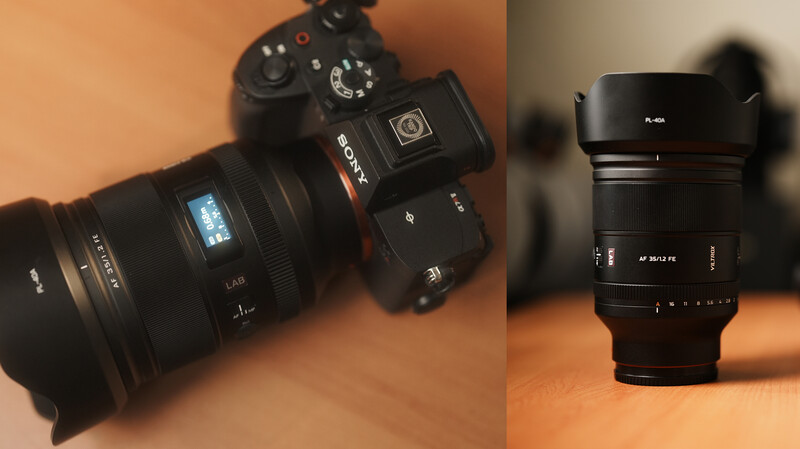
Almost a year since the release, Viltrox introduced a variant of the lens that has the same build and optical structure. However, it has been stripped of the LED screen that used to be a focus and/or aperture indicator. In addition, while the initial version had a multifunctional or programmable proximal ring that was by default an aperture ring, Viltrox replaced it with a permanent aperture ring when the screen was removed. This is probably because the screen was necessary to know the function that the ring was on, or probably because most users (including myself) didn't see the need to use the ring for any other function.
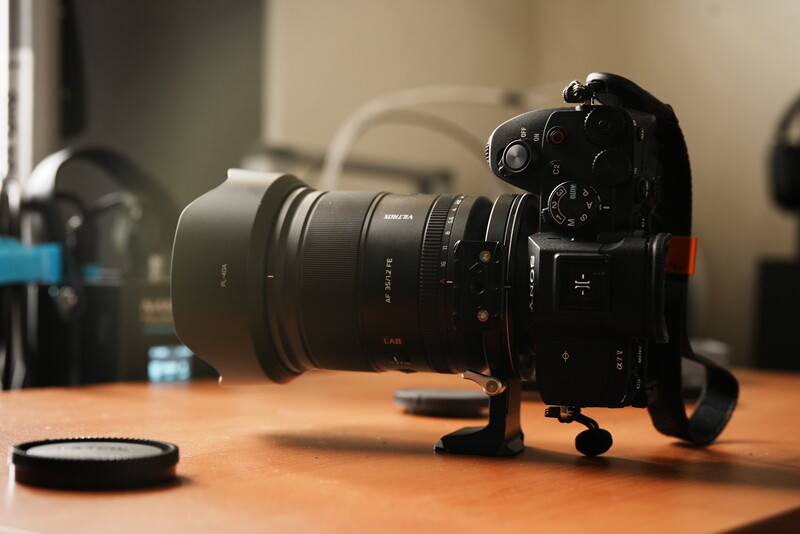
Those two points aside, the Viltrox 35mm f/1.2 LAB (N) comes in the same 89.2 x 121.8 mm form, the same 910-gram all-metal build, the same Quad HyperVCM Motors, and essentially the same performance. Its specs include:
- Angle of view: 64.2 degrees at 35mm full frame
- Aperture range: f/1.2 to f/16
- Minimum focus distance: 0.34 m
User Experience: What Remained and What Changed

Though certain features have changed because of the removal of the display and the redesign of the ring, for most users, there would probably be no change in the user experience whatsoever. While having the screen was neat, it wasn't entirely necessary and, to a small extent, consumes battery life.

In my first review of the initial version of this lens, I mentioned that the overall form and bulk could be a downside for some; however, when using this with more intentionality, one would realize that the weight can very well be worth the benefits of such a lens. Realistically, there's probably no way to make such a lens significantly smaller without sacrificing image quality.

On a personal note, once I got comfortable with carrying the lens paired with the camera body, it was quite empowering to have such range in depth of field and in low light despite having a fixed focal length. Using it on aperture priority and controlling the exposure from just the aperture ring (and sometimes the exposure compensation dial) was a convenient way to use it. While the focusing was relatively quick and snappy, focusing on fast-moving objects when wide open can have its challenges because of the depth of field that it has to work with. Regardless, it is clear that this is a special lens with specific use cases that would be up to the user's creativity to maximize. In the right hands, it can be a very powerful tool for photography.

What I Liked
- Redesigned functionality
- Great optical performance
- Large f/1.2 aperture
What Can Be Improved
- Focusing speed at large apertures




Join the Fstoppers community for free
-
Post comments and join in the discussions
-
Browse the site ad-free
-
Share your work and get featured in the community
-
Compete in the photo contests for fun and prizes
1 Comment
Wow seeing the photos make want to order one!
Two guys looking at the camera from 30 ft away, woman walking past from 26 ft away, guy walking past from 26 ft away, guy riding a bike from 26ft away 2 minutes later...
Looks like a nicely made lens :-)