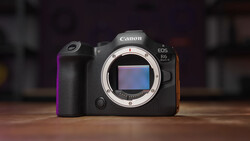
The sensor in any modern camera shapes what you can do in low light, fast action, and uneven lighting. Here's a look at what you can expect from the new Canon EOS R6 Mark III.
Coming to you from Jared Polin, this detailed video walks through how the Canon EOS R6 Mark III looks at base ISO and then pushes deep into higher settings. Polin starts with clean ISO 100 concert shots to show what the sensor can do when everything is ideal, but he quickly moves into the messy reality of ISO 4,000 and beyond. You see that once he zooms to 1:1, there is visible grain, yet the overall image still has strong color and punch that a client actually reacts to. Polin is open that his editing style on raw files tends to bring out noise more than a softer approach would. If you like contrasty, saturated edits, the way he handles ISO 8,000 gives a realistic idea of what you would see in your own files.
The video then shifts to how much you can trust the electronic shutter when action speeds up and how it compares to the Canon EOS R6 Mark II. Polin spends almost all of his real-world shooting in full electronic mode at high frame rates, then goes hunting for worst-case rolling shutter with flag football, field hockey, baseball, and cycling. The only really obvious skew comes from a baseball shot that mimics the examples he previously pulled from the Canon EOS C50, where a fast bat and ball at the wrong angle bend noticeably. In straight-ahead action like players running at the camera, the readout looks quick enough that you are unlikely to see awkward warping. When you want to remove the risk entirely, Polin shows that you can still flip to mechanical shutter at 12 frames per second and lean on traditional behavior.
Studio testing comes next, with Polin building a controlled scene that has one side correctly exposed and the other around five stops under to stress dynamic range. Using the same fast prime, a Canon RF 50mm f/1.2L USM, he compares mechanical 14-bit files against electronic 12-bit files and then matches them against the Canon EOS R6 Mark II across the same scene. You see that mechanical still gives you the most recovery, but the gap between modes has narrowed, and the Mark III’s electronic files look cleaner than the Mark II’s when pushed. At very high ISOs, the older 24-megapixel sensor can look a touch smoother in side-by-side crops, which tracks with the higher pixel density of the Mark III. Polin’s emphasis stays on how the newer body trades a small amount of high-ISO smoothness for noticeably more detail and richer color when you are not abusing exposure.
Polin also tackles something that will matter if you shoot video or mixed work: how the sensor behaves at its native gains and what that means in actual footage. By running a test, he confirms dual native points at 100 and 800 for stills and standard video, and 800 and 6,400 in log and raw, matching expectations from the Canon EOS C50 cinema body that shares the sensor. He then shows night soccer clips at ISO 6,400 with a variable ND where the image cleans up in a way that would be hard to guess just from spec sheets. The studio comparisons are intentionally exaggerated to reveal subtle differences, so you get both the lab view and the real field view without needing to decode charts yourself. There is also a quick look at how small exposure misses, within about a stop, can be fixed cleanly, while more extreme errors start to show the limits of what the files can take before they fall apart. Check out the video above for the full rundown from Polin.





Join the Fstoppers community for free
-
Post comments and join in the discussions
-
Browse the site ad-free
-
Share your work and get featured in the community
-
Compete in the photo contests for fun and prizes
No comments yet