Two weeks of airports, street shooting, and long days with a single body is a tough test for any hybrid camera, and that is exactly what this real-world trip puts the Canon EOS R6 Mark III mirrorless camera through. If you rely on one setup to handle both serious stills and video while traveling light, understanding how this body behaves outside a studio matters a lot.
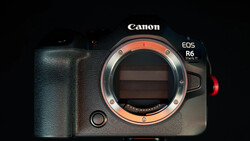
Coming to you from Tim Northey, this thoughtful video follows the Canon EOS R6 Mark III mirrorless camera through everyday travel chaos to see if it can be the main workhorse instead of a backup body. Northey runs it in the same-sized shell as earlier R6 models, but with smarter touches like a tally light, a CFexpress Type B slot, and updated LP-E6P batteries that comfortably stretch through mixed photo and video days. You see what that really means when you are walking all day, shooting casually one moment and then pivoting into client work the next. The slightly smaller footprint compared to an R5 Mark II keeps the setup feeling more like a travel kit than a full-blown production rig. You get a clear sense that this is designed to live in your hand, not sit on a shelf.
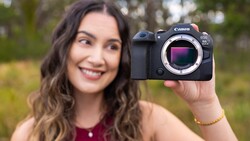
On the stills side, Northey leans into the 32.5-megapixel full frame sensor, using it like a primary camera rather than a compromise body. The extra resolution gives more room to crop without ballooning file sizes into unmanageable territory, which helps when you only have time for a quick frame and need to reframe later. Autofocus gets a notable lift with Register People Priority and pre-capture tools, which are the kind of features that actually save missed moments during fast travel days and events. Paired with the compact Canon RF 45mm f/1.2 STM, the camera turns into a small, bright, walkaround combo that stays on your shoulder from morning to night. Northey’s samples show that this combo is just as happy handling portraits as it is quick snapshots in bad light.
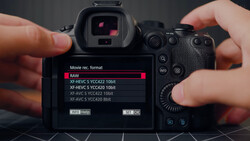
On video, things step up beyond what you might expect from a “6-series” body. Northey leans heavily on 4K 120p and Canon Log 2, using them for commissioned work shot entirely on the R6 Mark III, which says more than a spec sheet ever does. Oversampled 4K up to 60p from the full sensor readout keeps footage sharp without looking overly digital, and having 7K open gate recording as an option means you can shoot once and punch out vertical or horizontal crops later. The fact that Northey felt confident choosing this over an R5 Mark II for real client delivery speaks to how far Canon has pushed the video side in this generation, especially if you care about dynamic range and flexible grading in post. You still do not see every edge case or overheating scenario in the edit, so there is more nuance in the video around how hard you can push these modes.
Key Specs
-
Canon RF mount with 35.9 x 23.9 mm full frame CMOS sensor
-
Effective 32.5 megapixel stills (6,960 x 4,640) with 14-bit files
-
Sensor-shift 5-axis image stabilization for both photos and video
-
Internal 12-bit raw recording up to 7K 60p and open gate 7K 30p
-
Oversampled DCI and UHD 4K up to 120 fps, plus Full HD up to 180 fps
-
Dual card slots: 1x CFexpress Type B (up to 8 TB) and 1x UHS-II SDXC
-
Continuous shooting up to 40 fps with electronic shutter and pre-capture
-
Canon Log 2, Canon Log 3, and HDR-PQ gamma options for flexible grading
-
Articulating 3" touchscreen LCD and 0.5" 3.69M-dot OLED EVF
-
Wi-Fi 5 and Bluetooth 5.0 with Canon Camera Connect support and smartphone GPS
Where things get especially interesting is how Northey positions the R6 Mark III against Canon’s more expensive bodies without turning the review into a spec chart. When stacked next to an R5 Mark II, the R6 Mark III gives up resolution and 8K capture but gains oversampled 4K 60p, stronger travel ergonomics, and what appears to be better practical battery life in the field. Compared to the Canon EOS C50 cinema camera, you see how close the feature set gets while keeping IBIS, a mechanical shutter, and an integrated EVF, which matter if you actually shoot stills on the same body. Northey hints at where a true cinema body still pulls ahead with things like XLR audio, cooling, and mounting options, but the R6 Mark III clearly targets anyone who wants a much lighter kit and is willing to trade some of that production-level flexibility. Check out the video above for the full rundown from Northey.



Join the Fstoppers community for free
-
Post comments and join in the discussions
-
Browse the site ad-free
-
Share your work and get featured in the community
-
Compete in the photo contests for fun and prizes
No comments yet