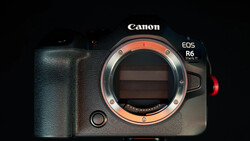
Canon is pushing its mid-tier hybrid line hard, and the EOS R6 Mark III is where that strategy becomes very real. If you shoot portraits, events, or weddings and want one body that can track eyes at high speed while still offering serious video options, this one sits in a very specific sweet spot.
Coming to you from Julia Trotti, this thoughtful video walks you through the Canon EOS R6 Mark III mirrorless camera with a mix of controlled tests and a real portrait session. Trotti leans on Canon’s Dual Pixel AF II to show how the camera holds focus on a face as you move, turn, and even look away. Working with the Canon RF 35mm f/1.4 L VCM, she pushes continuous human eye AF, including “locked on” behavior when something passes in front of the subject. You see where the system feels sticky and where it decides to jump to a new subject faster than you might like, which matters if you rely on one body for hectic aisle walks or dance floors. Trotti also shows unedited 100 percent crops next to her graded versions so you can judge detail and color response instead of just taking her word for it.
The video then shifts to how the R6 Mark III behaves as a stills workhorse, and this is where the spec sheet starts to feel practical. You get 12 fps with the mechanical shutter and up to 40 fps with the electronic shutter, with pre-shooting that captures frames before you fully press the button, which can save moments you react to a little late. Trotti talks about shooting long bursts and finds that in mechanical mode the buffer is effectively unrestricted, while electronic mode gives you a limited but healthy run before slowing. She spends time on ergonomics as well, pointing out the weight of 699 g with battery and card, the dedicated photo-video switch, and the reliance on human AF that makes the joystick almost optional. You also get a quick tour of the dual card setup, CFexpress Type B plus SD UHS II, and the full set of ports, including full-size HDMI and both mic and headphone jacks, which is not guaranteed at this level.
Key Specs
-
Canon RF mount
-
32.5-megapixel effective full frame CMOS sensor (6,960 x 4,640)
-
Sensor-shift 5-axis image stabilization
-
Native photo ISO 100 to 64,000, extended 50 to 102,400
-
Native video ISO 100 to 25,600, extended 100 to 102,400
-
Up to 12 fps mechanical shutter, up to 40 fps electronic shutter with pre-shooting
-
Internal 7K raw recording up to 59.94 fps, open gate 7K up to 29.97 fps in 10-bit MP4 or 12-bit raw
-
DCI and UHD 4K up to 120 fps, Full HD up to 180 fps
-
Dual card slots: 1 CFexpress Type B (up to 8 TB) and 1 SD/SDHC/SDXC (UHS II)
-
Full-size HDMI, USB-C power and data, mic in, headphone out, remote port
-
Articulating 3-inch touchscreen LCD and 0.5-inch 3.69-million-dot EVF with 100 percent coverage
-
Wi-Fi 5 and Bluetooth 5.0 with Canon Camera Connect app support
-
Weather-sealing and magnesium alloy body
Trotti pits the R6 Mark III’s overheating performance against the Sony a7 IV, Panasonic Lumix S1 II, and Sony a7S III in heat above 32 °C (90 °F), so you see where it holds up in moderate clips and where long continuous takes remain a weak point. She treats the R6 Mark III as a hybrid body first, not a cinema replacement, and that perspective shows when she talks about portraits, events, and weddings that rely more on shorter, cinematic sequences than fixed cameras rolling for an hour. There is also some honest criticism, especially of the flip screen choice on a camera pitched as a serious stills and video tool, and of the digital stabilization modes that look increasingly artificial at the strongest setting. That mix of praise and restraint makes it easier to parse where this body fits alongside higher-end options and where you might still need a second system for heavy video days.
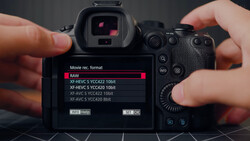
On the video side, Trotti takes you through internal 7K raw, open gate recording, and 4K high frame rate modes without turning it into a menu crawl. She builds a small sequence in C-Log 3, using her own Rec 709 preset, to show how the files grade and how Canon color looks in real scenes rather than charts. You see the practical impact of the slight crop that appears when switching into standard 4K modes, along with how stabilization feels in standard mechanical IBIS versus the digital options. She also walks through rolling shutter behavior in a straightforward way, using simple moves to show that the sensor readout is not the fastest on the market but is more than fine for typical portrait and lifestyle work. Toward the end, there is a full low-light series stepping through every ISO in both raw-friendly and in-camera noise reduced JPEGs so you can decide where you are comfortable stopping. Check out the video above for the full rundown from Trotti.



Join the Fstoppers community for free
-
Post comments and join in the discussions
-
Browse the site ad-free
-
Share your work and get featured in the community
-
Compete in the photo contests for fun and prizes
No comments yet