Canon just dropped a new ultra wide prime that aims straight at night skies, tight interiors, and fast-moving video, and the price puts it in serious territory. If you’ve been waiting for a 14mm that doesn’t feel like a special-purpose brick, this one raises a few questions worth watching play out.
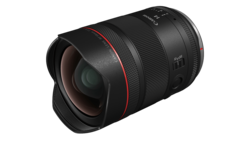
Coming to you from Gordon Laing, this hands-on video puts the new Canon RF 14mm f/1.4 L VCM in context before the real torture tests arrive. Laing frames it as Canon’s widest non-fisheye RF prime so far, built for full frame EOS R bodies and meant to pull double duty for stills and video. The headline tradeoff shows up early: you’re buying a fast 14mm that stays relatively compact, not a monster that demands its own support hardware. The comparisons to older and competing 14mm options are the part to pay attention to, since size and handling can matter as much as pure sharpness once you’re actually carrying the setup. If you’ve been debating whether f/1.4 at 14mm is practical or just expensive bragging rights, the video gives you enough real footage to start forming a verdict.
A big chunk of the discussion is about how Canon kept the lens in the same general design language as the other f/1.4 hybrid primes, while still dealing with the realities of an ultra wide front element. The built-in hood is a quiet but meaningful change, and it hints at how often this lens is expected to live without a protective filter. There’s also a real-world note that won’t thrill everyone: to use the lens as intended, you’ll lean on a correction profile in your workflow, and you’ll see what happens when that correction is toggled. Laing also points out alternatives that cost wildly less, like the Canon RF 16mm f/2.8 STM, plus a range of manual-focus third-party wides, which is the uncomfortable reminder that price-to-performance isn’t the same as price-to-ownership. If you shoot events, travel, or any job where the lens has to earn its spot in the bag, this is the part that forces an honest comparison.
The optical test section is where the lens starts to look both impressive and slightly demanding. On a body like the Canon EOS R6 Mark III, Laing shows crisp detail in the center at f/1.4 and checks corners in a way that makes distortion correction feel less scary than you might assume. You also get a look at vignetting behavior as you stop down, plus a quick read on how flat the field appears for that particular subject distance. Then there’s the stuff you only notice after you’ve been burned once: the lens produces defined sunstars thanks to an 11-blade diaphragm, and flare artifacts do show up when the light source is in play. If you shoot city lights, backlit interiors, or action with the sun scraping the frame, those samples are the ones that can save you a headache.
The handling details are also more telling than they sound on paper. The de-clicked aperture ring is clearly aimed at video-first control, while still leaving you the option to ignore it and use camera dials. Focus performance gets a quick stress test up close, and the “almost instant” behavior plus near-silent operation is exactly what you want if you’re pulling focus on people at arm’s length. At 14mm, the shallow-depth-of-field look is subtle, but it’s there, and the video shows how quickly the perspective can turn weird when you get too close. Laing also contrasts it with the newly announced Canon RF 7-14mm f/2.8-3.5 L Fisheye STM, which is a useful reality check if you’re tempted by “wider” without thinking about rectilinear versus fisheye rendering. The Canon-versus-Sigma size matchup is the other tension point, especially if you’ve ever considered the Sigma 14mm f/1.4 DG DN | Art and bounced off the sheer bulk. Check out the video above for the full rundown from Laing.




Join the Fstoppers community for free
-
Post comments and join in the discussions
-
Browse the site ad-free
-
Share your work and get featured in the community
-
Compete in the photo contests for fun and prizes
No comments yet