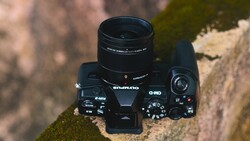
Micro Four Thirds gets dismissed fast, especially when you’re staring at a dark stage and thinking about switching to full frame. This video puts real pressure on that assumption by showing how a smaller system holds up when the lights drop without warning and the job still needs to get done.
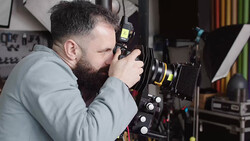
Coming to you from Robin Wong and centered on the Olympus OM-D E-M1 Mark II, this grounded video starts with a demanding shoot at a performing arts center where lighting cues are unpredictable and sometimes vanish entirely. Wong frames the discussion around an actual assignment rather than abstract comparisons. The point is not that Micro Four Thirds beats everything else, but that it keeps pace when failure is not an option. You see how choices made before the show affect what happens once the performers are already moving. The camera is treated as a working tool, not a talking point.
The lens setup is where the argument becomes tangible. Wong carries five small primes: the Panasonic Leica DG Summilux 9mm f/1.7 ASPH., the Panasonic Leica DG Summilux 15mm f/1.7 ASPH., the Olympus M.Zuiko Digital 25mm f/1.8, the Olympus M.Zuiko Digital 45mm f/1.8, and the Olympus M.Zuiko Digital ED 75mm f/1.8. Each lens pulls its weight, and together they cover an entire performance without forcing compromises in framing. Fast apertures help, but the emphasis stays on size and speed of use. Everything fits into a small bag that stays light enough to carry all night. That physical freedom affects how often you move, where you stand, and how willing you are to chase moments.
Stabilization becomes the quiet enabler of many of those decisions. Wong explains how the E-M1 Mark II’s in-body stabilization allows slower shutter speeds when subject movement is minimal. He gives a concrete example of shooting at 1/25 second and keeping the image sharp, which lets ISO drop far below what most people would expect in a dark theater. He also mentions working at even slower speeds with wide angle lenses, sometimes down to a full second, without a tripod.
One lens gets special attention, and it earns it. The Olympus 75mm f/1.8 is presented as a practical reason to stay put rather than chase a larger sensor. Wong compares it to full frame equivalents that deliver similar reach but demand far more space and weight. He talks about lens changes, fatigue, and long-term strain, not abstract rendering differences. There’s also a direct acknowledgment that full frame still wins on pure image quality metrics. The counterpoint is sufficiency: the files are clean enough, the dynamic range holds up, and the system allows faster movement and more shots over the course of a job. The trade is laid out without softening the downsides. Check out the video above for the full rundown from Wong.




Join the Fstoppers community for free
-
Post comments and join in the discussions
-
Browse the site ad-free
-
Share your work and get featured in the community
-
Compete in the photo contests for fun and prizes
6 Comments
My full frame setup is more compact than this? Sony a7cii with compact primes
I doubt it. The a7C is about the same size, but it's heavier. And, there's no 90mm "compact" prime for it that's anywhere near as small and light as an MFT 45. I shoot events professionally and used MFT exclusively 2014-2020. Now I'm all Sony FE, including an a7CR.
As a full-time event photographer, I worked exclusively with MFT from 2014 to 2020. Using primes, I got about the same level of noise in low light as 35mm-format cameras with f2.8 zooms while carrying much less weight on my body. Two GX8s, a GX9, Panasonic 7-14/4, Olympus 12/2, Panasonic 20/1.7, Olympus 45/1.7 and 75/1.7. Great kit, and comparatively cheap on the used market at the time.
Robin is spot on. I have made a comparison based on the prices of used gears in the Japanese market.
The m43 system will be at least AU$2500 cheaper and 1.3 kg lighter, and will deliver reasonably professional-level photos (80~90% IQ of FF). Please check the attached. If anyone can suggest better equivalent FF lenses that are cheaper and lighter than the M$3 counterparts, you are most welcome. The MZ 75 mm f/1.8 is the main winner here.
I appreciate Mr. Wong's comments; I'm an OM user and very much appreciate the small primes (I have several of the ones he mentions) in low-light environments (in my case, photographing ballroom dance competitions). Combined with light weight and IBIS, it's a very useful combination that lets me work all evening.
While Mr. Wong carries five primes with him, I do hope he's not trying to use all five at a single event -- I can't imagine trying to switch lenses that often!
IMO the Olympus 75mm 1.7 is among the best lenses ever made, regardless of format.