Tilt-shift lets you fix leaning buildings and control depth of field with precision, and a true 17mm field of view opens spaces you couldn’t cover with 24mm. If you work in tight city streets or interiors where you can’t back up, this focal length changes what you can deliver to clients.
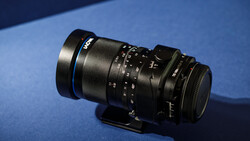
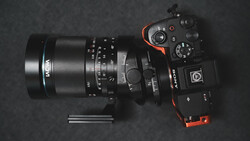
Coming to you from Ben Harvey, this practical video looks at the new TTArtisan 17mm f/4 Tilt-Shift lens. You see how the independent tilt and shift locks work, how far the lens rotates around the mount, and what full shifts look like on a city scene. Harvey demonstrates basic tests from f/4 through f/16 and finds real gains at f/5.6 and f/8, with clean mid-frame detail and better edge definition as you stop down. He also points out consistent vignetting across apertures and shows where you’ll want to correct it in post. He notes chromatic aberration control looks strong even around bright sky transitions.
A 17mm tilt-shift fills a gap left by the lack of native mirrorless options from Canon, Sony, and Nikon. Harvey compares the handling to his long-used Canon TS-E control layout, where one knob loosens and another drives the shift, and explains why the TTArtisan’s drop-when-loosened movement demands two hands. You see why that slows fine adjustments on a tripod and how it compares with a geared approach. Cost is the tradeoff, since the Canon TS-E 17mm f/4L sits in a different price tier and the Nikon PC 19mm f/4E ED is also a serious investment. You get a clear sense of what you gain by going wider than 24mm and what compromises you accept to get there.
Harvey shoots Brighton landmarks to show where 17mm pays off. A portrait-orientation, fully shifted frame pulls an entire church into a single image where 24mm would come up short. He shows why you might choose 17mm not only for coverage but for drama. Flare management comes up whenever the sun hits that large front element, and you see how a missing hood or the need to hand-shade the glass affects contrast and ghosts. Barrel distortion appears subtly on Regency façades, which you’ll want to correct, while starbursts at small apertures look clean and crisp.
Key Specs
-
17mm ultra-wide with ±10 mm shift and ±8° tilt for perspective control and plane-of-focus adjustments
-
64mm image circle covers larger sensors and enables stitching without vignetting in full frame mode
-
Two aspherical elements plus high-refractive glass aimed at controlling distortion and axial color
-
10 aperture blades for smooth bokeh and consistent 10-point starbursts from f/4 to f/22
-
Full-metal body with internal focusing and compact build that’s lighter than many legacy tilt shift options
-
Promotes creative portrait and travel looks with elongation effects and level backgrounds
-
Useful for video with dramatic perspective tools and starburst highlights that pop in short-form clips
Handling notes from the field help you plan a realistic workflow. The separate tilt and shift locks include clear markings, but the shift stage needs a supporting hand as you loosen it, or gravity takes over. Rotating the whole assembly to swap between vertical and horizontal movements is quick once you learn the silver lock button. With the projecting front element and large image circle, standard round filters aren’t an option, so you should price a 150mm square system if you rely on ND or grads. Expect to focus manually using magnification or peaking and to record aperture settings by hand, since metadata won’t include them.
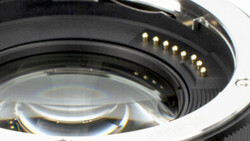
Harvey suggests living at f/8 to f/11 for the best balance of sharpness and depth of field, then only pushing to f/16 when you truly need more in focus. Shifting didn’t show a drop in center or edge acuity in his tests, which bodes well for stitching and layered interiors. The size and weight feel substantial in the bag, and the barrel’s girth near the mount can crowd your grip on smaller bodies, especially if you have larger hands. Native E, Z, RF, L, and GFX mounts remove adapter bulk and make the whole package more manageable on a travel tripod. Check out the video above for the full rundown from Harvey.



Join the Fstoppers community for free
-
Post comments and join in the discussions
-
Browse the site ad-free
-
Share your work and get featured in the community
-
Compete in the photo contests for fun and prizes
1 Comment
How is the barrel distortion at the edges? Also, you mentioned there is a GFX version. Does it fill the entire frame like the Canon does?