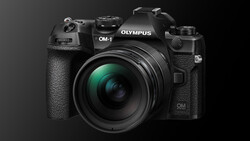
The OM SYSTEM OM-1 Mark II mirrorless camera is designed to solve one of the biggest challenges you face in the field: balancing performance with portability. When you spend long hours outside carrying heavy gear, every pound matters, and having the right setup can mean the difference between getting the shot or missing it.
Coming to you from Todd DeWald, this detailed video walks through the OM SYSTEM OM-1 Mark II mirrorless camera and shows how it stacks up in real-world shooting. DeWald compares it against Nikon bodies like the Z9 and Z6 II, focusing first on weight and size. The OM-1 Mark II body comes in at just 1.3 lbs with battery and card, noticeably lighter than Nikon’s full frame flagships. Pairing it with the OM System 150–400mm f/4.5 lens gives you effective reach up to 1,000mm with the built-in teleconverter, all in a package that’s still lighter than Nikon’s comparable telephoto setups. The result is gear you can handhold longer and carry farther without fatigue.
DeWald highlights another critical advantage: stabilization. The OM-1 Mark II offers up to 8.5 stops of stabilization when paired with the 150–400mm, letting you shoot handheld at long focal lengths and slower shutter speeds without sacrificing sharpness. In practice, this allows you to work tripod-free in situations where other systems almost demand extra support. For wildlife and outdoor video work, this translates into freedom of movement and more spontaneous shooting opportunities.
Key Specs
-
Lens Mount: Micro Four Thirds
-
Effective Resolution: 20.4 MP (5,184 x 3,888)
-
Image Sensor: 17.4 x 13 mm Four Thirds BSI MOS
-
Stabilization: 5-Axis Sensor-Shift
-
ISO Range: 200–25,600 (80–102,400 Extended)
-
Continuous Shooting: Up to 120 fps
-
Video Recording:
-
DCI 4K (4096 x 2160) up to 59.94 fps
-
UHD 4K (3840 x 2160) up to 59.94 fps
-
Full HD (1920 x 1080) up to 240 fps
-
-
Video Output: 4:2:2/Raw 8/12-bit via HDMI
-
Card Slots: Dual UHS-II SD
-
Viewfinder: 5.76M-dot OLED, 1.48x magnification
-
LCD: 3" articulating touchscreen, 1.62M dots
-
Battery Life: Approx. 500 shots (BLX-1 battery)
-
Weight: 1.1 lb / 511 g (body only)
The autofocus system is another area where DeWald shares practical insights. In photo mode, subject tracking works well for birds and other wildlife, with customizable AF target modes that let you adjust box sizes to match your subject. Even small, erratic birds like tree swallows were tracked successfully at 800mm handheld. Video autofocus, however, is less consistent, sometimes hunting in complex scenes. DeWald worked around this by relying on single AF with manual override or switching to manual focus with peaking, showing that the camera is still very capable for video work when used thoughtfully.
Image quality from the OM-1 Mark II holds up strongly, even when compared directly against Nikon’s Z9 in side-by-side tests. DeWald shows raw files at ISOs ranging from 4,000 to 25,600, with noise performance that cleans up well in Lightroom using standard noise reduction or masking techniques. The Micro Four Thirds crop factor also gives you effective in-camera reach, reducing the need to crop heavily in post. This advantage makes it easier to keep full-resolution files while still framing tightly in the field. Check out the video above for the full rundown from DeWald.


Join the Fstoppers community for free
-
Post comments and join in the discussions
-
Browse the site ad-free
-
Share your work and get featured in the community
-
Compete in the photo contests for fun and prizes
6 Comments
Not sure these strengths are a surprise to anybody who uses this system. Seems it just needs to be pointed out to the none believers! 😂
No need to watch the video but I can guess it's all about compact and weight, always :)))
So you want to say it has no other strengths and advantages over APSC or FF systems?
Do you know that there are ONLY 14 cameras with stacked sensor? I bet no.
OM1 sensor only is worth 80% of cameras out there and when you throw in all the goodies that OM1 delivers + size/weight + lens choice only very few cameras can compete with it.
In bright light it clearly performs as good as any. I am not sure the images are that good when the light begins to fade.
If you're into BIF and telephoto then m43 has a lot of virtue. Apart from landscape and general shooting I am into bokeh and for this FF leaves m43 way behind. I used to use m43 until Olympus sold up so I'm not biased, I have a lot of affection for my Olympus kit. I especially like the quality and portability. However, I do prefer the colour output of my FF system.
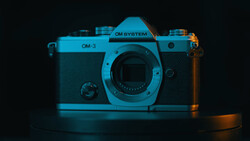
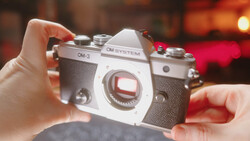
I've been using OM-1 mk2 for over a year now. It's my favorite camera. I love it so much that I also got OM-3, which is almost exactly the same camera but in a retro format and slightly lighter and more compact.
There are only 14 cameras that can really compete with OM-1 (yes 14 with stacked sensor and 2 of them is OM1/OM3) and ALL of them are bigger, heavier and much more expensive.
OM-1 is a unique camera. I just wish OMDS has done better marketing.