
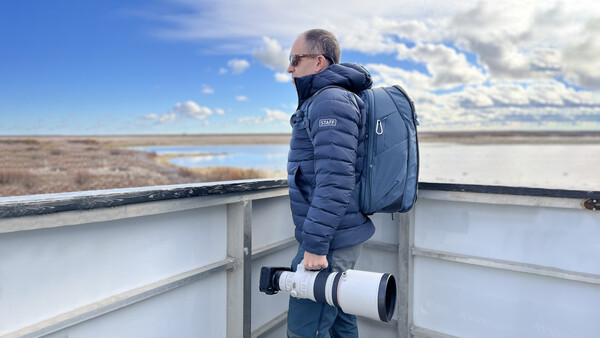
I've been looking for a bag that meets my needs for a long time. I've always been a traveling photographer, taking my gear to some of the hottest, coldest, wettest, and driest places on the planet. A bag has to do a lot to make the grade. Escalating my needs, over the last few years I've also been working as a photography guide in Canada's sub-Arctic, the high Arctic, and Antarctica. These regions don't settle for everyday quality. In these extreme environments, the bags either work or your gear gets ruined. I've taken five different bags to task and only two have protected my gear effectively from the elements. The Peak Design Travel Backpack is one.
What do I need from a backpack? Obviously, there is give and take with each of the following criteria, as I'm traveling long distances, sometimes on small planes. I'd love the best harness system and almost invulnerable materials, but I can't haul all that.
So far, the Peak Design Travel Backpack has confidently met each need.
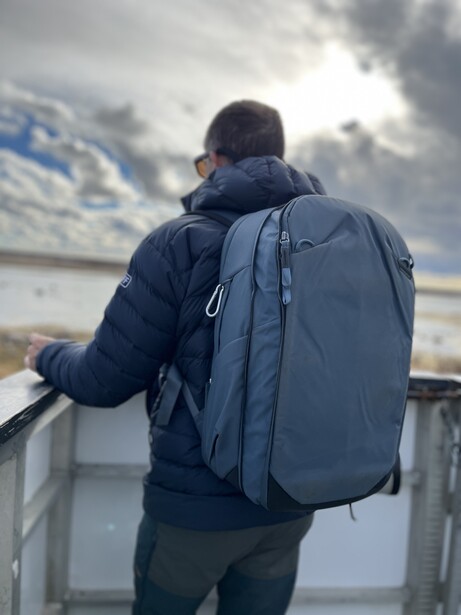
Weatherproofing
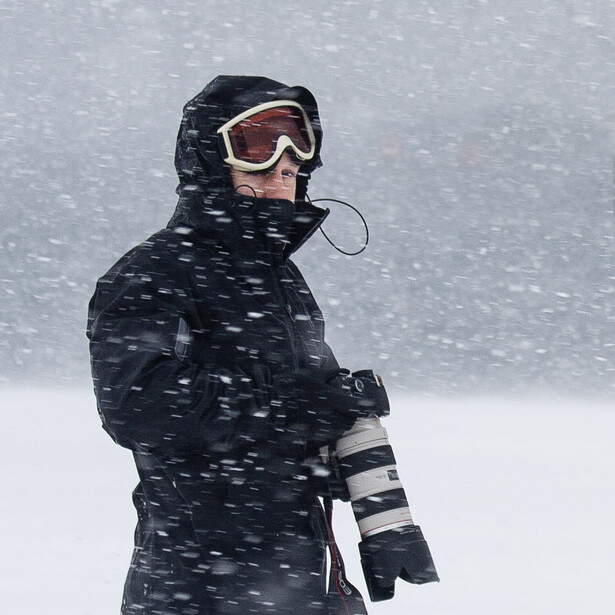
My most important demand for a bag is its weatherproofing. I need a strong water-resistant bag that edges toward dry-bag qualities. If I could, I'd love to rely on a dry bag. However, I've found that dry bags aren't typically hardened enough for the bumps and scrapes my bags take. I work in conditions with 70-knot winds, seeing rain, sand, and snow come in hard and come in sideways. I can't just throw a rain cover over my bag, as I need constant access to my gear. A rain cover is just one more step to getting to my gear, which I may need to access fast if the bears start to spar or the whales start to breach. Moreover, a rain cover is potential litter. In the windy conditions I see, I can't have anything on me that might blow away. Everything is either heavy or attached to me.
The Peak Design Travel Backpack isn't waterproof, but its exterior shell has been DWR-impregnated and double poly-coated for water resistance. This treatment has provided enough protection in some of the worst weather that I've been out in. Don't forget, it's best to test the strength of your waterproof coating each year to ensure that the bag is still providing the protection you expect it to. Ensure you clean your bag of salt or other contaminants and dry your bag after use, as contaminants and standing water can reduce the lifespan of the coatings.
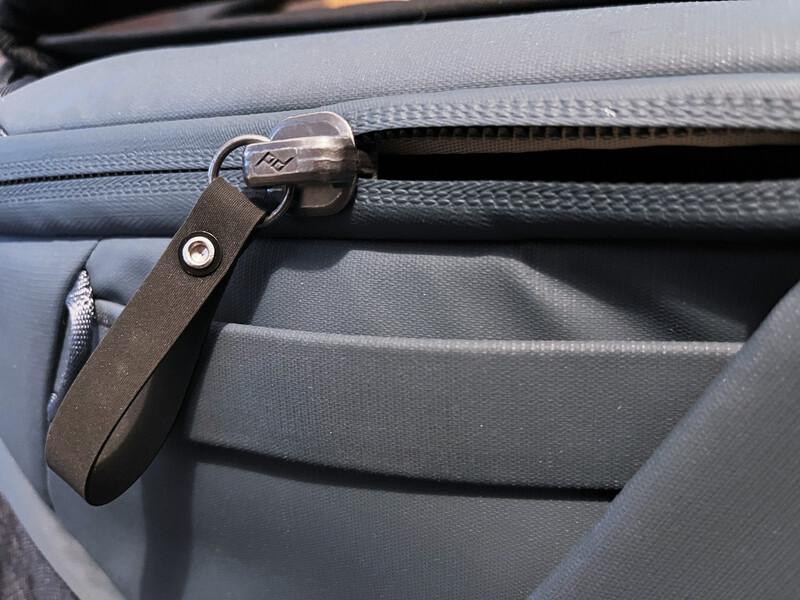
I find that the common weak point for most bags is the zippers. Blowing sand, snow, and rain are really good at squeezing through the smallest of openings. The Peak Design bag uses weatherproof #10 UltraZips, which hold out rain and snow and can also withstand extended use thanks to their proprietary abrasion-resistant thread. True waterproof zippers are just too heavy for a bag that doubles as a carry-on or hiking bag.
Organization
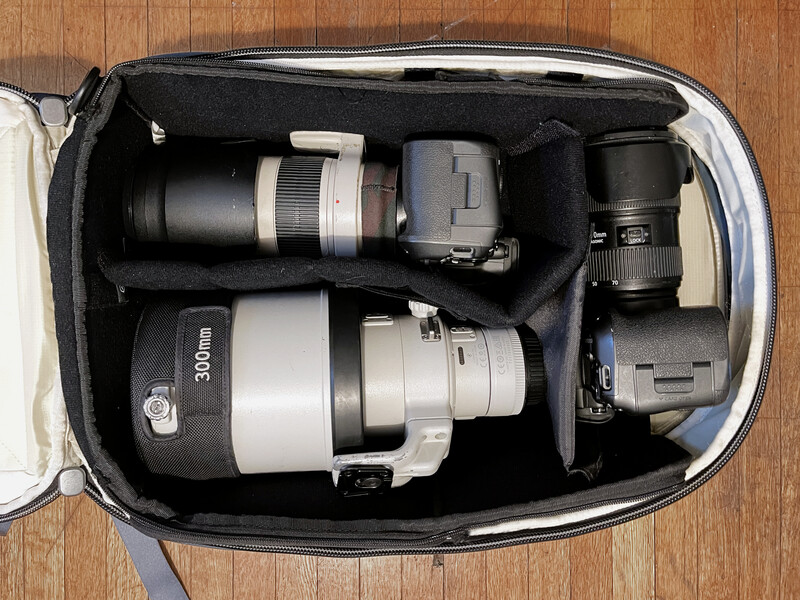
I'm traveling long distances, often on small planes. Most recently I've been flying on ATR turboprops and 52-year-old 737s. These planes don't have anywhere near the overhead room that modern wide-body jets do. The Peak Design Travel Backpack is so well organized that I'm fitting:
- Canon EF 300mm f/2.8
- 1.4x tele
- 70-200mm f/2.8
- 24-70mm f/2.8
- Two camera bodies (Canon EOS R5 and Canon EOS R5 Mark II)
- Plenty of batteries and memory cards
- My 2023 16-inch MacBook Pro
My bag can fit under the seat in front of me, even with the reduced seat depths on the ATRs. By tucking away the shoulder straps, I can actually get the bag, fully packed, into the overhead. No other bag I've had has been small enough to pack and stow that way.
As an added bonus, there is a zippered section that can hold my passport and other travel documents so that I don't have to root around in the body of the bag.
Points of Entry
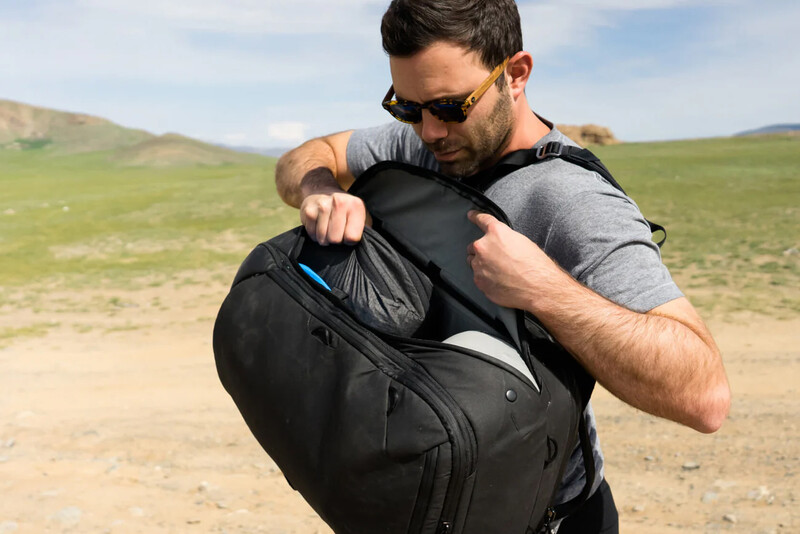
I've mentioned this before, but new rules in Antarctica mean that you can't put your bag on the ground, even if it's just for a quick lens change. The only way to juggle a potential lens change is to balance and sling my bag while using one of the smaller access hatches instead of opening the bag up fully. The Peak Design bag makes this much less awkward than it sounds.
The large zip compartment is on the strap side of the bag, so the zippers are further protected by being against my back. This construction helps with weather as well as with security.
Rugged
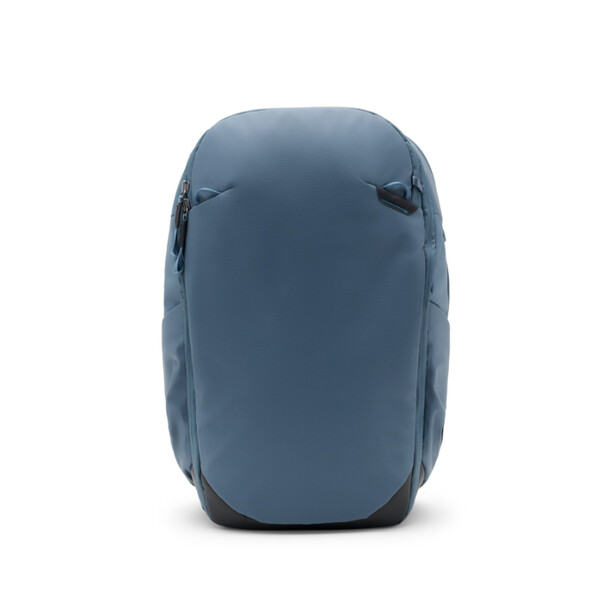
I'm not casting aspersions, but there are those who baby their gear. I am decidedly not in that group. For me, my gear is a tool, a means to an end. I work in dirty, wet, harsh environments. My gear gets dinged, scratched, and scuffed. The only thing I baby is the front element of my lenses. Even then, I'll clean off penguin guano with the back of my glove if there is nothing else available. My bag gets tossed on and off zodiacs in 10-foot swells and bounced around a Tundra Buggy crossing moon-like landscapes. My bag needs to be able to take the pounding. The Peak Design Travel Backpack's outer shell is 400-denier nylon canvas, with a 900-denier bottom liner. From my perspective, this is an almost perfect weight-to-robustness balance. I'm sure the bag will get scuffed, and eventually it will rip, but the materials mean that my bag will last multiple seasons.
The smooth and simple exterior also means that I can hose the saltwater off my bag when the surf was a bit too rough and water came over the bow.
Harness System
I can be out in the field or on shore for hours at a time, often without somewhere to put my bag. Even if I'm operating from the Tundra Buggy Lodge or the big ship, I often carry my bag from room to room or deck to deck just in case something pops up. The Peak Design Travel Backpack has a robust harness system that allows me to carry the bag for a few hours before feeling the pressure on my shoulders. I can also attach an optional waist belt to relieve the weight if I'm going to be ashore and walking for extended hikes.
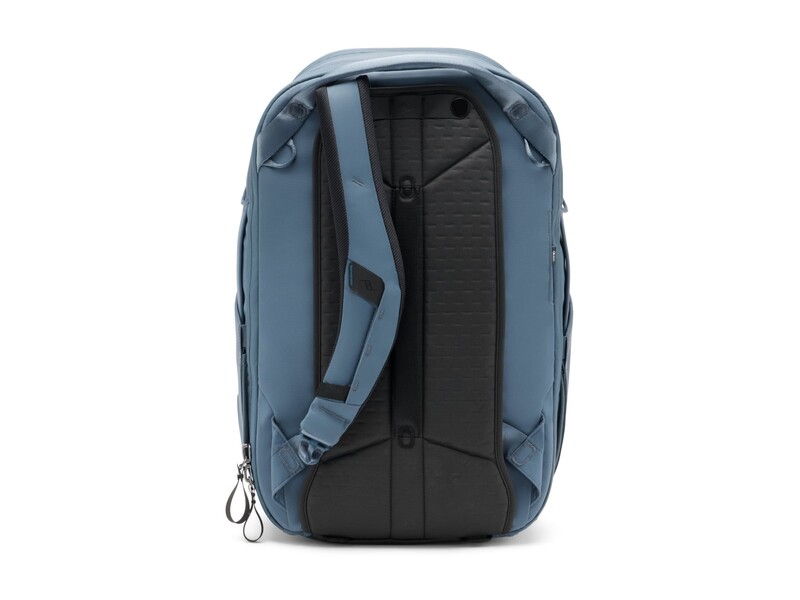
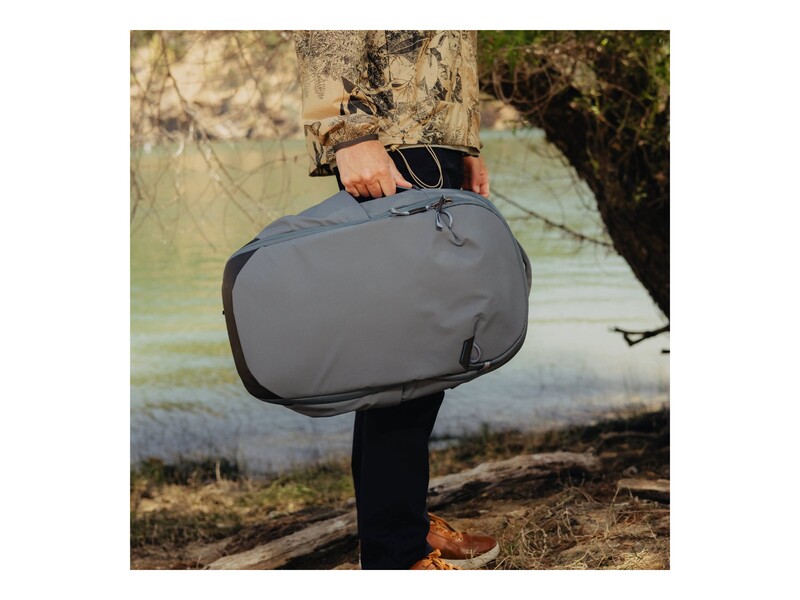
The bag was also built with several carrying handles so that you can pick the bag up from almost any direction. Peak Design calls these 360-degree grab handles, and I appreciate the redundancy—this bag is easy to grab and go from any side. Oddly, there is a grab handle at the bottom of the bag. This handle was one of the biggest surprises: it works great to get my bag out from under a plane seat or to pull my bag out of an overhead bin with ease. These grab-and-go handles sit relatively flush with the bag and don't pose a tripping or entanglement risk.
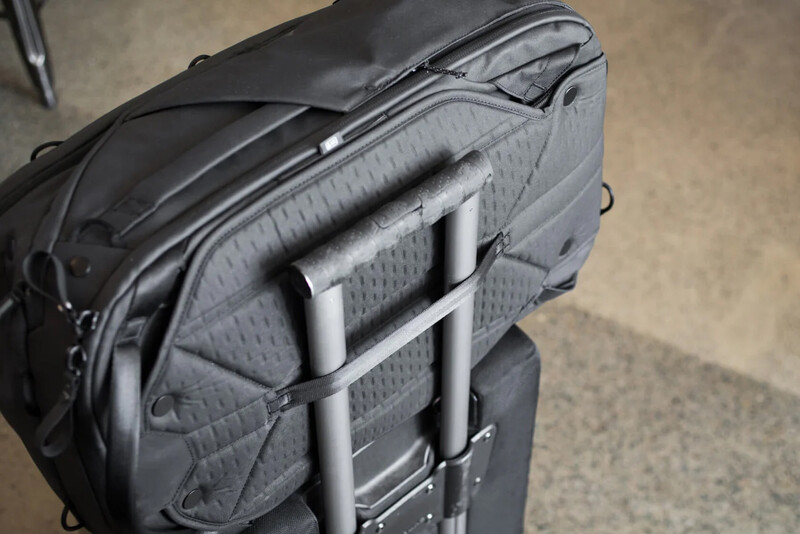
The grab-and-go handle on the strap side of the bag can also double to secure my backpack to a roller bag if I have one with me, again relieving the pressure of carrying a bag around an airport on long layovers.
Parting Thoughts
The Peak Design Travel Backpack is a rugged, accessible, ergonomic, well-priced bag that seems to provide the weather resistance I need when I'm out working in the elements.
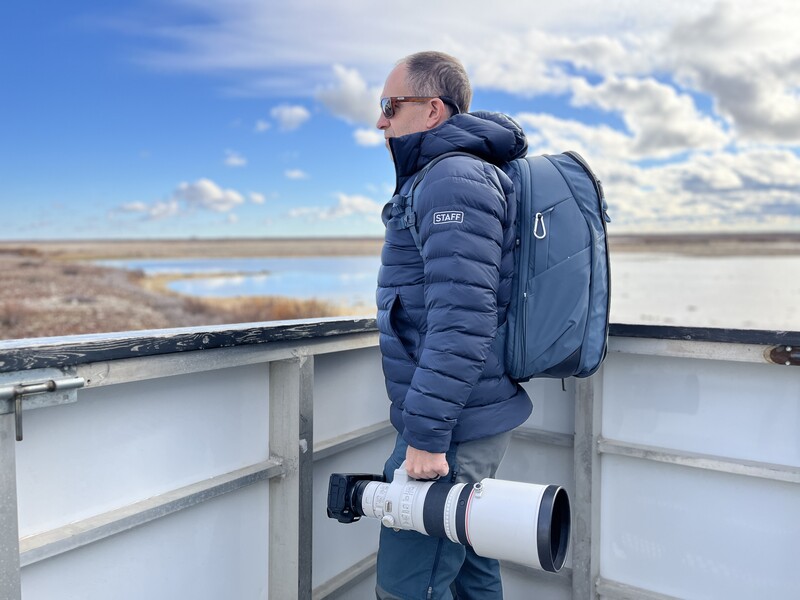
If pressed, I'd suggest that Peak Design change the orientation of the roller bag slip handle so that the bag sits upright instead of on its side.
As always, I wouldn't mind more robust zippers that are just a little more weather resistant. I'm a little concerned that blowing sand might find its way into the bag. That being said, I understand that this request would add weight and likely increase the price point for the bag outside of the target demographic. Similarly, I'd love to see the whole bag made of 900-denier fabric, but again, this would change the weight and price point of the bag, likely shifting the balance between weight and protection to somewhere outside my comfort zone.
It's important to note that, for those of you that care, Peak Design is a Certified B Corp and the Peak Design Travel Backpack is Fair Trade Certified and 100% carbon neutral.
All images provided by Peak Design or Alex Cupeiro, including lead image.


Join the Fstoppers community for free
-
Post comments and join in the discussions
-
Browse the site ad-free
-
Share your work and get featured in the community
-
Compete in the photo contests for fun and prizes
No comments yet