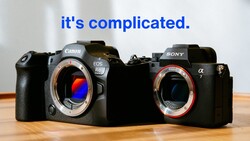
Picking the right Sony body right now is genuinely complicated. The Sony a7 V sits under $3,000, yet this video argues it beats the Sony a1.
Coming to you from Jake Sloan, this hands-on field test takes the a7 V to Knik Glacier in Alaska for a real-world workout across stills, video, aurora photography, and stabilization. The sensor is still 33 megapixels, same as the a7 IV, but Sony squeezed out better dynamic range, faster readout speeds, and improved low-light performance from the new chip. Sloan puts the rolling shutter improvement front and center: it was one of the main reasons he didn't stick with the a7 IV long-term, especially for helicopter work. At 33 megapixels, files are noticeably easier to manage in post than the 50-megapixel Raw files from the a1, and you still have enough resolution to crop and reframe without losing detail.
The low-light performance gets its own dedicated ISO test, running from 800 all the way up to 102,400. Sloan shoots aurora footage in Alaska to put it through its paces, and his take is that the second base ISO at 8,000 is a genuine sweet spot. He compares it directly to the Sony a7S III, which has a second base ISO of 12,800, and while the a7 V doesn't quite match that, he finds it more than capable for aurora and astro work, especially paired with something like a Sony FE 20mm f/1.8 G. Battery life also comes up, and Sloan tested the camera in conditions ranging from 35 below zero to around 15 above zero Fahrenheit. He found it meaningfully better than the a7 IV, the a1, and even slightly ahead of the a7S III on a single charge.
There are real issues worth knowing about before you buy. Sloan had serious problems with the card reader, specifically with non-Sony-branded CFexpress Type A cards. His camera stopped reading and writing to cards entirely, forcing him to pull the battery to recover from lockups, and he ultimately had to send it in for repair. He notes the EVF is not class-leading and the screen, while improved, still falls short of what Canon and Nikon offer at this price point. Sony's AI autofocus system is a genuine step forward and performs well in most conditions, but the video also covers details on the new fully articulating screen, the stabilization modes including dynamic active, and how the camera handles overheating, which Sloan couldn't fully test given the Alaskan winter. Check out the video above for the full rundown from Sloan, including the ISO test footage, aurora clips, and his thoughts on the card reader issue once he gets the camera back from repair.





Join the Fstoppers community for free
-
Post comments and join in the discussions
-
Browse the site ad-free
-
Share your work and get featured in the community
-
Compete in the photo contests for fun and prizes
1 Comment
Still dreaming of finding a good deal on an A1.