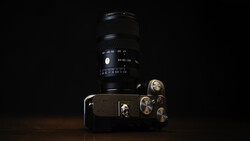
The Tamron 35-100mm f/2.8 sits in an interesting spot: it's compact and light enough to travel with, but fast enough to handle portraits, events, and low-light shooting. At around $899, it's priced to compete with other mid-range zooms, and whether it delivers enough to justify that price is genuinely worth understanding before you buy.
Coming to you from Stefan Malloch, this thorough video breaks down everything you'd want to know about the lens before spending your money. Malloch tested it on the Sony a7 V, and autofocus tracking held up well, even with fast-moving subjects. The 35–100mm range is more telephoto-weighted than a traditional 24–70mm, which means you're giving up some wide angle reach in exchange for extra compression on the long end. At f/2.8 throughout the zoom range, the lens produces solid subject separation and handles low light well, and Malloch notes the autofocus is fast, snappy, and reliable in both photo and video modes. One standout detail: this is Tamron's first lens with a 12-blade aperture, which produces noticeably smooth, rounded bokeh compared to what you'd get from a more typical 7- or 9-blade design.
On sharpness, the center is razor sharp wide open at both 35mm and 100mm. The corners are a different story, particularly at f/2.8, where you'll see some softness. Stopping down to f/5.6 or f/8 brings the corners in line, and by f/8, overall performance is strong across the frame. Malloch also flags heavier vignetting wide open at 100mm, along with some noticeable pincushion distortion at the long end. Chromatic aberration is well controlled at 35mm but becomes more visible at 100mm, especially in high-contrast situations. None of these are dealbreakers, but they're worth knowing if you shoot wide open often or rely on lens profiles in post.
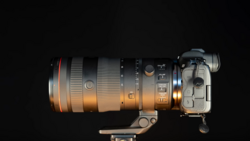
The build quality matches what Tamron has been putting out recently: solid, well-finished, with a rubber-gasketed metal mount for basic weather resistance. It has 67mm filter threads up front and extends slightly as you zoom, though only by about an inch. The Tamron Lens Utility app, accessed through the USB-C port, now goes beyond firmware updates and lets you remap buttons and adjust lens behavior remotely, which is particularly useful for video work. Focus breathing is minimal, which matters if you're pulling focus on camera. Malloch also puts the lens next to the Tamron 35-150mm f/2-2.8 for a size comparison, and the difference is dramatic. The 35-150mm is a bigger, heavier lens with more range and slightly better overall character, but the 35-100mm is the one you'll actually want to carry all day.
Check out the video above for the full rundown from Malloch, including more sample images and his final take on who this lens is really built for.




Join the Fstoppers community for free
-
Post comments and join in the discussions
-
Browse the site ad-free
-
Share your work and get featured in the community
-
Compete in the photo contests for fun and prizes
No comments yet